Warrington

Kenyon Tunnel

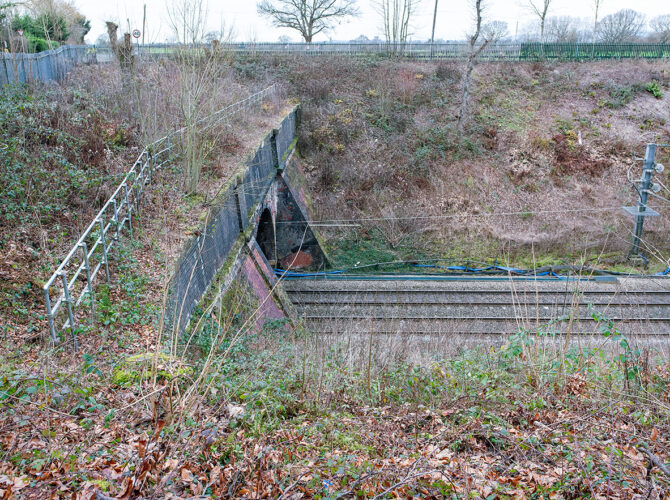
A side view of Kenyon Tunnel showing a smaller brick opening tucked into the cutting wall, with railway tracks and cables running past in the foreground
© Manchester Histories

A hidden passage beneath the Moss

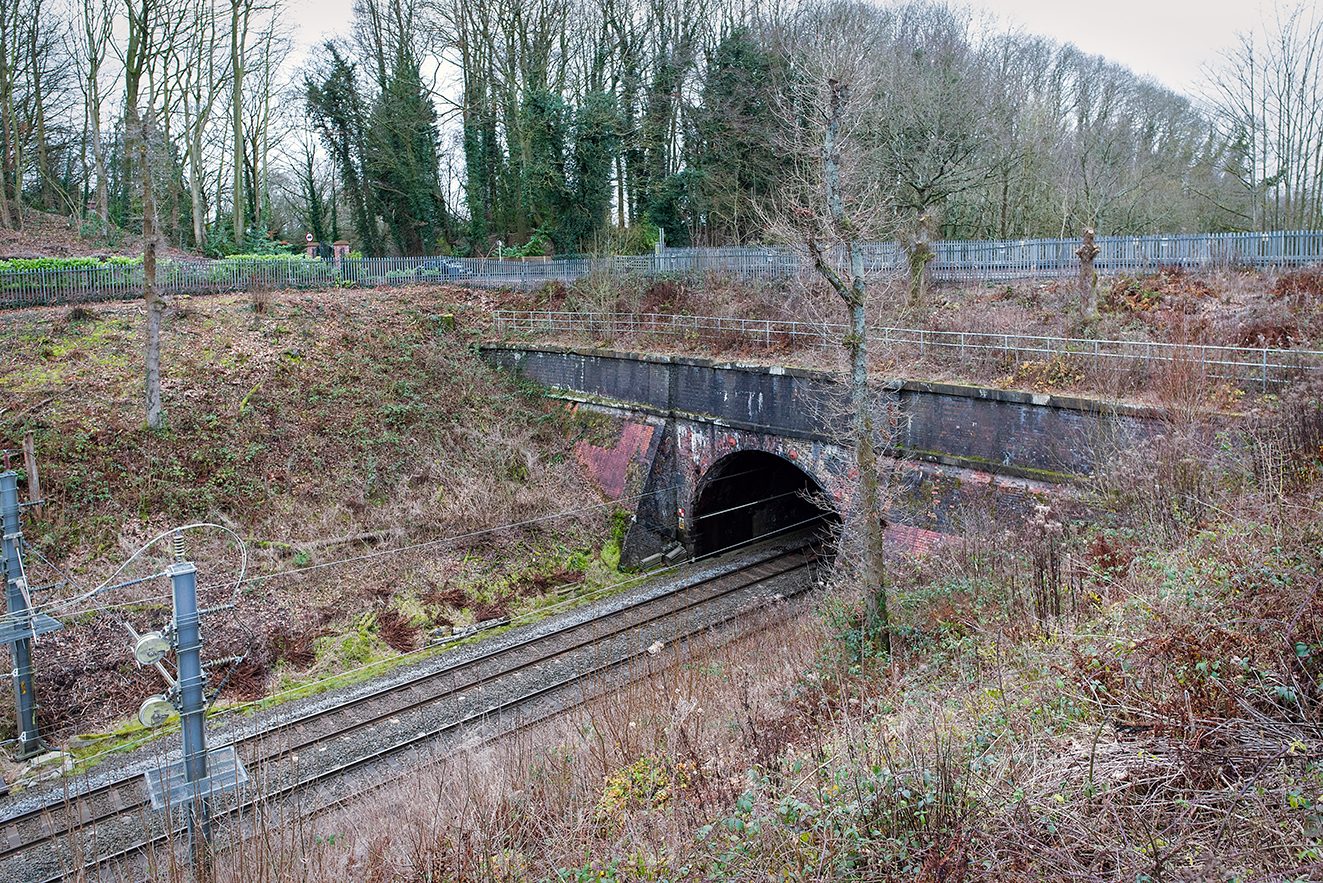
Kenyon Tunnel is a short brick-built tunnel that carries the railway beneath a road junction near Culcheth. Hidden among trees and undergrowth, it is one of the quieter features of the line but still a striking piece of early railway engineering. Trains emerge from a deep, curved cutting before passing through the tunnel’s arched brick mouth, vanishing briefly beneath the landscape before reappearing on the other side.

Why it matters

Kenyon Tunnel was likely built using a method known as cut-and-cover. Rather than boring through solid rock, engineers dug a trench, constructed the tunnel with brick walls and a vaulted roof, then covered it over with earth. This was a practical solution in places where the land was too high to cross and too soft to tunnel through directly.

Structures like this were crucial to keeping the route level. Early locomotives struggled with hills, so engineers had to carve a straight, flat path across the land. Tunnels, cuttings and embankments were all part of that bold new landscape.

Though short, Kenyon Tunnel shows the same care and confidence in design seen in much grander features on the line. It is built to last, and it has
Interesting stories

Not far from the tunnel stood Kenyon Junction, once a busy meeting point between the Liverpool and Manchester Railway and the lines to Wigan and Bolton. For many years it bustled with passengers and goods traffic. Though the station is long gone, the tunnel still sees modern trains rush through at full speed, following the same path first laid nearly two centuries ago.

The tunnel sits quietly beneath a road junction now, its presence easy to overlook. But for passengers in the early 1800s, especially those in open carriages, it would have been a strange new experience to dip briefly into darkness beneath the road before returning to open land.

What to look out for…

If you can view it safely from above, look for the curved brick portals at each end, with their strong arch and clean brickwork. The approach cutting is steep-sided and lined with vegetation, showing just how deep the engineers had to dig to carry the line through.

The brickwork is darkened by age but still solid. The tunnel mouth blends into the earth around it, giving the whole thing a low, powerful profile. It is a working reminder of how even the more modest parts of this railway were built with ambition and skill.

Explore related content

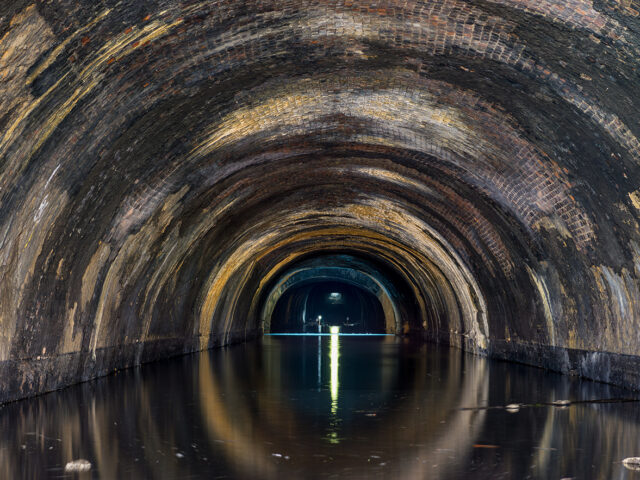
Inside the Wapping Tunnel near Crown Street, showing the brick-lined arch reflected in still water with a faint light in the distance.
Liverpool

Wapping Tunnel

The tunnel under the city. The Wapping Tunnel is a hidden marvel. Running over two kilometres...