Engines built for the world.
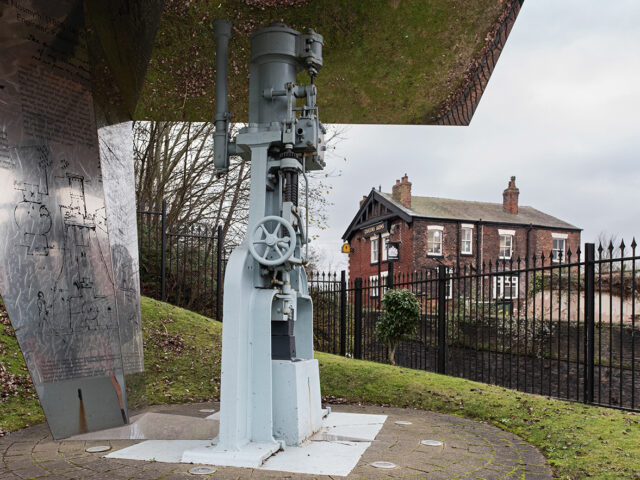
The Vulcan Foundry was a major railway engineering works in Newton-le-Willows. It was founded in 1830 as Charles Tayleur & Company, shortly after the Liverpool and Manchester Railway opened. Its first products were iron girders, crossings and other components for Britain’s fast-growing railway system.
By 1833 the works had begun building steam locomotives, and before long its engines were being shipped across the world. Over the next 170 years, Vulcan adapted to changing technology, producing steam, diesel and electric locomotives before closing in 2002.
Why it matters
Vulcan Foundry became one of the UK’s most important locomotive works. It supplied engines for railways in India, South America, Egypt, Japan and dozens of other countries. These machines helped establish British engineering as a global standard.
The foundry’s history also reflects the rise and fall of Britain’s heavy industry. Vulcan produced thousands of locomotives for export and for use at home. During the Second World War it helped with war production, building tanks and military locomotives. Later, it embraced diesel and electric technology as steam began to fade.
Vulcan was more than a factory. It was a centre of skills, invention and global reach. Its engines ran on almost every continent and its name became known far beyond Newton-le-Willows