Interesting stories
In 1830 the idea of a railway station was entirely new. Rather than build something industrial or monumental, the designers made the buildings resemble smart townhouses, helping the unfamiliar railway blend into the city.
Passenger services moved to Manchester Victoria in 1844 as traffic grew, but Liverpool Road continued operating as a goods depot until 1975.
After freight operations ended, the site was preserved and later incorporated into the Science and Industry Museum, ensuring the birthplace of the modern railway remained open to the public.
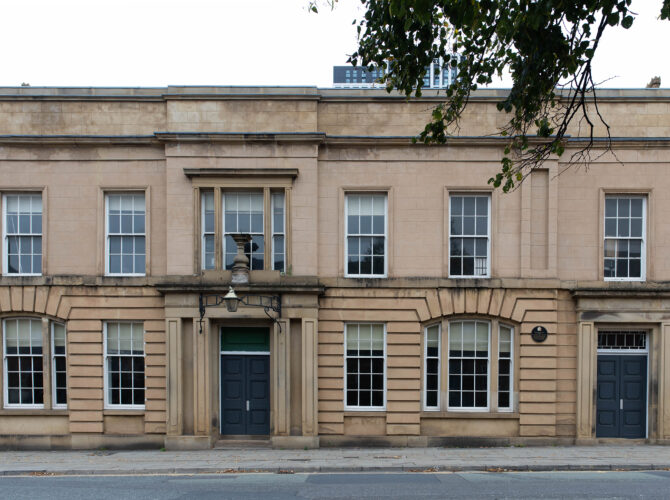
One charming detail from the early days is the sundial once mounted above the first-class entrance, reflecting the growing importance of accurate timekeeping in the railway age.
What to look out for…
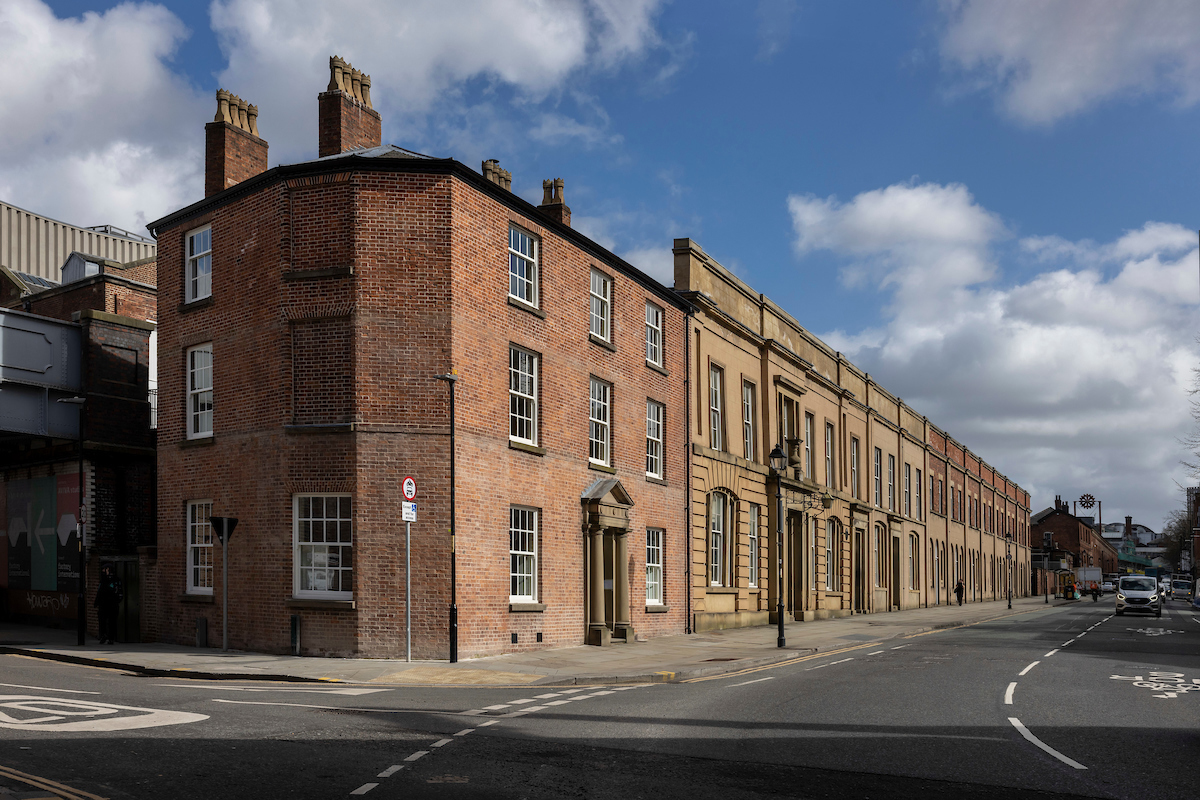
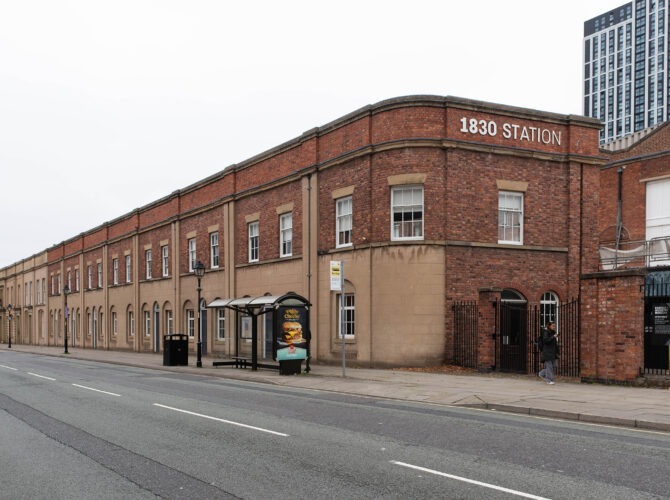
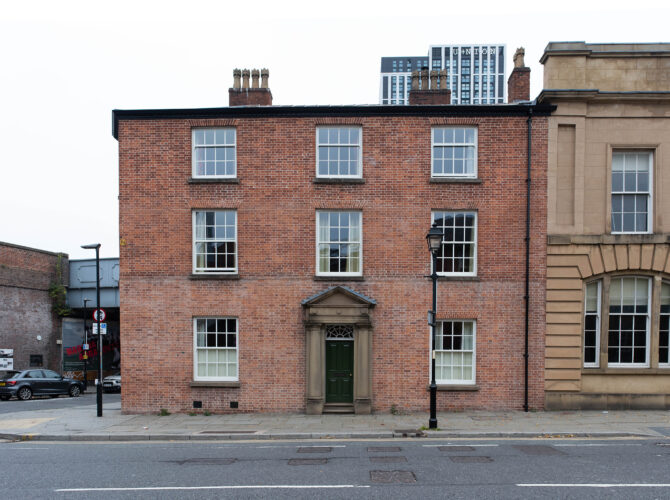
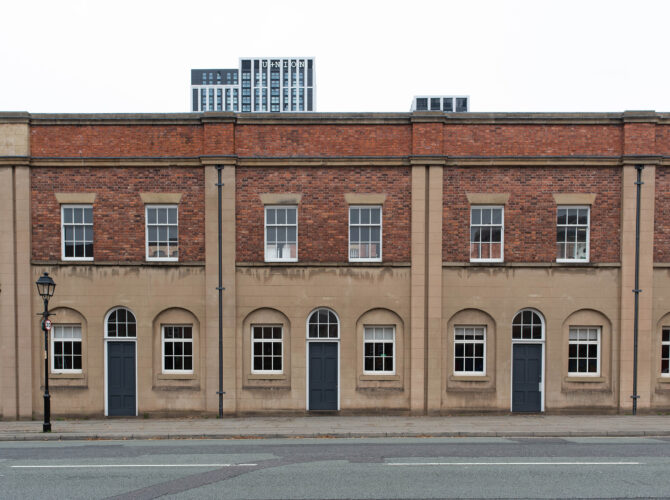
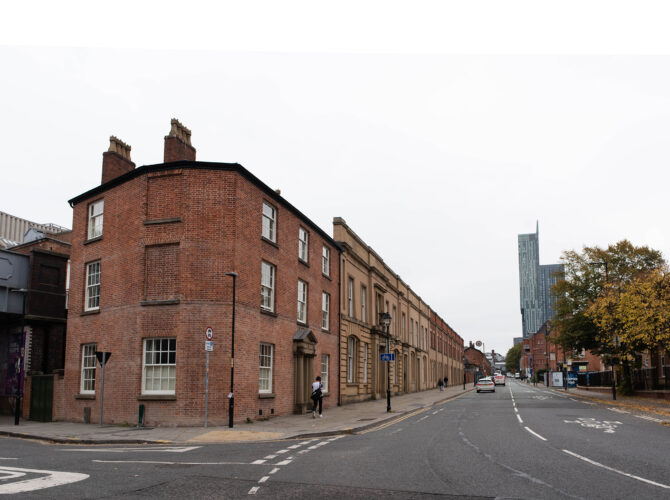
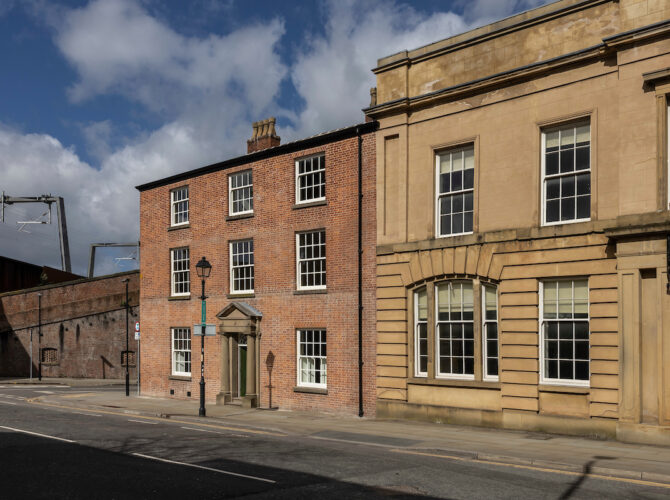
Stand across Liverpool Road to take in the long row of early railway buildings that once welcomed passengers arriving from Liverpool. The restrained red-brick façade, regular sash windows and simple stone detailing reflect the Georgian style chosen to make the unfamiliar railway feel at home in the city.
Look for the “1830 STATION” sign on the corner of the building, a modern reminder of the site’s remarkable place in railway history.
The station master’s house, set slightly apart within the row, still resembles a Georgian townhouse, with its raised entrance, symmetrical façade and classical stonework. Above the former first-class entrance, you can also spot the stone pedestal that once supported a sundial. The dial itself is now displayed inside the museum.
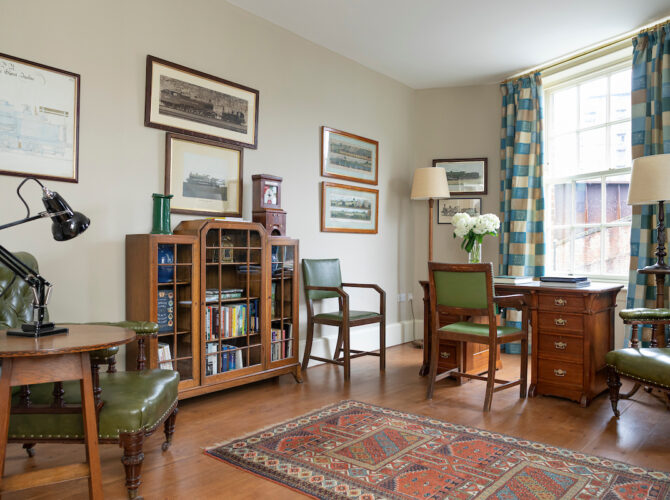
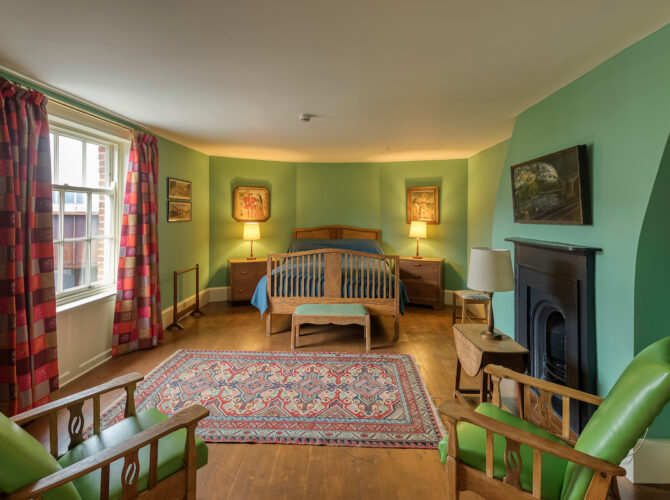
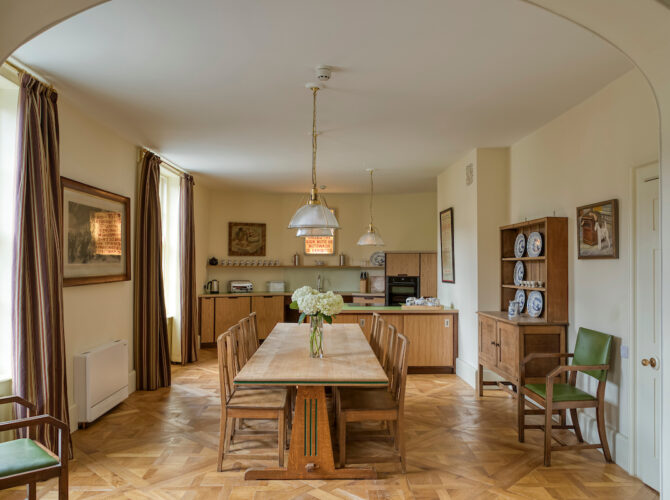
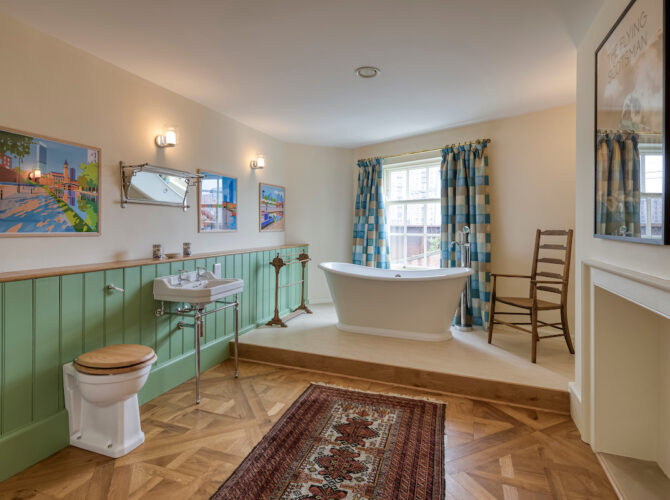
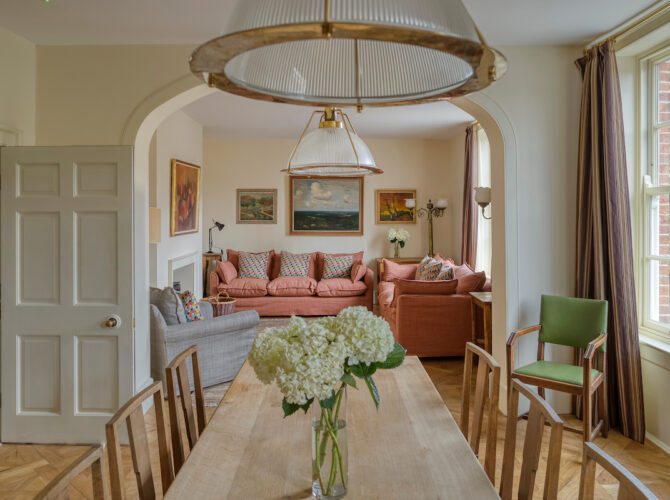
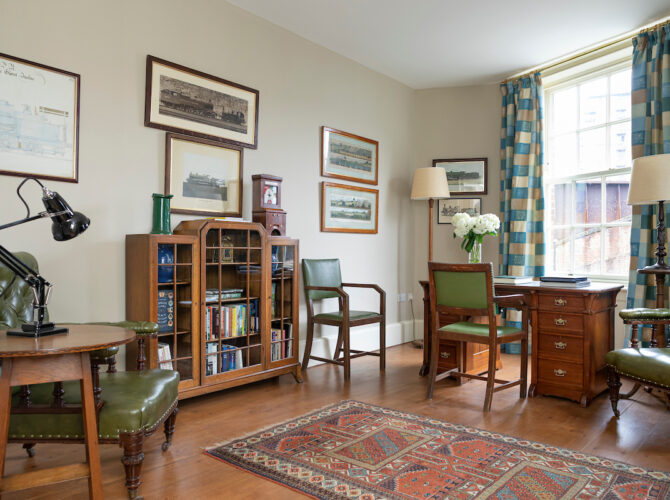
Inside the house, several rooms have been carefully restored and furnished to show how a senior railway official might have lived in the early Victorian period. Visitors can explore spaces including a formal dining room, comfortable parlours, a study lined with books and railway prints, and private bedrooms.
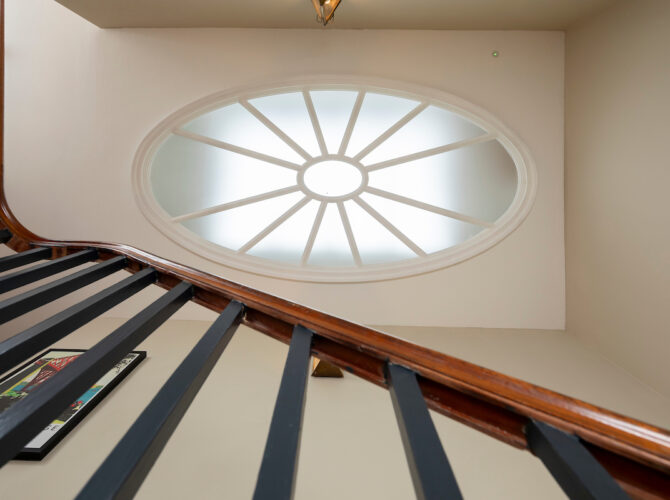
Architectural details inside are worth noticing too: arched openings between rooms, polished wooden floors, a sweeping staircase and an oval skylight above the stairwell that brings light down through the house.
Behind the street frontage, parts of the original railway infrastructure survive within the museum site, including early platform areas and goods warehouses, offering a rare glimpse into the very beginnings of railway travel.
This content is adapted from:
https://historicengland.org.uk/listing/the-list/
https://www.scienceandindustrymuseum.org.uk