Under the great glass roof.
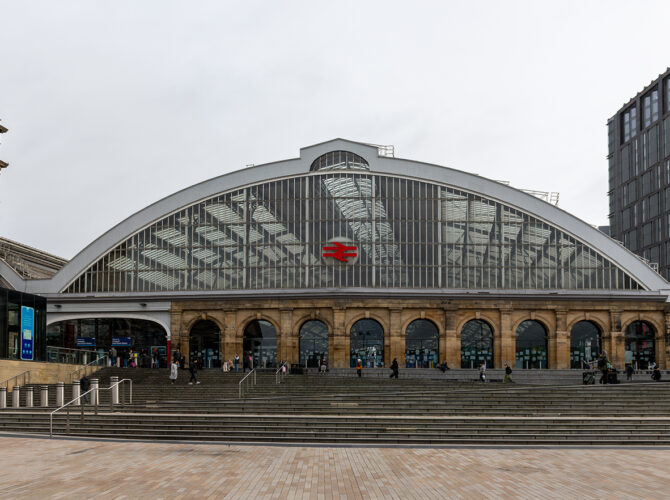
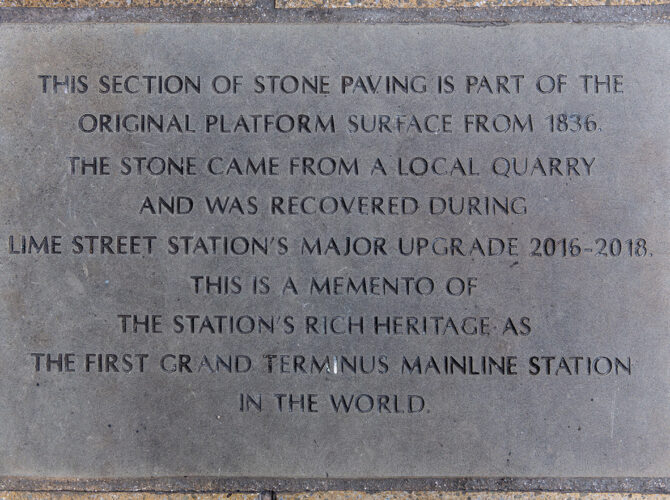
Lime Street Station is Liverpool’s grand railway terminus and one of the most recognisable stations in Britain. Standing at the eastern edge of the city centre, it has welcomed travellers since 1836 when it replaced the earlier Crown Street terminus.
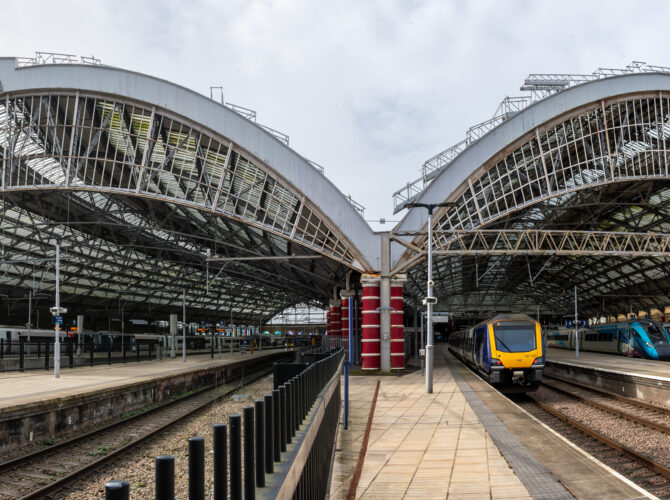
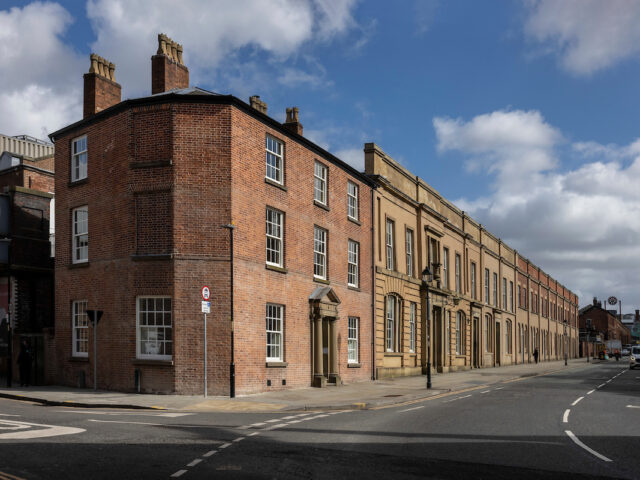
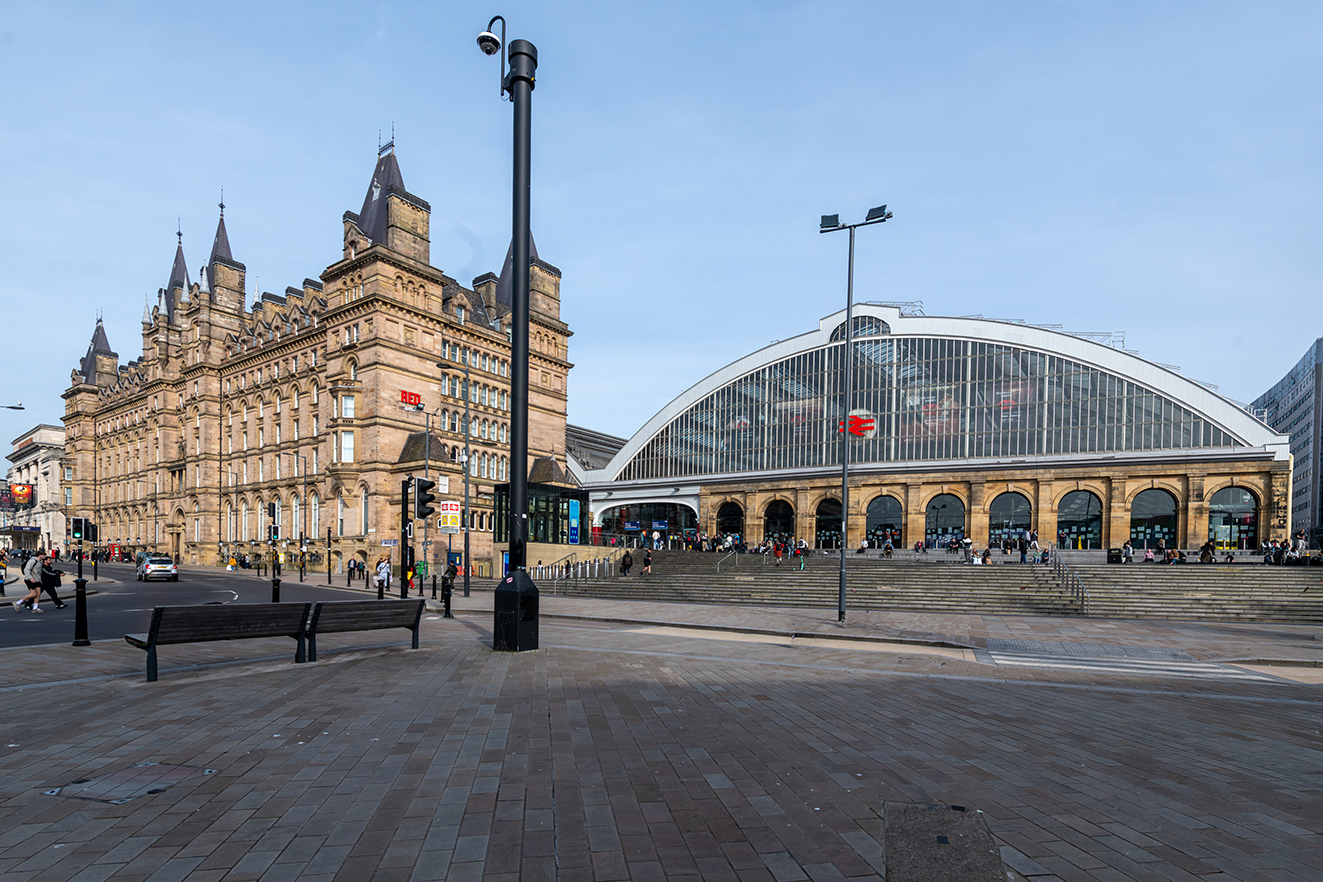
Today the station is dominated by its vast arched train shed, built in 1879, with sweeping glass and iron spans that cover the platforms below. Outside, the imposing sandstone frontage and broad steps would have greeted Victorian travellers with a sense of arrival. For many visitors stepping off a train, this grand entrance formed their first impression of Liverpool.
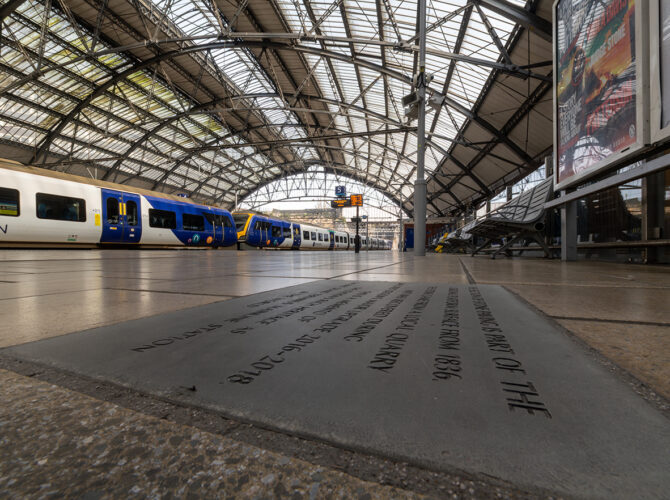
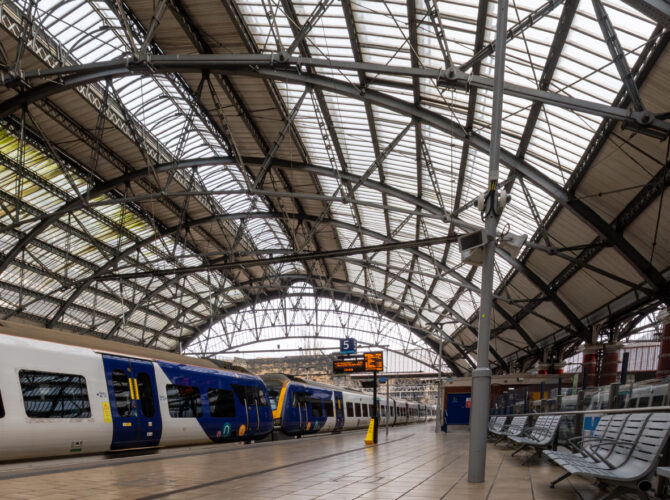
Step inside and the great iron and glass roof sweeps high above the platforms, its lattice of girders and glazing still echoing the ambition of Victorian railway engineering.
Why it matters
Lime Street was built when the original Crown Street Station quickly proved too small for the growing railway. Opening in 1836, it became one of the earliest purpose-built main line city centre stations in the world.
Its expansion in the late 19th century produced the great arched roof that still defines the station today. At the time it was one of the largest train sheds ever constructed. The lofty design wasn’t just for show. In the days of steam it helped lift smoke and soot away from passengers waiting below, while the vast roof also protected platforms and travellers from the weather.
Over time the station became Liverpool’s main gateway to the national railway network and remains a major hub nearly two centuries later.