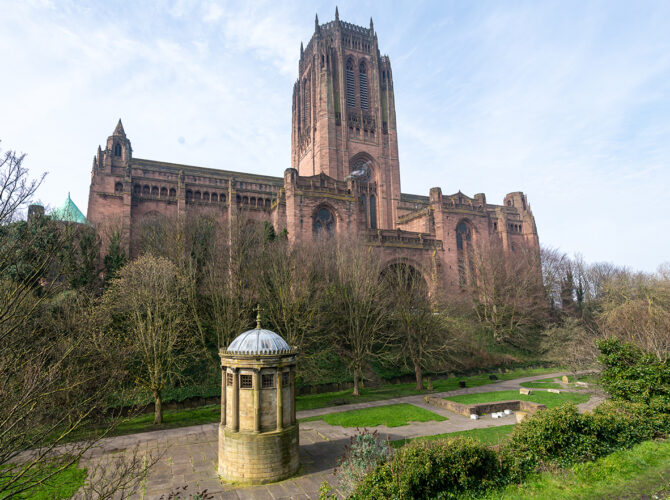
The monument to a railway tragedy.
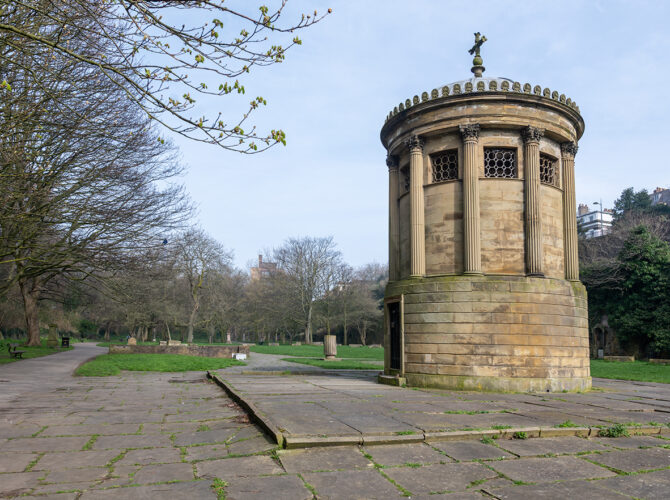
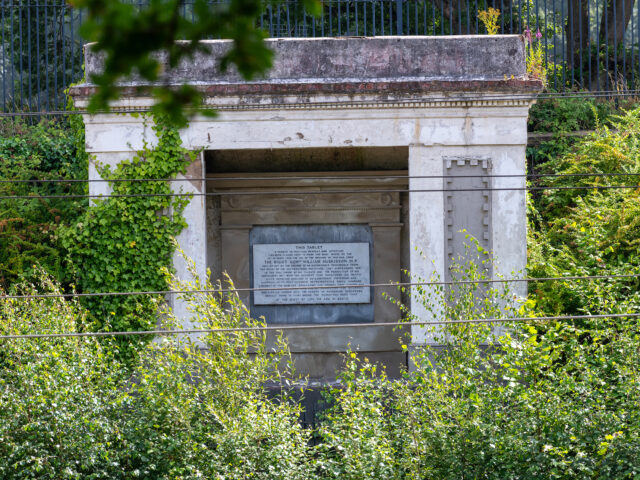
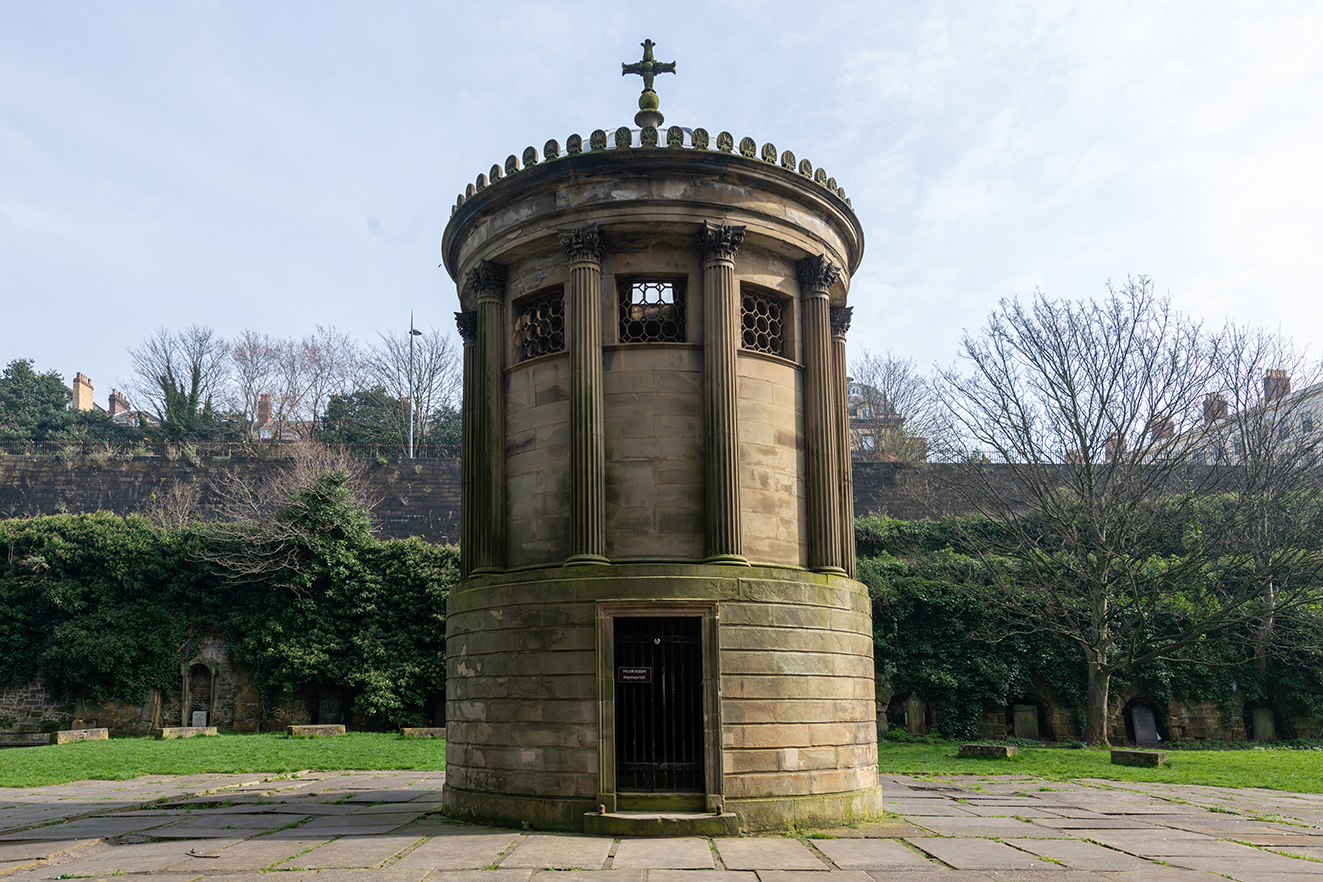
Standing in the quiet surroundings of St James Cemetery is the Huskisson Memorial, a circular stone monument built to commemorate William Huskisson. Huskisson was the Member of Parliament for Liverpool and one of the most prominent political figures associated with the early railway era.
The monument is a striking classical structure. It is built in sandstone and shaped like a small round temple, with tall columns surrounding the upper section and decorative stonework around the roofline. A cross sits at the top, giving the structure the appearance of both a memorial and a chapel.
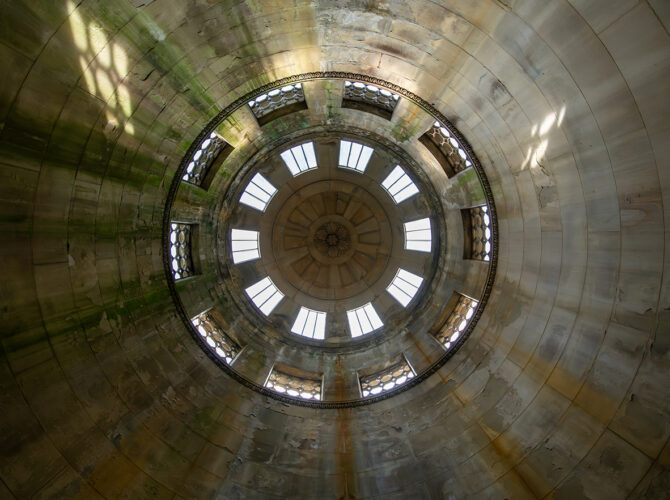
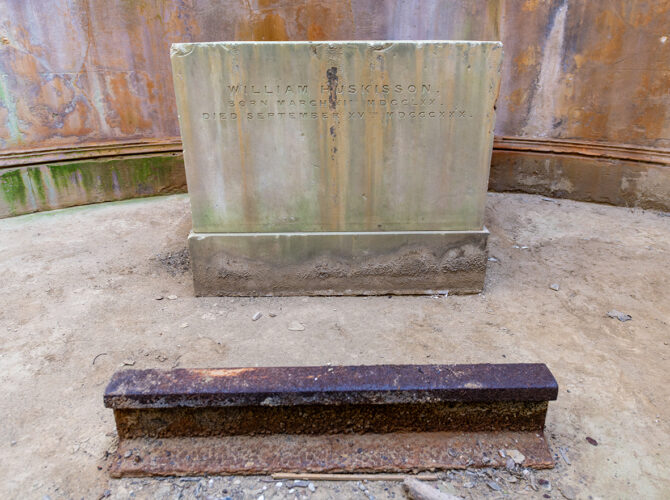
Inside the monument lies the tomb of William Huskisson, whose death became one of the most famous and tragic moments in railway history.
Why does it matter?
William Huskisson was the first widely recorded passenger to die in a railway accident. On 15 September 1830 he was struck by George Stephenson’s locomotive Rocket during the opening ceremony of the Liverpool and Manchester Railway.
The accident happened at Parkside while dignitaries were travelling along the new railway. Huskisson had stepped onto the track to greet the Duke of Wellington when the approaching locomotive struck him. He was taken by train to Eccles in what became one of the earliest recorded emergency rail journeys, but he later died from his injuries.
His death shocked the public and quickly became one of the most talked about events connected with the opening of the railway. The memorial at St James Cemetery was built soon afterwards to honour hi