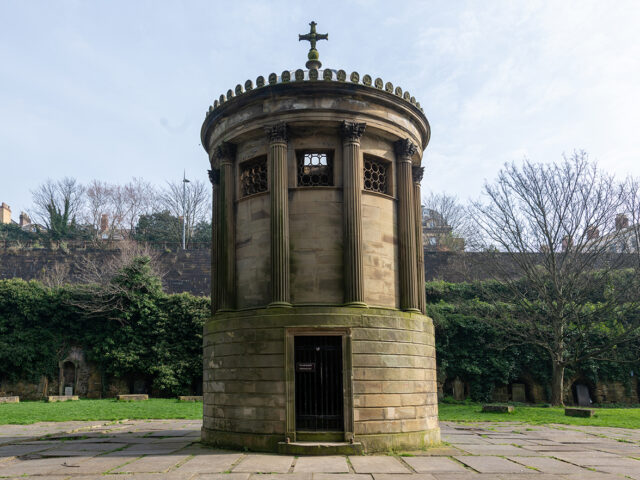
Interesting stories.
Huskisson’s death was unusual for the time mainly because of his political standing. It didn’t dent investor confidence or keep the public away, if anything, it added a morbid curiosity that drew more people to try the new railway. Fatal accidents had happened long before, such as the death of James Pattison in Scotland in 1765, and the Middleton Railway in Leeds had already seen both the first engine driver and the first member of the public killed by a locomotive.
What to look out for…
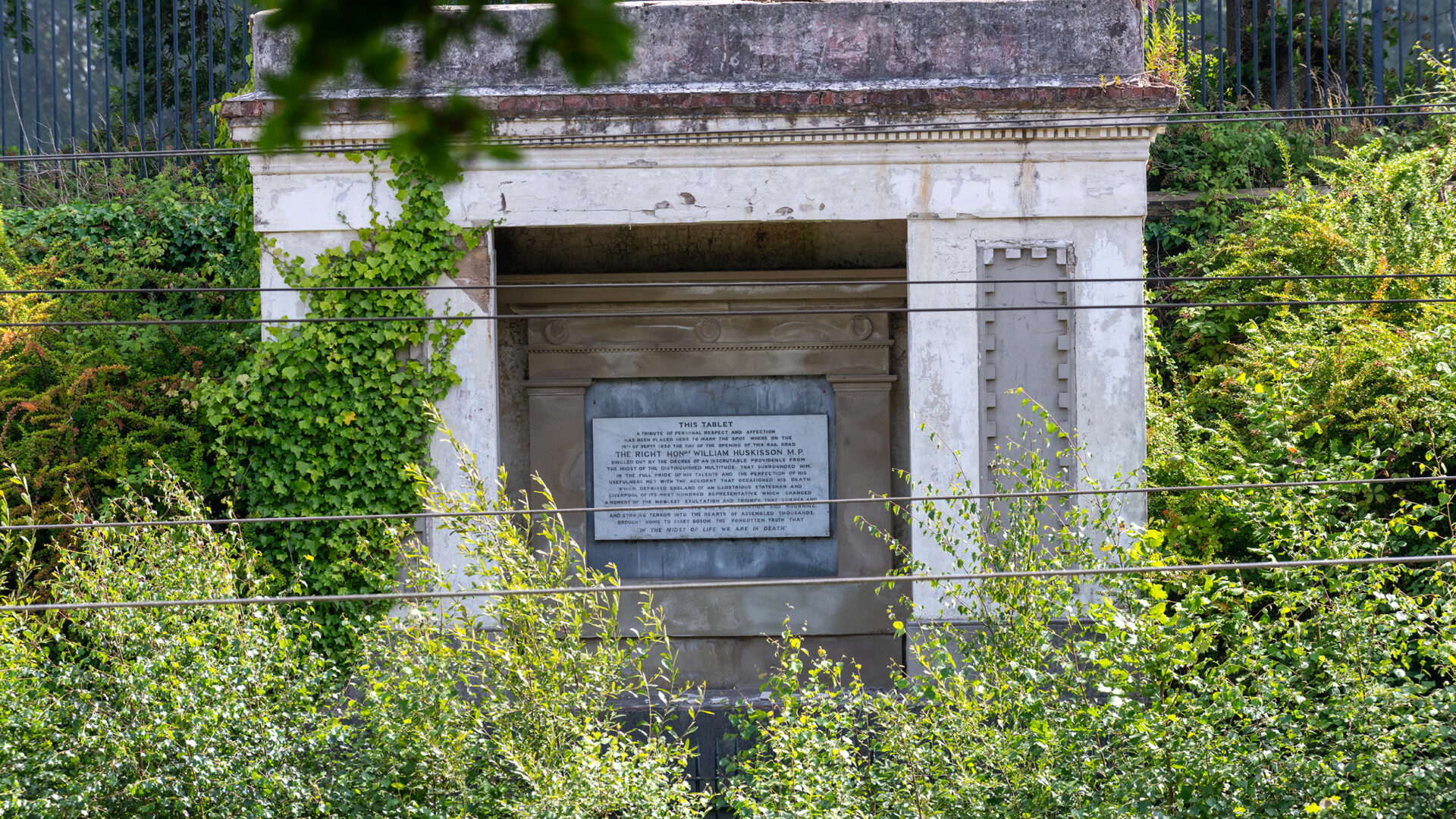
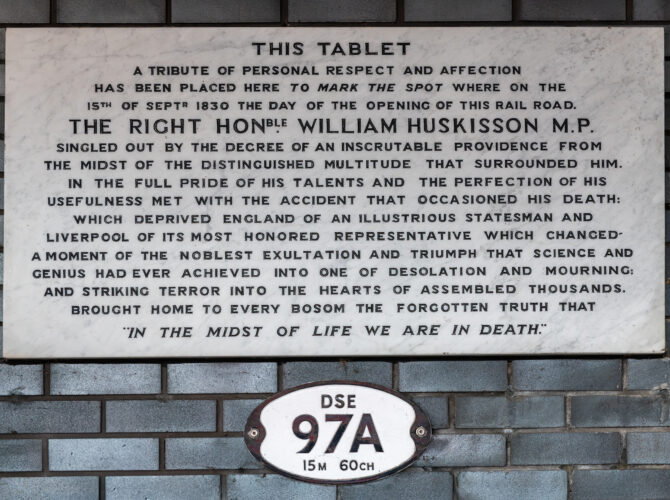
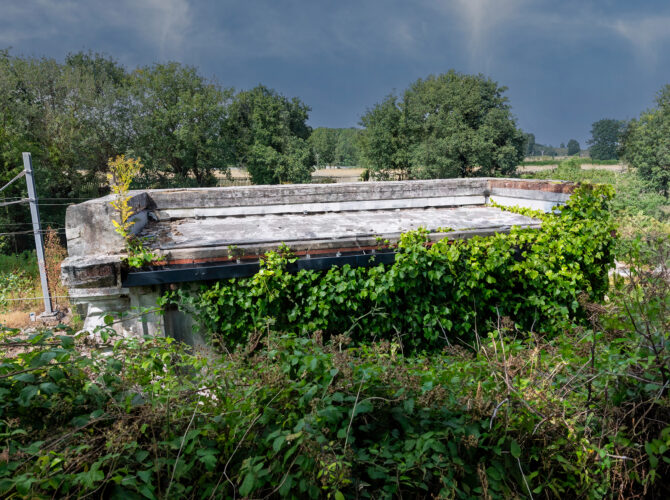
Though there’s no public access, you can glimpse the Huskisson Memorial from passing trains. Framed by ivy and vegetation, the structure resembles a classical temple front, complete with pillars, a heavy cornice and a recessed stone plaque. The inscription commemorates William Huskisson, the first person to be killed by a passenger train. Tucked into the cutting wall, it stands as a poignant and surprisingly grand monument to a moment that marked both tragedy and the dawn of a new transport age.
This content is adapted from:
https://historicengland.org.uk/listing/the-list/
https://en.wikipedia.org/wiki/William_Huskisson