Where the railway carved its path
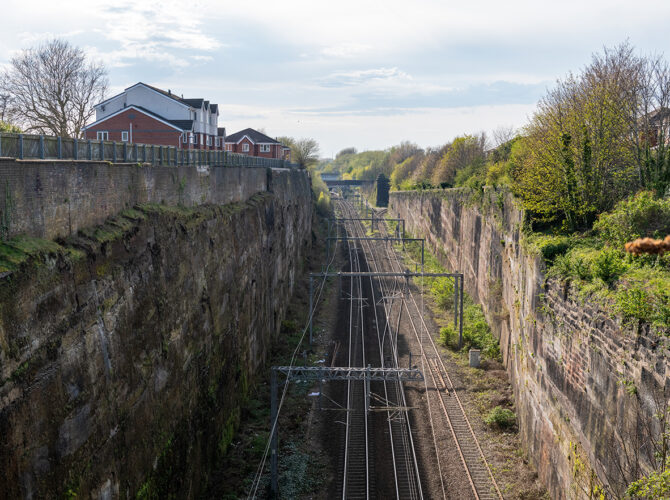
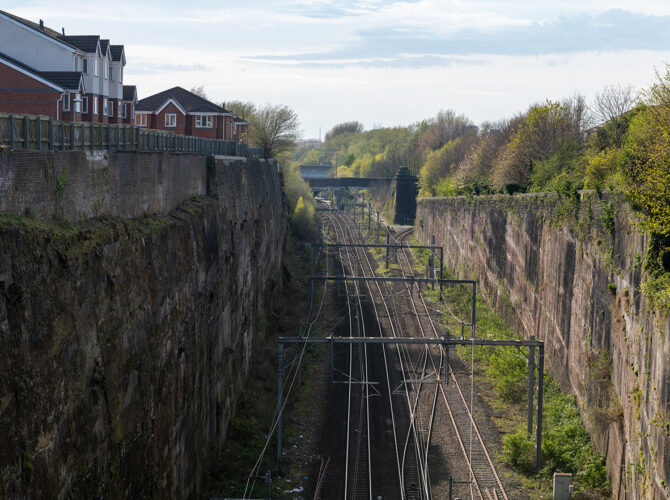
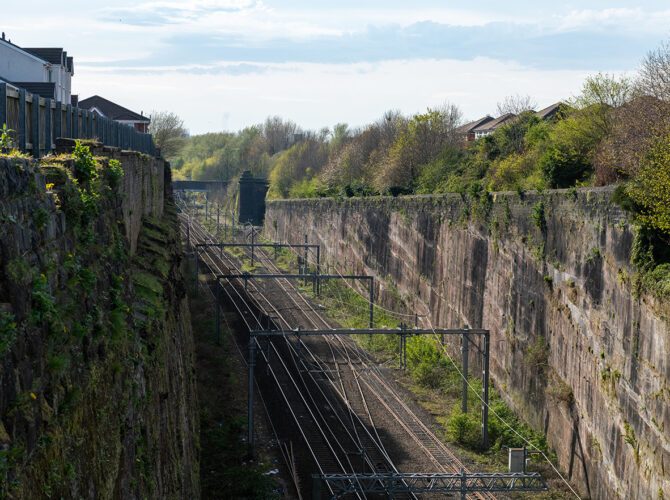
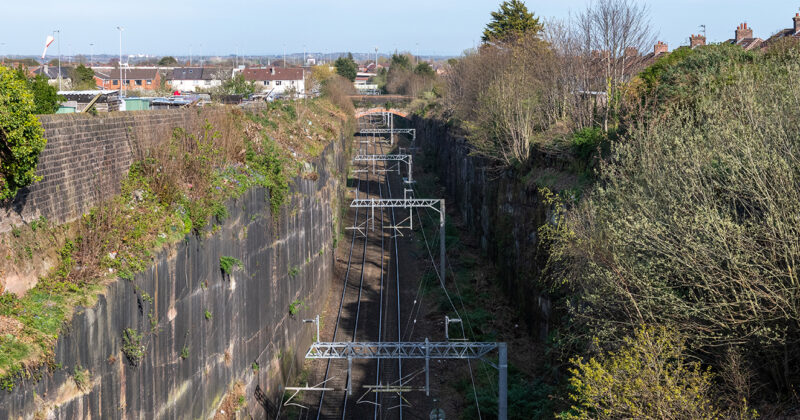
Stretching for over two miles between Rathbone Road in Wavertree and Broadgreen Station, the Olive Mount Cutting is one of the most dramatic features along the line. Cut through solid sandstone, it reaches depths of around 70 feet at points such as Mill Lane.
When first completed around 1830, the cutting was much narrower, only about 20 feet wide. Today it is far broader, carrying multiple tracks, but the scale of the original excavation is still clear, especially where the rock faces rise steeply on either side.
Why it matters
The Olive Mount Cutting was one of the earliest large rock cuttings constructed for a railway. It demonstrated that engineers could carve a direct route through high ground rather than diverting around it, helping to maintain the gentle gradients needed for early locomotives.
The excavation produced vast quantities of sandstone, which were reused elsewhere along the railway, including in the construction of embankments such as Roby.
As traffic increased, the line was widened under the London and North Western Railway to accommodate four tracks. The cutting was enlarged rather than replaced, with the north side cut back in stages. This has left a visible contrast between the earlier and later engineering.