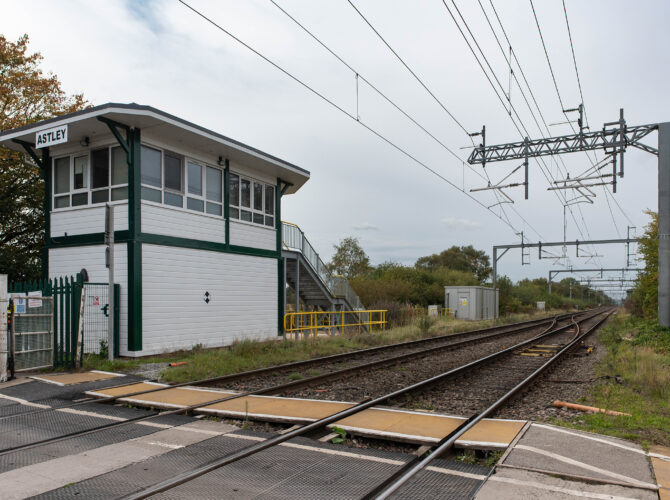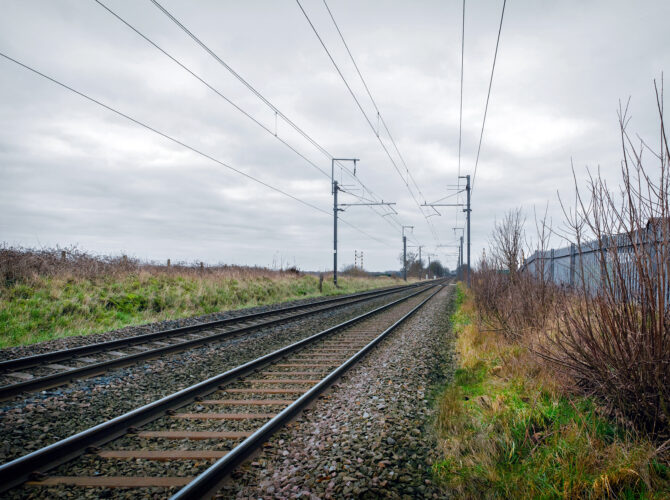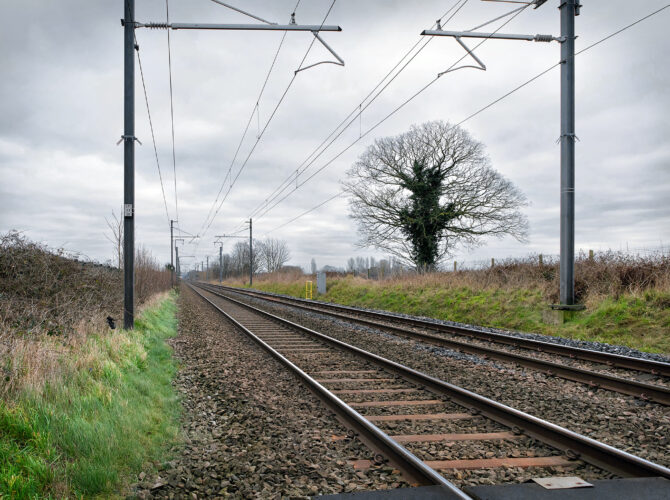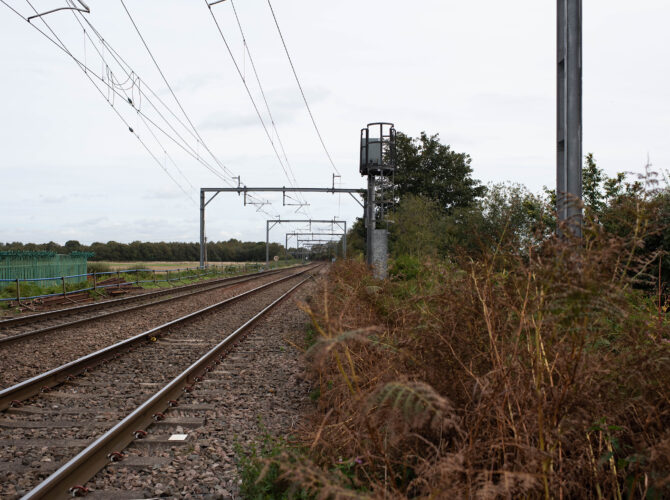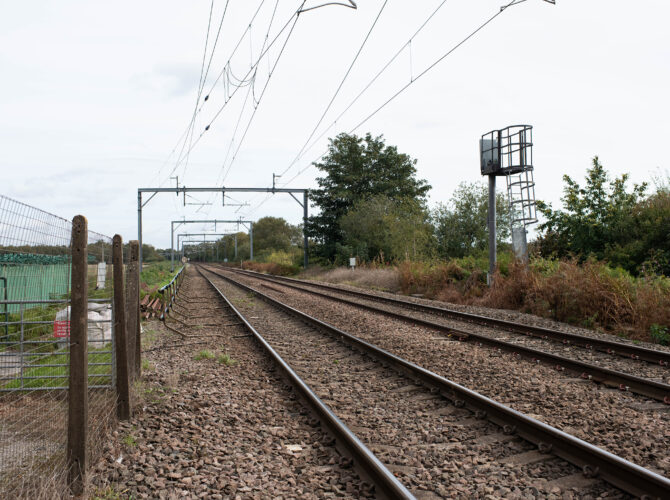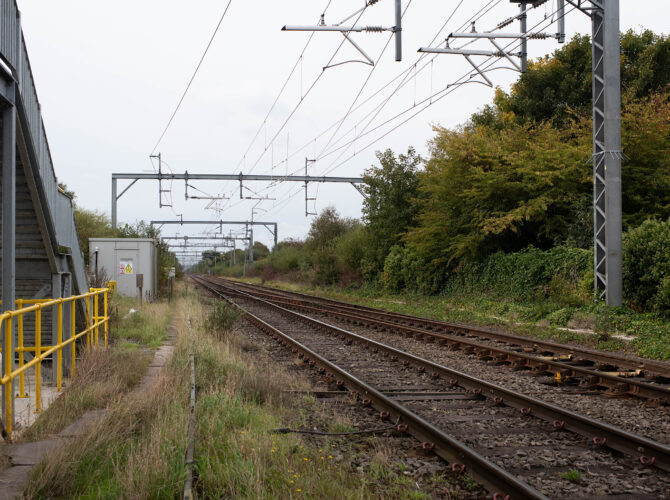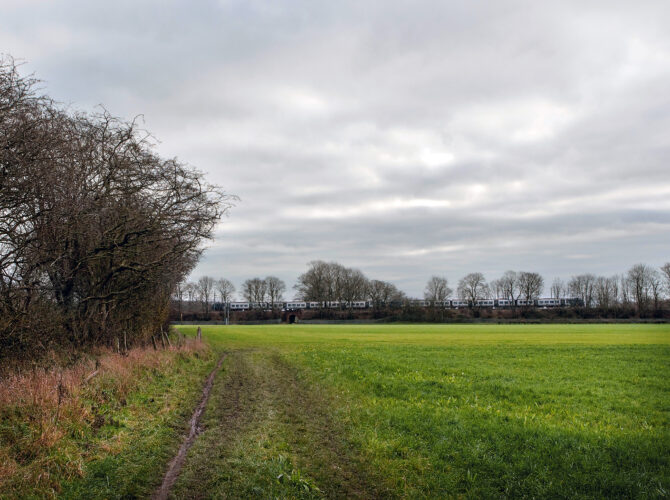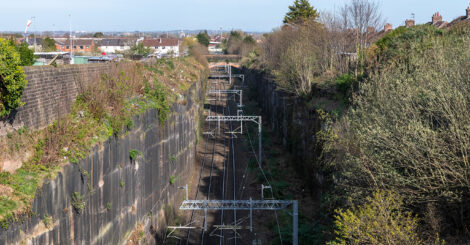
A railway across one of England’s boggiest landscapes.
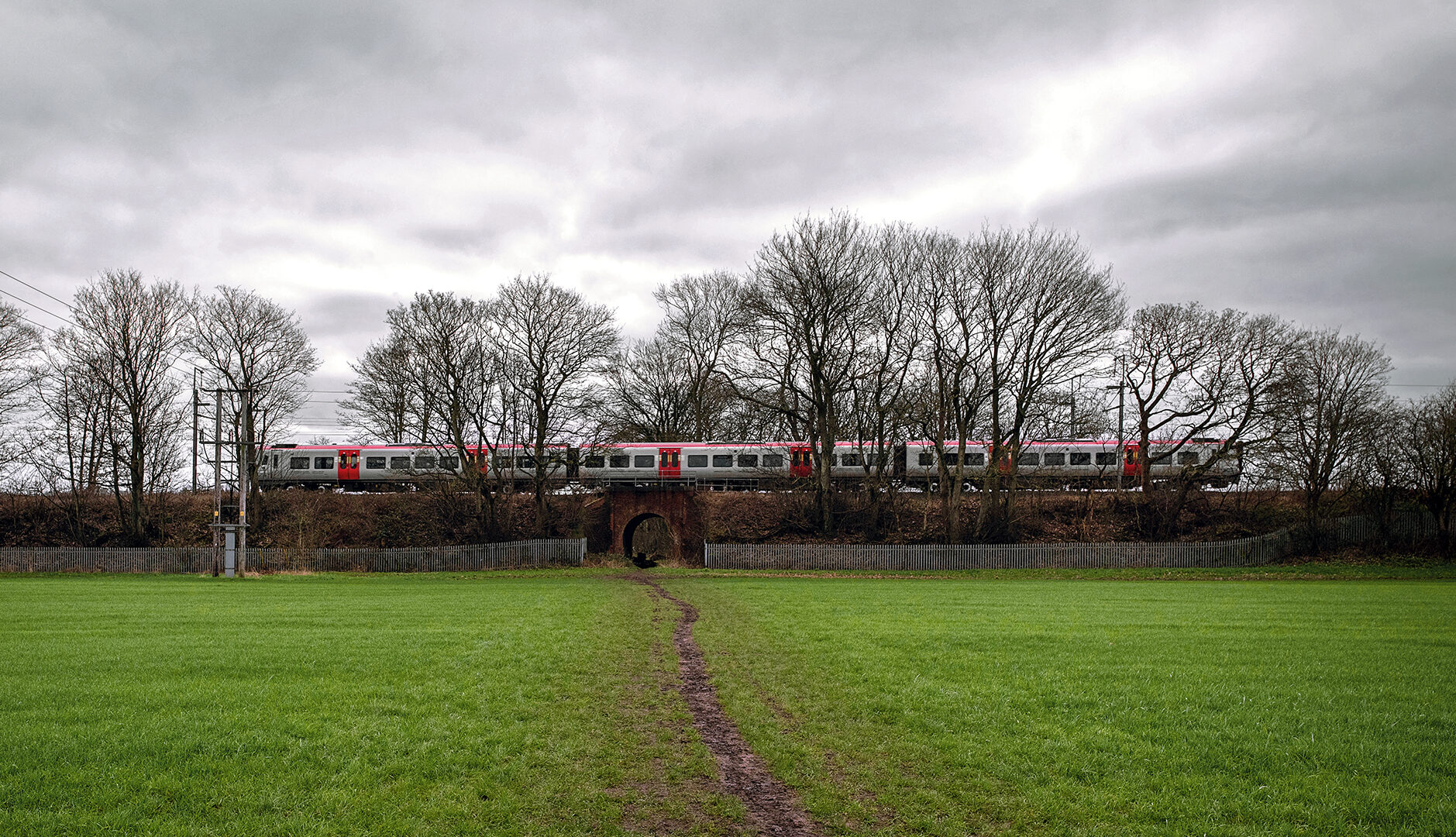
The Chat Moss Causeway is the remarkable stretch of railway that carries the Liverpool and Manchester line across Chat Moss. At the time the railway was built, this area was a vast peat bog lying between the two cities. In the late 1820s it was widely considered almost impossible to cross. The ground was soft and wet, making it one of the greatest challenges faced by the engineers constructing the line.
To solve the problem, George Stephenson and his team created what is effectively a floating trackbed. Layers of brushwood, timber and other materials were laid across the bog to spread the weight of the railway, forming a stable base for the tracks. The line still follows this route today, gliding across land that once seemed impassable.
Why it matters
Crossing Chat Moss was one of the greatest engineering challenges of the Liverpool and Manchester Railway. Many critics believed it could not be done. Some engineers predicted the railway would simply sink into the bog.
Stephenson’s solution proved them wrong.
The success of the causeway showed that railways could cross landscapes once thought impossible and helped build confidence in railway engineering. It became one of the most celebrated achievements of the early railway age.