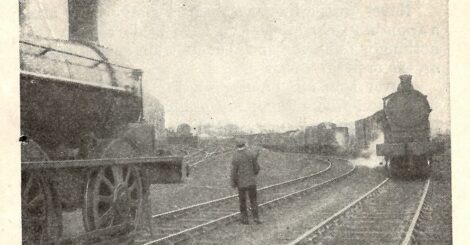
In the late 19th century, as railways transformed Britain, connected cities, moved people and reshaped everyday life, they also helped give rise to new communities and shared pastimes. Among these was football. Railway companies employed thousands of workers, many of whom formed teams to play against colleagues from other departments and neighbouring firms. The railway did not just move the game, it helped create it.
In 1878, one such team was formed at the Lancashire and Yorkshire Railway depot at Newton Heath. Known as Newton Heath LYR Football Club, the team was made up of workers from the Carriage and Wagon department. Wearing the railway’s colours of green and gold, they initially played matches against other railway teams. Their first recorded game, on 20 November 1880, ended in a 6–0 defeat to Bolton Wanderers’ reserves, but the foundations had been laid.
As both football and the railway network expanded, so too did the club. By 1888, Newton Heath had become a founding member of a regional league known as The Combination. Although short lived, it marked the club’s transition into organised competition. They later joined the Football Alliance, and when that league merged with the Football League in 1892, Newton Heath entered the First Division, by now having severed formal ties with the railway and dropped the LYR from their name.
Success was not immediate. After two seasons, the club was relegated, and by the turn of the century financial troubles threatened its very existence. In 1902, facing debts that could have ended the club, captain Harry Stafford helped secure investment from local businessmen. In return, the club was reformed, and on 24 April 1902, Manchester United was officially born.
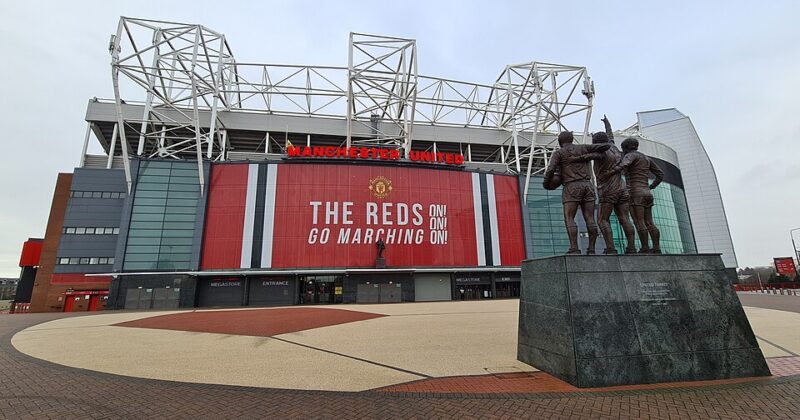
Under manager Ernest Mangnall, appointed in 1903, fortunes began to change. Promotion to the First Division came in 1906, followed by the club’s first league title in 1908. Success continued with victory in the inaugural Charity Shield and an FA Cup win soon after. Mangnall also oversaw the move to Old Trafford in 1910, a step that reflected the club’s growing ambition and status.
By 1911, Manchester United had secured a second league title, firmly establishing itself as one of the leading clubs in English football.
(This content is adapted from the Wikipedia article Manchester United F.C. (https://en.wikipedia.org/wiki/Manchester_United_F.C.), licensed under CC BY-SA.)