
Growing up in China, my first encounter with the Liverpool and Manchester Railway wasn’t at a station, but in a school textbook. It felt distant then, a simple fact about the world’s first railway. Years later, living in Manchester, that history became real. Through the Rocket: All Aboard project, I’ve come to see how this local innovation shaped not just the North West England, but global transport including in my own country.
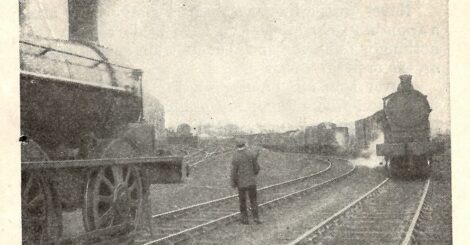
When the railway opened in 1830, it marked a turning point. Before this, travel was slow and uncertain, relying on horses or canals. The line between Liverpool and Manchester introduced something entirely new: steam-powered passenger travel, fixed timetables, and purpose-built stations. It didn’t just move people faster—it changed how time, distance, and daily life were understood.
By linking two major cities, the railway reshaped economies and communities. Goods, people, and ideas moved more freely, and society began to organise itself around schedules rather than daylight. Railways became more than transport, they became a force that reshaped how people lived and worked.
Today, rail travel is an essential part of life in China. In 2024 alone, billions of journeys were made across an extensive network. While Britain’s railways connected existing cities, China’s high-speed rail has often led development, creating new urban connections at scale. Yet despite these differences, there is a direct link back to the early railways of the North West.
That link is the track itself. The standard gauge first used by George Stephenson—1,435 mm—remains in use today. When I travel by high-speed train in China, I am still, in a sense, travelling along the same dimensions first laid nearly two centuries ago between Liverpool and Manchester.
This is the lasting power of railway history. It is not something fixed in the past, but a living legacy that continues to shape how we move, connect, and build communities. Projects like Rocket: All Aboard show how heritage can inform more sustainable futures.
History connects us in unexpected ways. The next time you take a train, remember: this global journey began here in the North West.