Interesting stories?
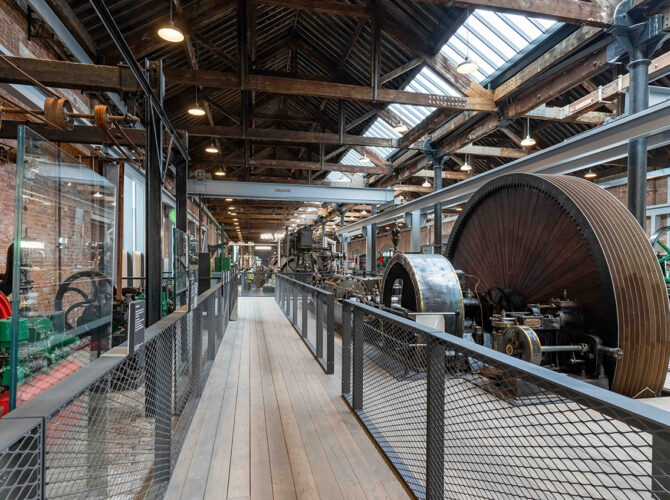
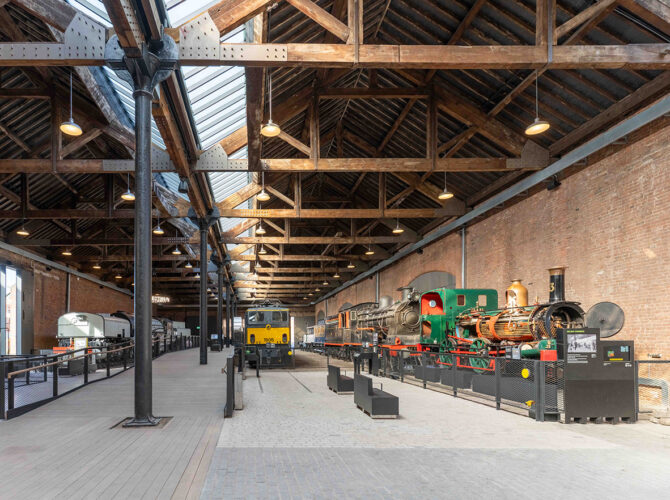
The Power Hall first opened to the public in 1983 when heritage enthusiasts transformed the former shipping shed into a working gallery of engines. Visitors were treated to the sights, sounds and smells of industrial power as pistons pumped and steam hissed.
After decades of thrilling audiences the hall closed in 2019 for essential roof and structure repairs and a pioneering decarbonisation programme that reduced its environmental impact. Funding from heritage and public bodies enabled careful restoration that respects both its industrial origins and its future role as an inspiring space for learning.
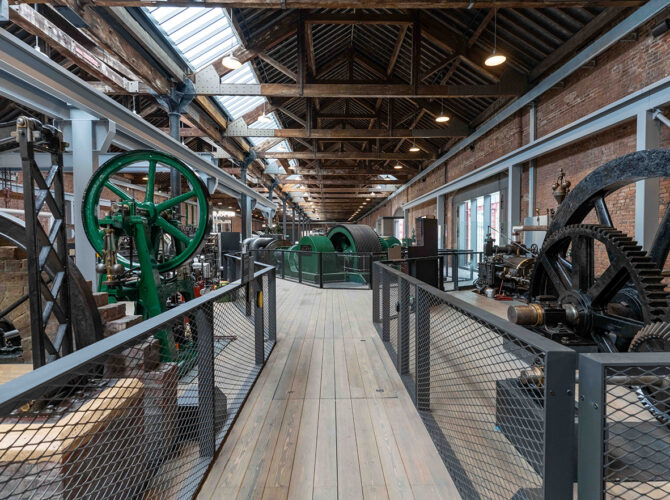
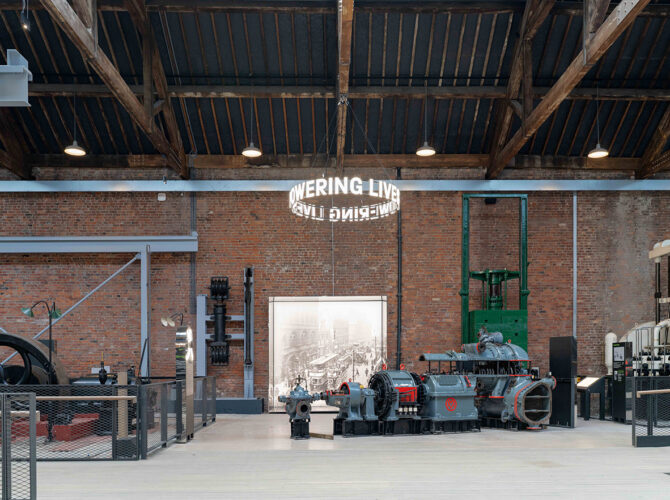
Inside you will find engines that once powered mills, factories and railways, each with a story about how people harnessed energy to change work, transport and everyday life.
What to look out for…
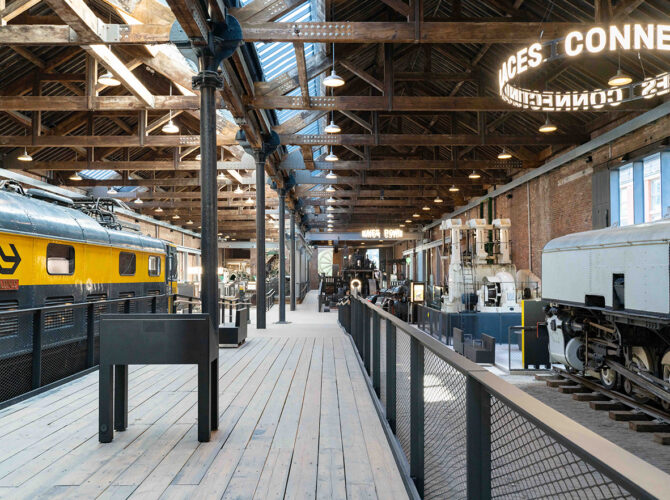
Look up at the rows of timber roof trusses that span the length of the hall. These striking structural members create two linear galleries and reflect the building’s original role as a goods shed.
Take time to notice the large open floor space, reinstated in recent restoration, which allows you to see engines like steam locomotives and mill engines close up.
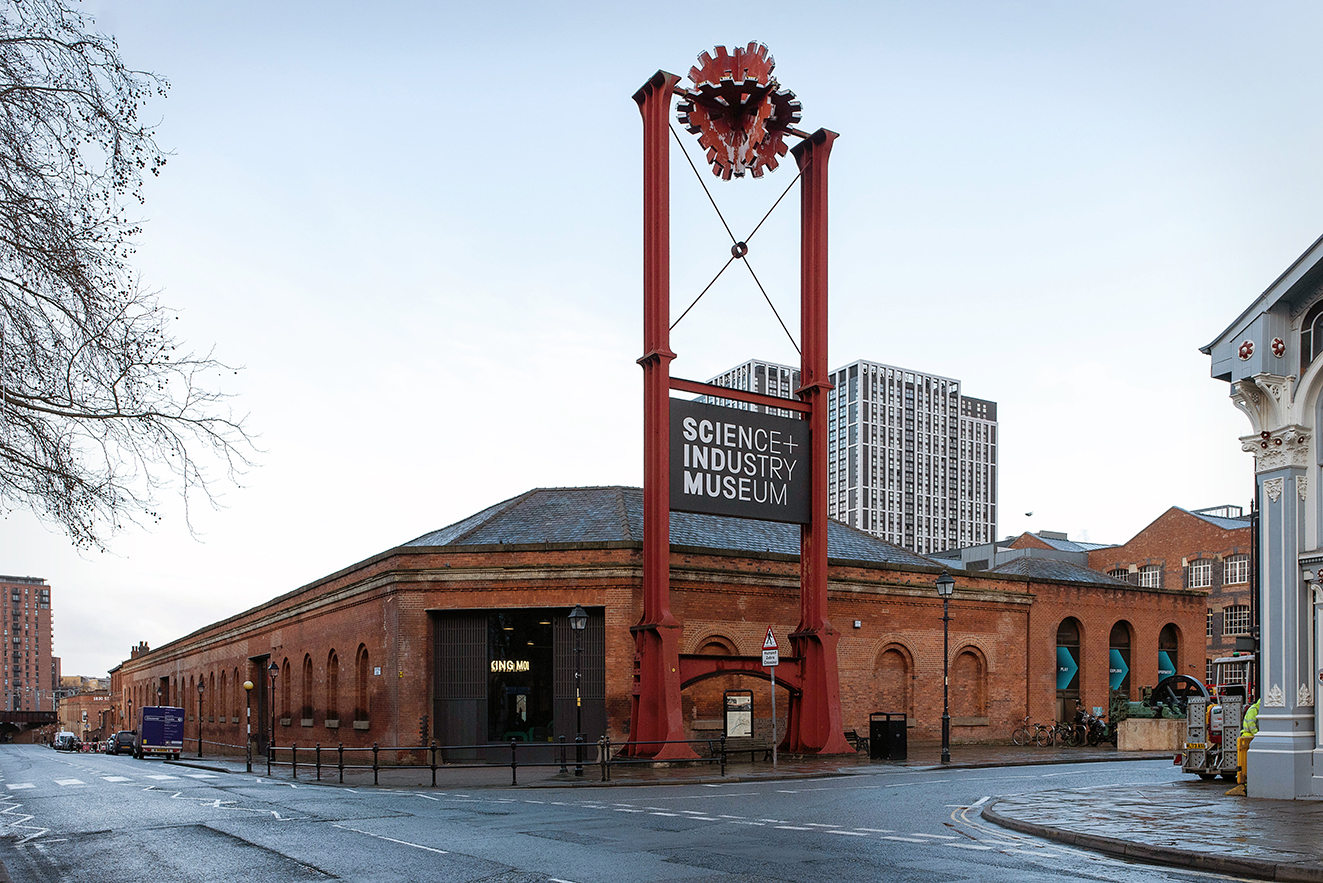
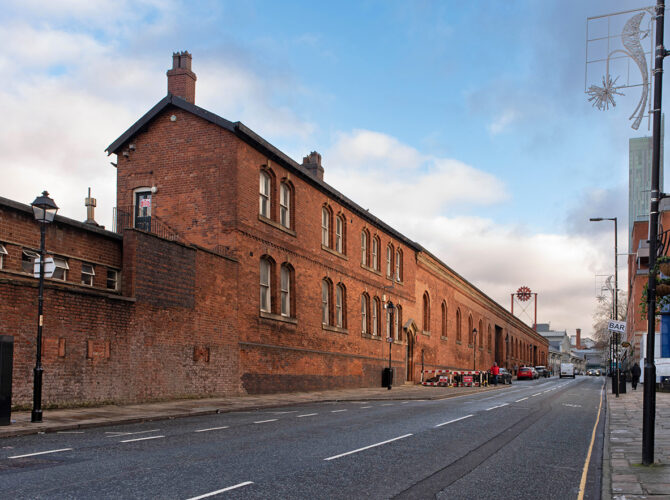
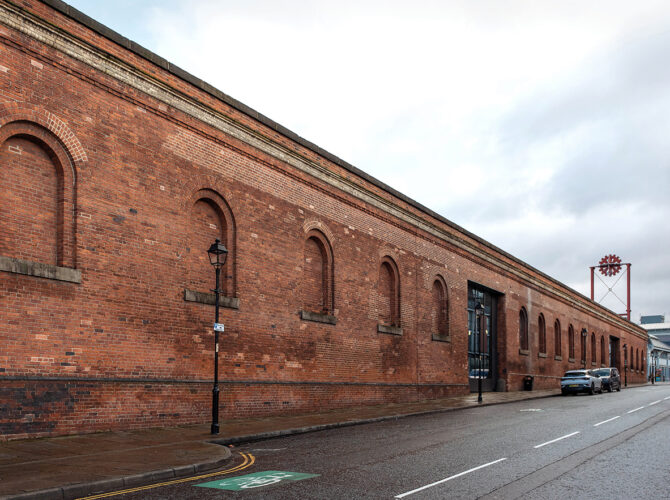
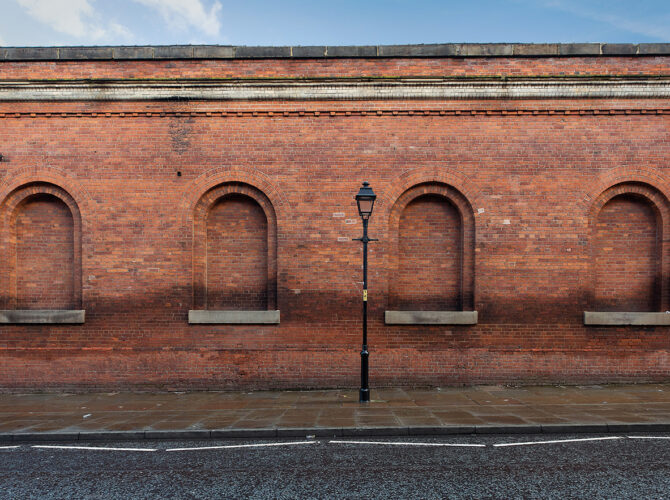
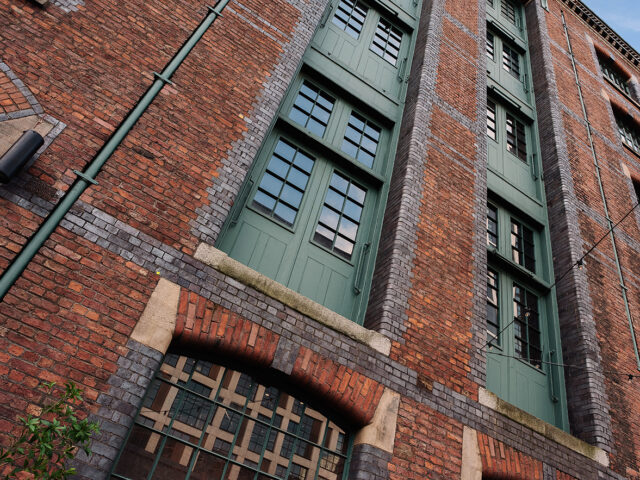
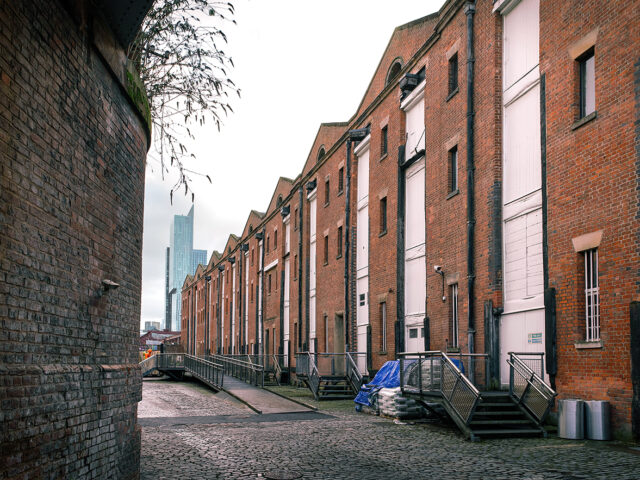
Step outside and admire the Power Hall’s long red brick frontage, stretching parallel to Liverpool Road. It has a hipped slate roof and decorative sandstone dressings. The wide splayed corner leads onto Lower Byrom Street, forming a striking visual link between the two sides.
You’ll spot large round-headed blind windows with stepped surrounds and raised stone sills, set between former wagon entrances. These tall, square-headed doorways were once used to bring wagons straight into the building and still have stone fenders at their base. The original timber sliding doors are gone but the openings are now glazed.
Look out for the brick frieze running along the top, with a simplified corbel table, a band of white brick beneath and a stone-capped parapet. These thoughtful details give the Power Hall its distinct mix of function and grace, a quiet reminder of Manchester’s industrial might.
This content is adapted from:
https://www.scienceandindustrymuseum.org.uk
https://historicengland.org.uk/listing/the-list/