Salford

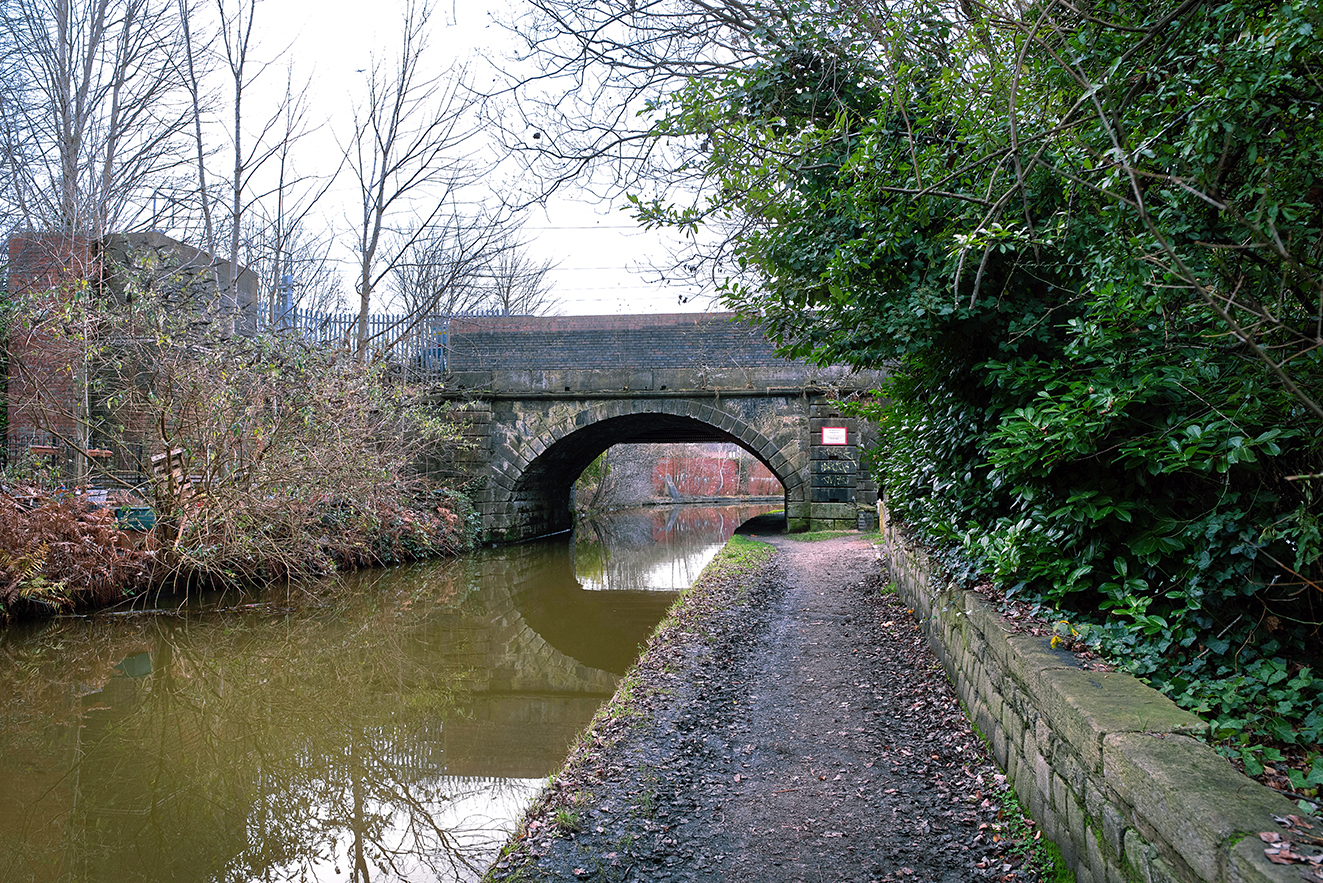
Canal (Duke’s) Bridge

Calm canal water reflecting the curved stone arch and surrounding greenery.
© Manchester Histories

A meeting point of transport.

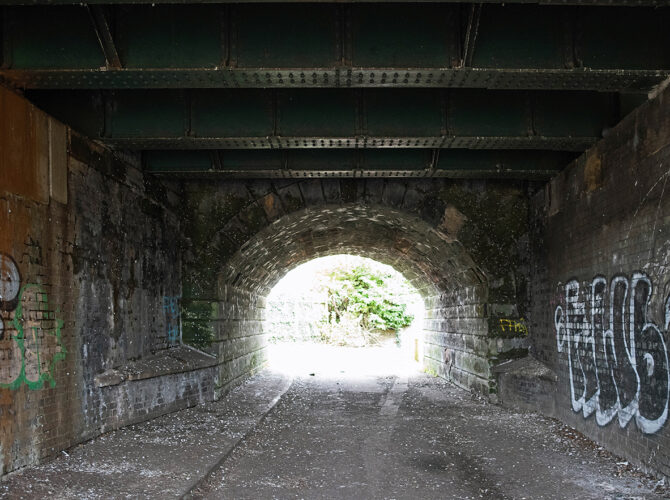
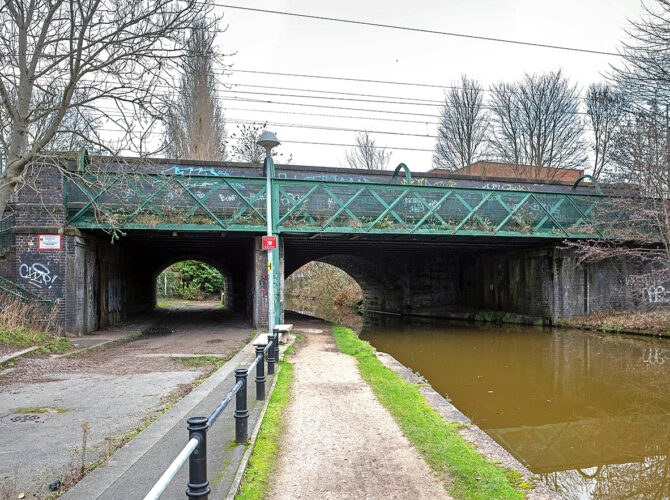
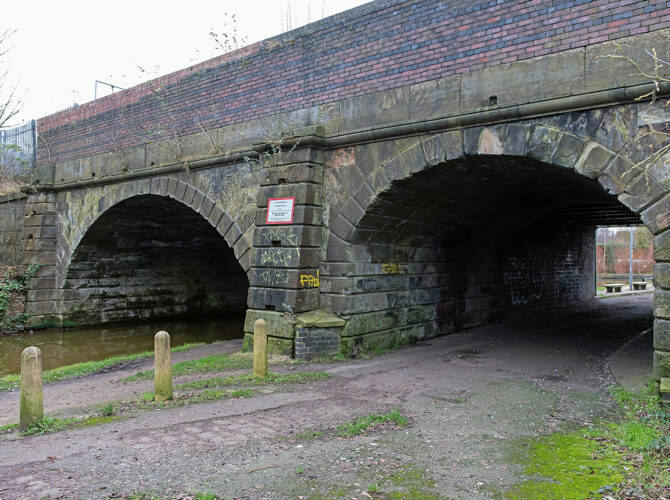
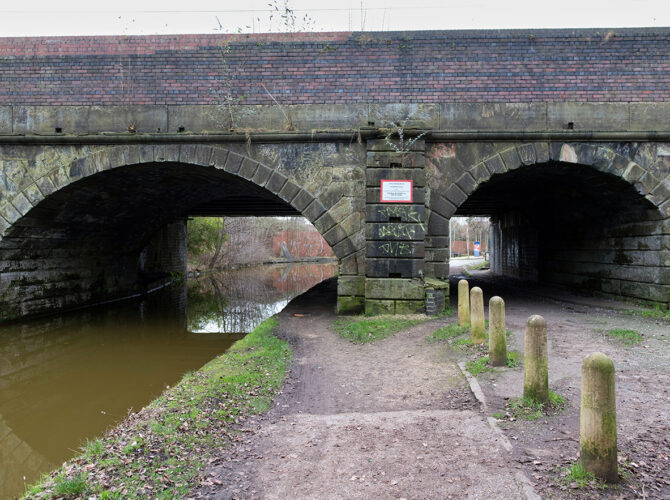
This is the bridge that carries the railway across the Bridgewater Canal at Patricroft. Known locally as Canal Bridge or Duke’s Bridge, it links two of the most important transport systems of the Industrial Revolution. Just east of Patricroft Station, the bridge features two large arches, one over the towpath and one over the canal itself, with later ironwork added to carry extra tracks.

Why it matters

The Bridgewater Canal changed everything when it opened in 1761. It was the first of its kind and made it possible to move coal cheaply from the Duke of Bridgewater’s mines to Manchester. Seventy years later the railway arrived, crossing the canal at this very point. The bridge stands at a place where two transport revolutions crossed paths. It’s a rare chance to see how one era of innovation gave way to another and how both continued to shape the landscape for generations.
Interesting stories?

At one time this would have been a noisy place full of movement. Canal boats moved slowly below while steam trains rattled overhead. The Bridgewater Foundry stood nearby, where James Nasmyth and his team built steam hammers and locomotives. It’s likely that many of the engines crossing this bridge were made just down the road. The bridge was later widened and strengthened to take more traffic but the original arches still carry trains today.

What to look out for…

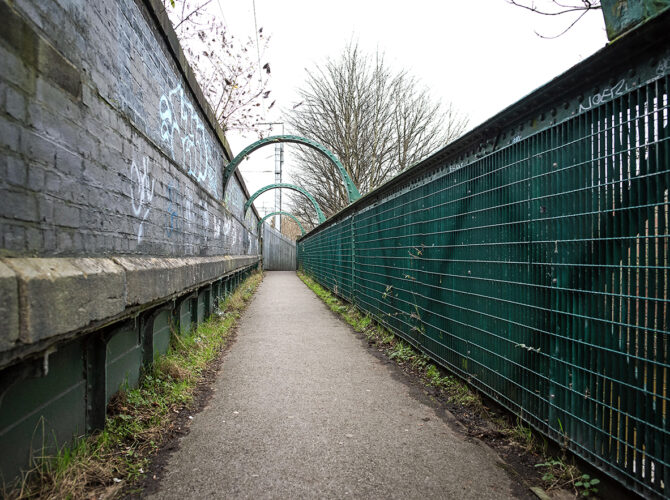
Walk along the canal towpath and look up to see history in layers. The curved sandstone arches are part of the original design from the 1830s. Above and beside them are the later iron girders added as the railway grew busier. The green-painted iron parapets and hoop-like supports over the footpath are a distinctive feature. You can also spot the contrast in brickwork where the structure was expanded. This bridge isn’t just a crossing point, it’s a snapshot of nearly 200 years of transport history.

This content is adapted from:
https://historicengland.org.uk/listing/the-list/

Explore related content