Warrington

Bury Lane Bridge & Bury Lane Station

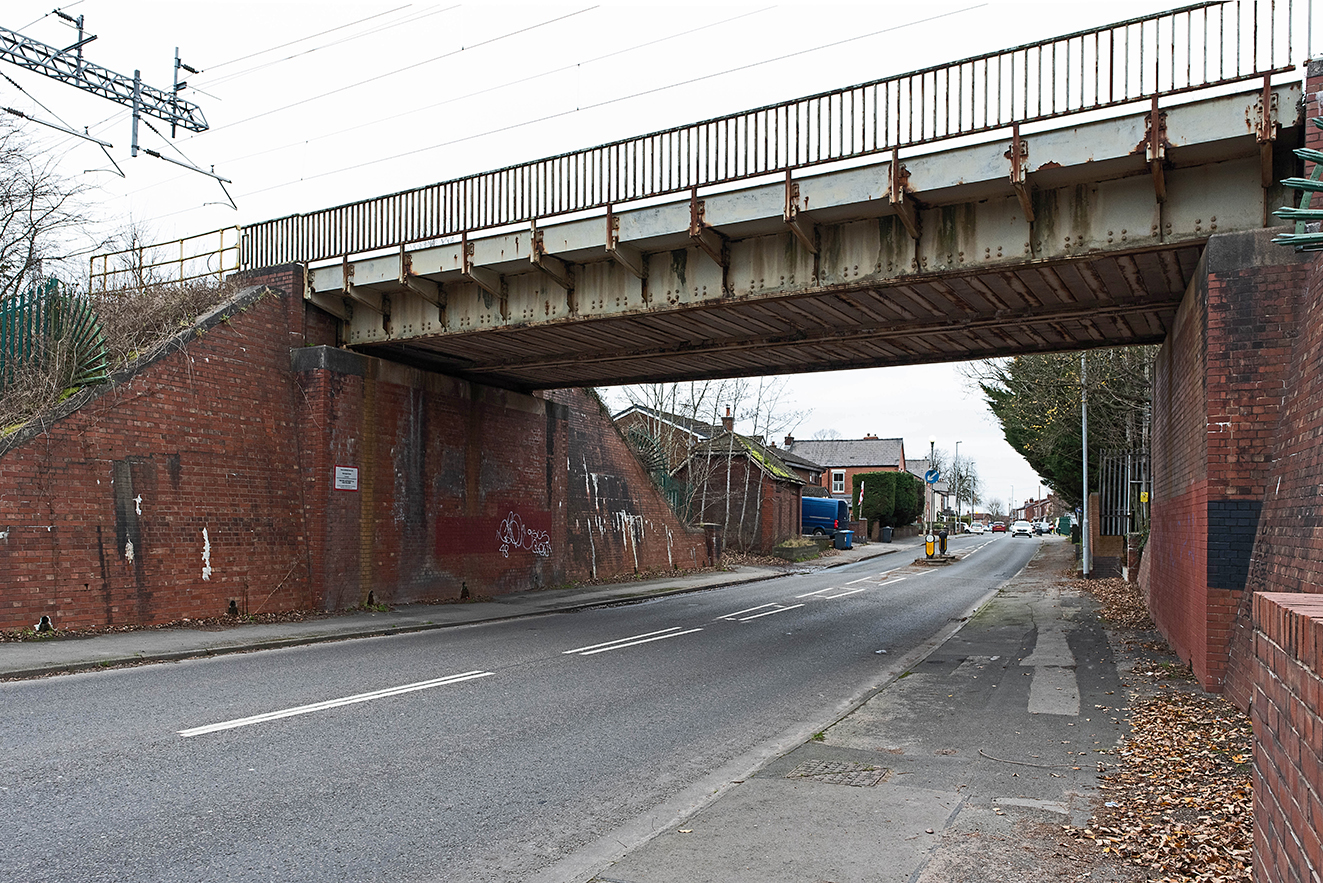
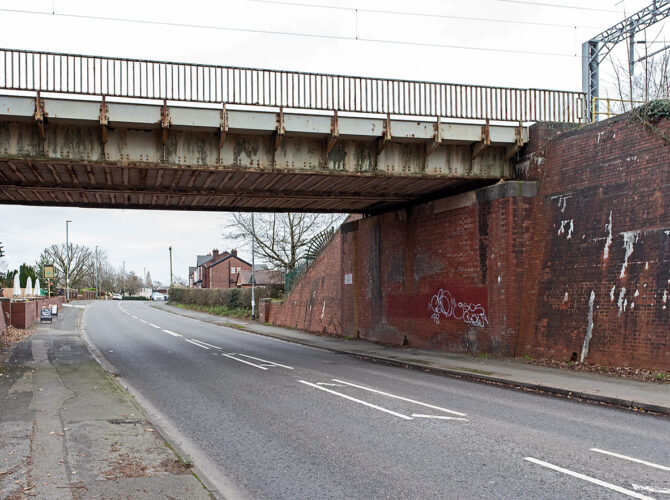
A rebuilt railway bridge with steel girders and brick abutments carrying the line over Warrington Road, marking the historic crossing point.
© Manchester Histories

A railway station lost to time.

This spot once marked an important stop on the Liverpool and Manchester Railway. The original Bury Lane Station, later known as Glazebury and Bury Lane, served the surrounding rural and industrial communities from 1830 until its closure in 1958. It was a busy point on the line with platforms, a station building and goods facilities. Though the station buildings have long since been removed, its location is still defined by the railway bridge that carries trains over Bury Lane. The bridge itself has been rebuilt, but the site continues to reveal its former role as a place where people and freight moved between local villages and the cities beyond.

Why it matters

The station played an active role in the line’s long history of mixed passenger and goods traffic. Its survival well into the 20th century, closing only in 1958, shows how this part of the route remained useful long after many early stations had vanished. The bridge has changed in form but continues to carry the same alignment.
Interesting stories

The station at Bury Lane opened with the line in 1830 and was later renamed to reflect the nearby village of Glazebury. Over the decades it grew with goods sheds, platforms and waiting rooms, and had sidings serving nearby industries. Local recollections suggest the station was a community hub in its day, though services declined after the war. The station eventually closed in 1958, leaving only subtle traces behind. 

What to look for…

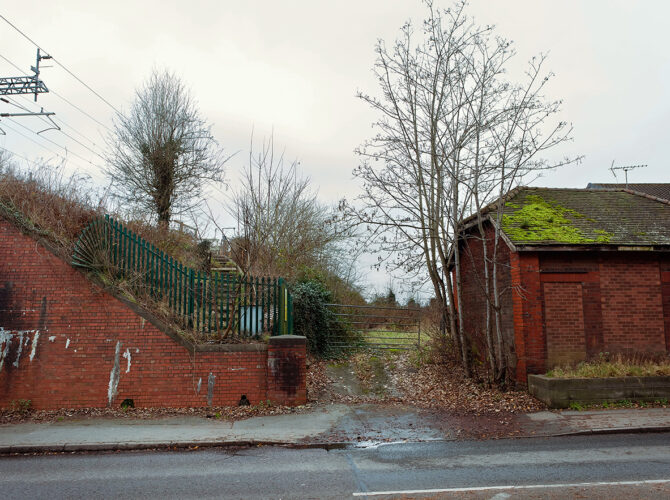
Trains still cross the road here on a bridge, though it is not the original. The replacement bridge uses a steel girder deck with red brick abutments, showing some evidence of repair and updating over time. On the north side, a set of steps leads up the embankment and a bricked-out building stands nearby, possibly linked to the former station. This area was once a fully equipped station complex. Now it’s easy to pass without noticing, but look closely to see  mossy remains of steps on the north side of the bridge that hint at the former entrance to the platforms.

Explore related content