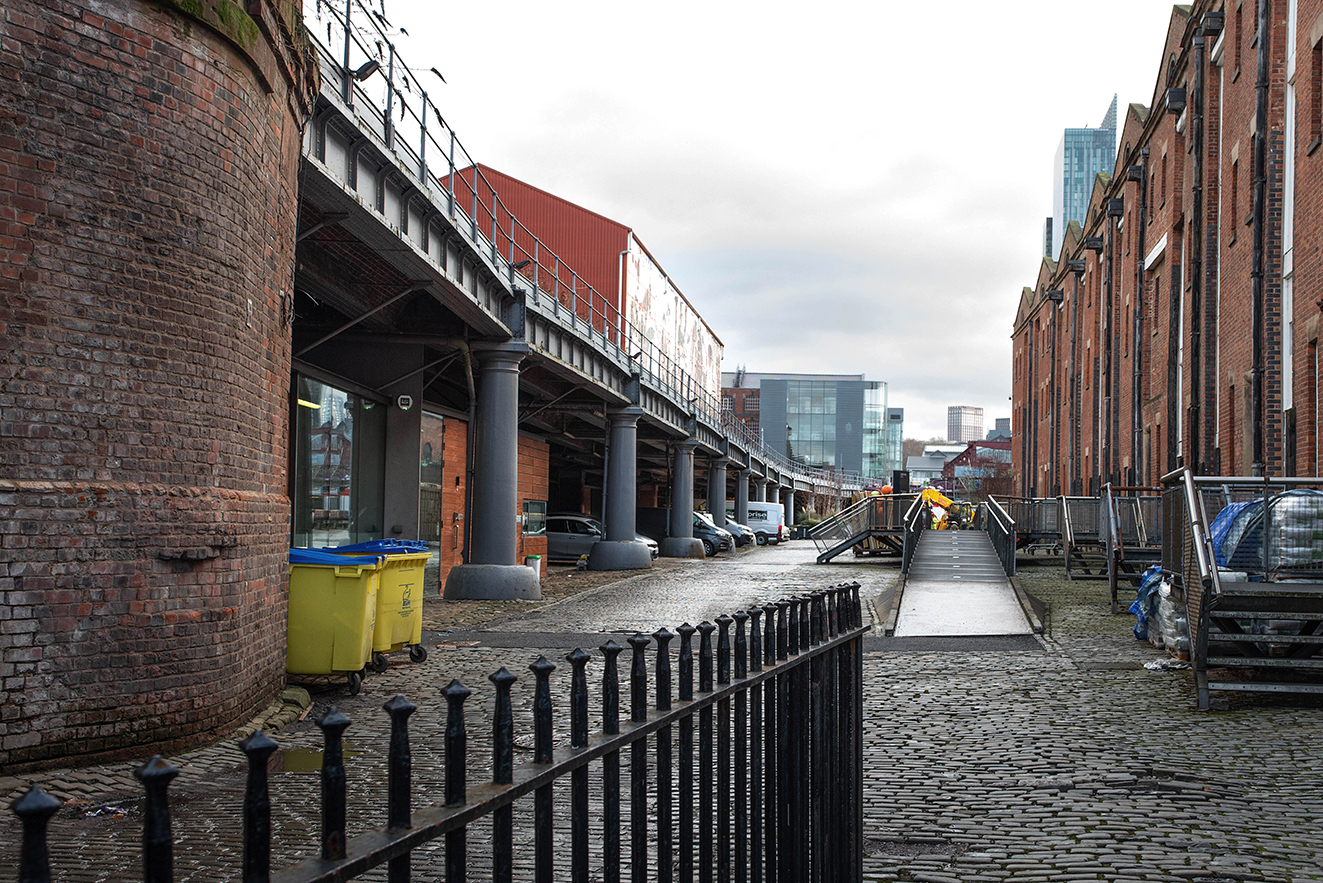
The iron colonnade of Liverpool Road station.
This elegant cast-iron viaduct was built around 1870 to carry goods trains into the growing freight yard at Liverpool Road Station. A long row of slender iron columns, each set on a stone base, supports broad iron beams that once bore the weight of wagons delivering goods into Manchester’s warehouses.
Once part of the bustling heart of the goods depot, the viaduct now stands within the grounds of the Science and Industry Museum. Though long out of use, the museum is restoring the surrounding area to its 19th-century industrial character while bringing new life to this striking piece of Victorian railway infrastructure.
Why it matters
By the 1870s Liverpool Road had shifted from a passenger station to a major freight hub. As rail traffic soared, new structures like this viaduct were added to meet the demand. It helped channel goods from all over the country into Manchester at a time when the city was booming with trade and industry.
The viaduct is a fine example of Victorian design where engineering met elegance. The iron columns are slender yet strong, arranged in a graceful rhythm that’s both practical and pleasing to the eye. It’s part of a wider group of buildings and structures that tell the story of how railways transformed Manchester into an industrial powerhouse.