St Helens

Newton Viaduct

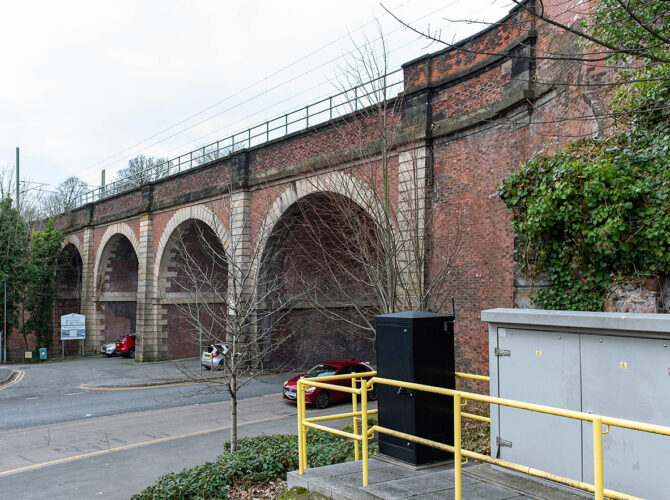
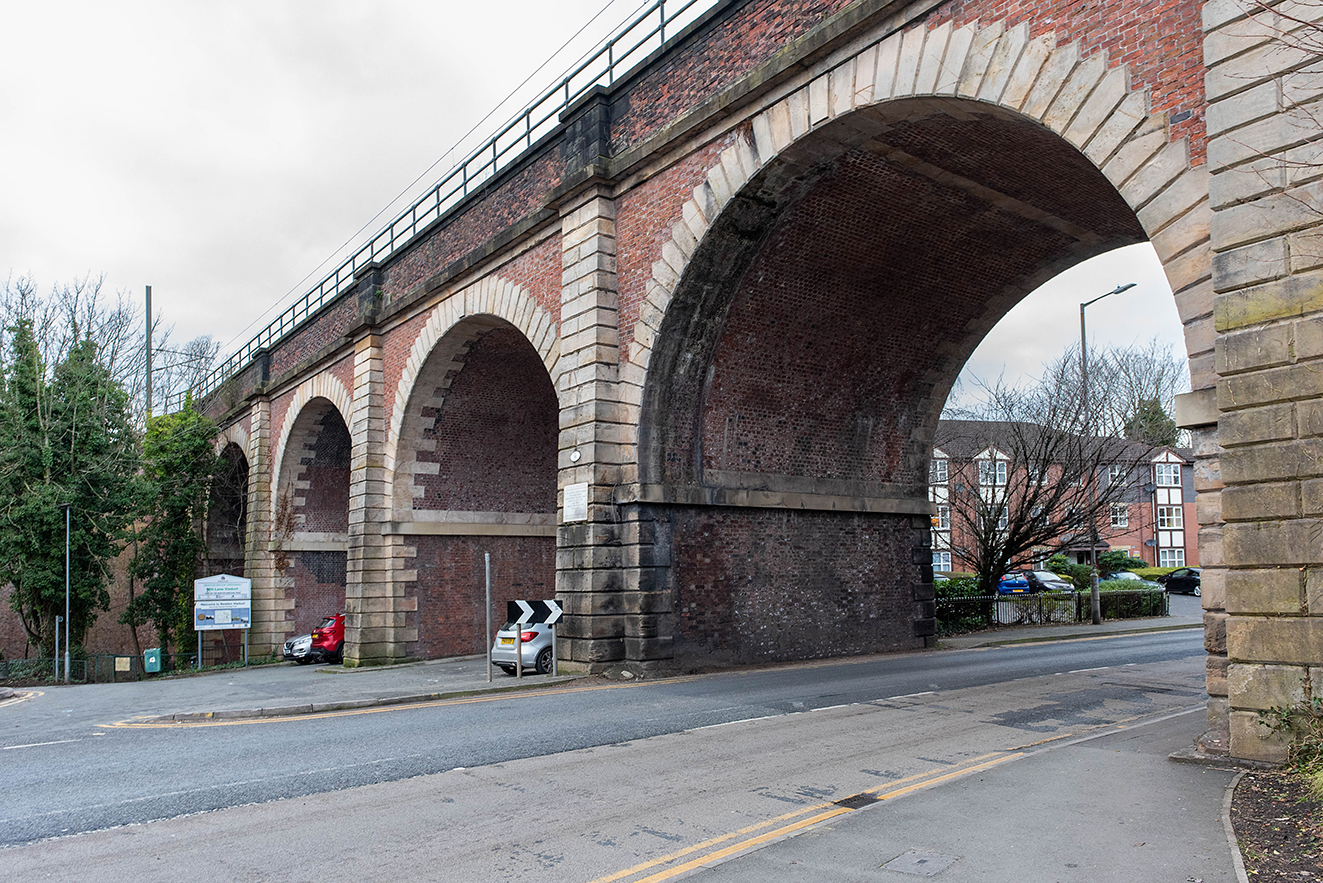
Side view of a main arch spanning the road, showing the scale of the structure and surrounding street.
© Manchester Histories

A grand crossing in brick and stone

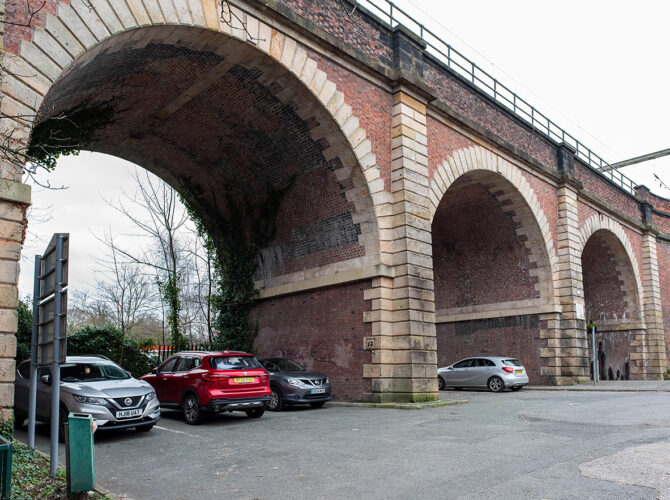
Newton Viaduct is a striking brick and stone bridge that carries the railway over Mill Lane in Newton-le-Willows. Just beside the town’s modern station, its series of broad arches stretch confidently across the road and car parks below. The design is all clean lines and solid craftsmanship, a textbook example of early railway engineering built to last.

Why it matters

This viaduct was part of a carefully engineered solution to keep the railway as level as possible. Early steam locomotives like Rocket couldn’t cope with steep gradients, so the line had to maintain a steady height even if that meant carrying it high over valleys, roads and farmland. The viaduct allowed the trains to stay on course while the landscape dipped below.

As a bonus, it meant carts, carriages and pedestrians could still move freely beneath the railway without disruption. It was an elegant fix, practical for engineers and convenient for local people.

The design reflects the high standards of the time. Sturdy red brick, bold stone piers and carefully shaped archways all combine strength with symmetry. It is still doing the job it was built for and doing it well.
Interesting stories

When the railway opened in 1830, Newton was already a key staging post. Just beyond the viaduct stood Newton Bridge Station where passengers would arrive to waiting coaches, continuing their journey on roads that had served travellers for centuries. Steam met stagecoach and the town quickly became a lively interchange.

Locals were drawn to the viaduct too. In the early days, people would gather to see the new trains pass overhead, puffing smoke and rattling the arches. Imagine the thrill and maybe a little fear of seeing your first locomotive from beneath a brick span like this.

What to look out for…

Stand on Mill Lane and look closely at the arch detail. Pale stone voussoirs contrast with deep red bricks, forming a crisp curve that repeats from end to end. The piers have neat rusticated stonework that gives the whole structure a sense of weight and confidence.

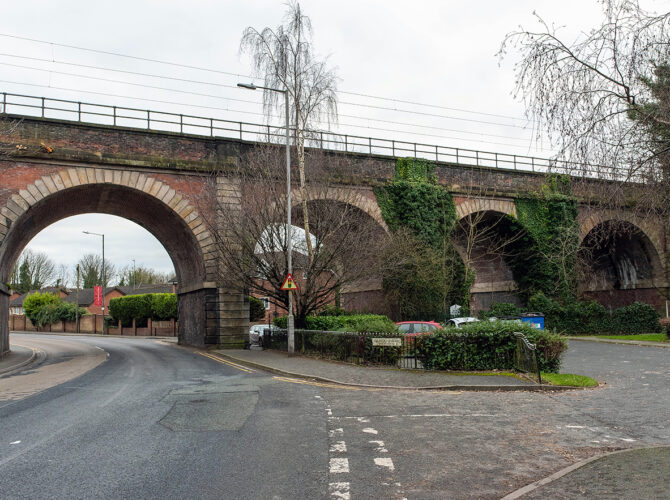
On the north side, ivy tumbles from the top courses and softens the outline. The road dips gently beneath the central span, shaped by nearly two centuries of passing feet, hooves and wheels.

Newton Viaduct still carries trains as it always has, a solid part of the town’s daily rhythm. Its presence is familiar now, but the story it holds is easy to pass by. Look up, and you’re seeing nearly two centuries of railway history still doing its job.

This content is adapted from:
https://historicengland.org.uk/listing/the-list/

Explore related content

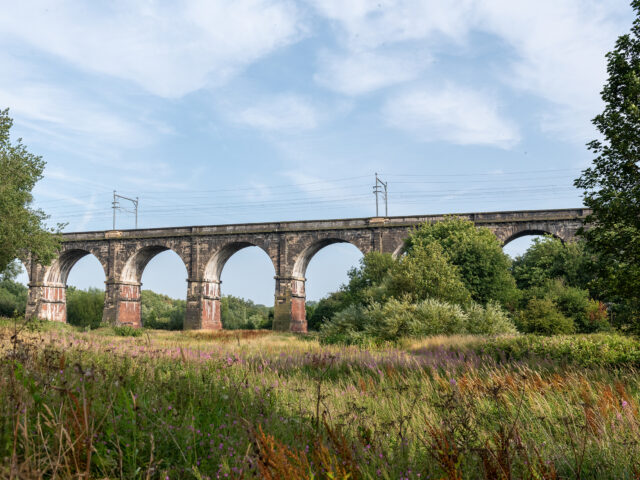
The viaduct rises above a field of grasses and wildflowers, showing its elegant curve across the valley.
St Helens

Sankey Viaduct

The world’s first large railway viaduct. The Sankey Viaduct is a towering railway bridge that crosses...