Interesting stories.
The viaduct and its approach embankment were unfinished on opening day, trains crossing via a huge wooden trestle that was later buried in earth. Major repairs over the years have included piling under the piers, rebuilding wing walls, and reinforcing the embankment, which remains prone to subsidence.
What to look out for…
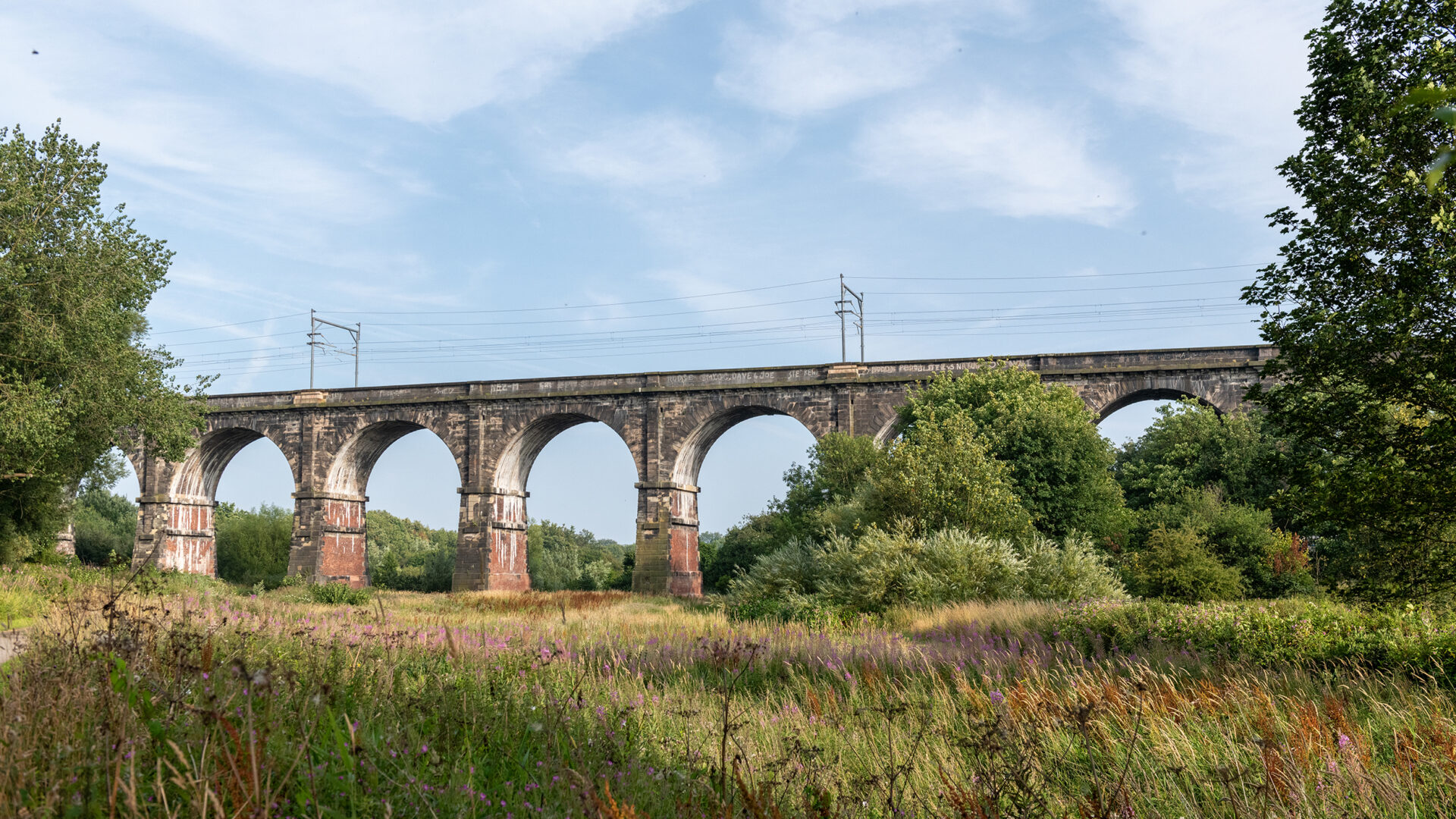
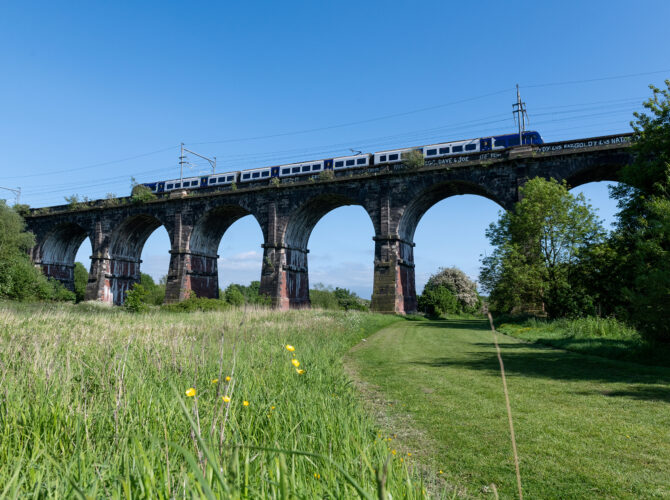
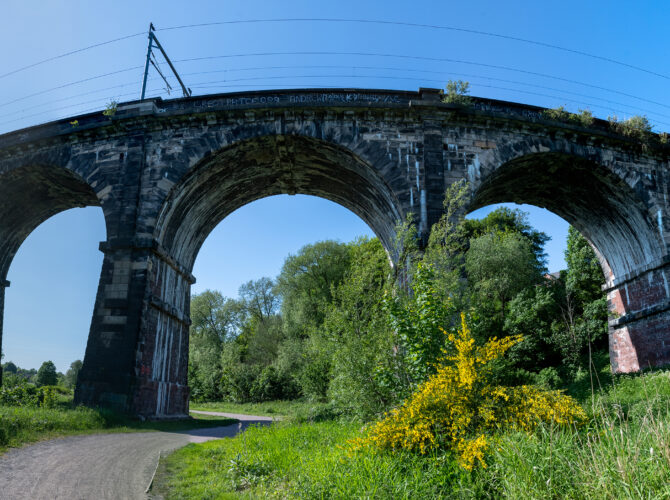
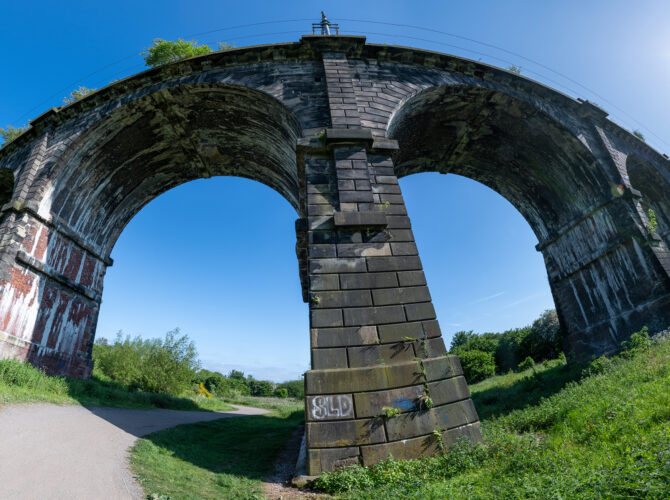
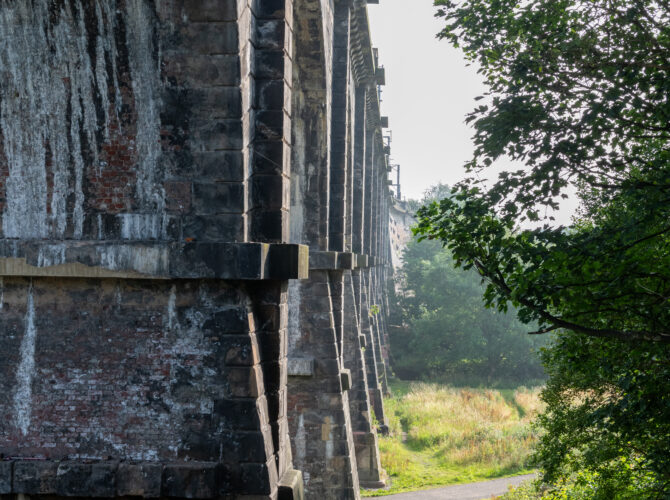
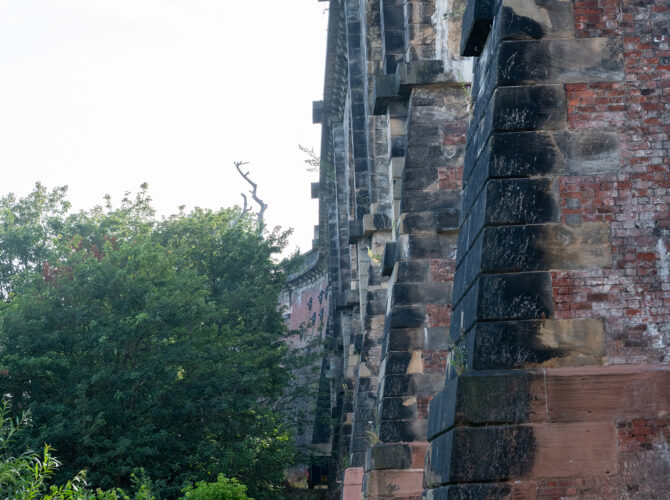
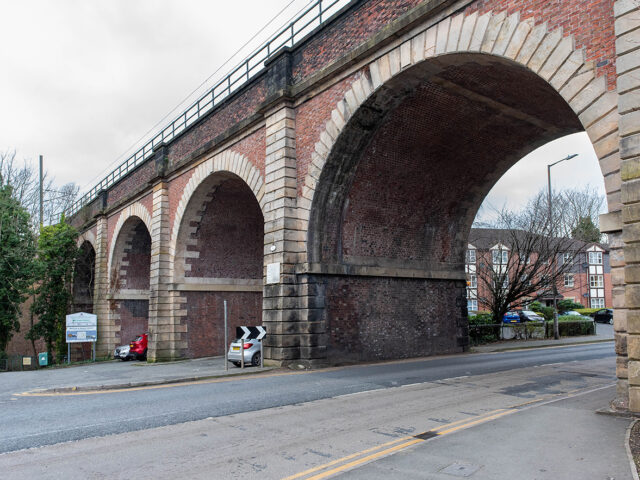
Walk beneath the soaring sandstone arches and you’ll get a real sense of the scale and ambition of early railway engineering. At its highest point the Sankey Viaduct stands over 60 feet tall, lifting the tracks high above the Sankey Valley. Look up to admire the chunky stone piers and robust parapets, each one a testament to the durability of Victorian craftsmanship.
The viaduct’s subtle curve gives it real character and grace. That bend wasn’t just for aesthetics, it was a bold structural solution for crossing the valley. Hidden within the embankment at one end lies part of the original wooden trestle used during construction, still buried from view but part of the story.
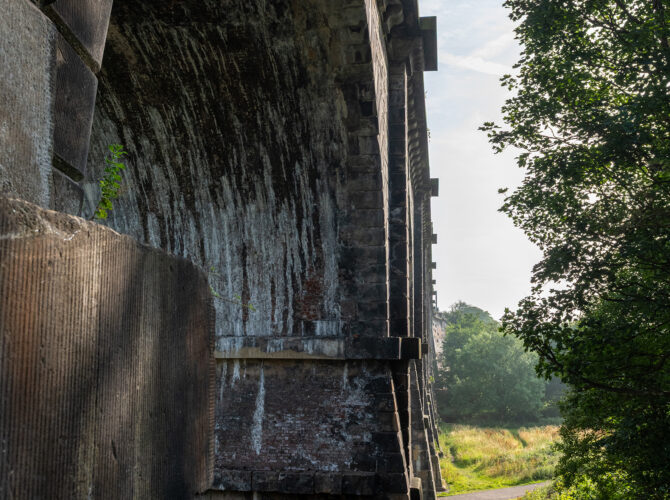
Follow the footpaths below for dramatic views from every angle. From one side it stretches like a Roman aqueduct, disappearing into the trees. From directly underneath you can see the weathered stone and streaks of mineral salts marking the passage of time. If a train passes overhead, you’re hearing history in motion, the world’s first intercity railway, still in use.
This content is adapted from:
https://en.wikipedia.org/wiki/Sankey_Viaduct
https://historicengland.org.uk/listing/the-list/