Beneath the traffic.
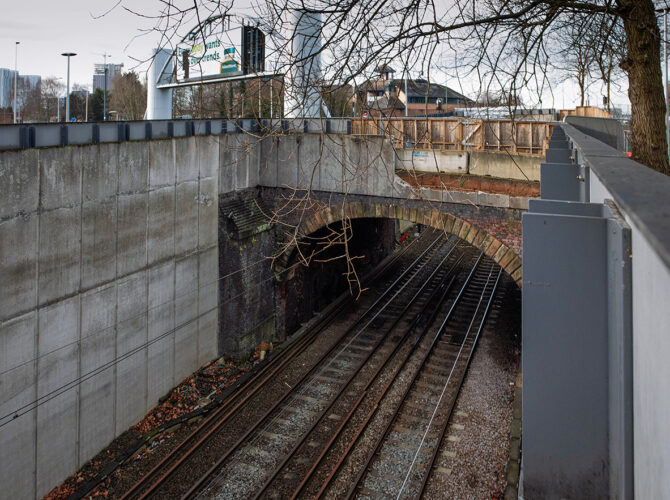
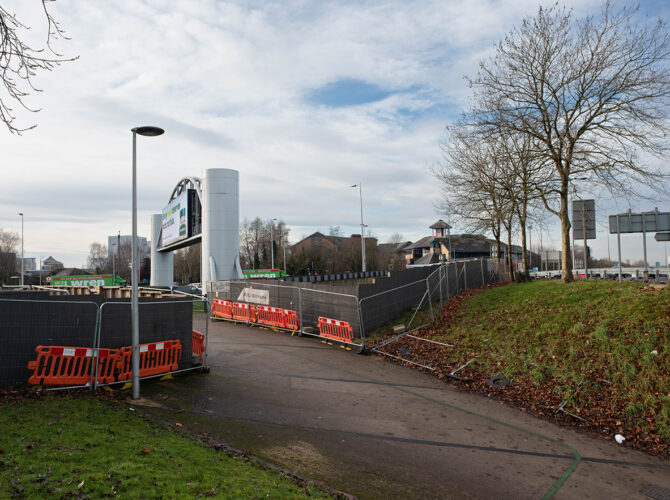
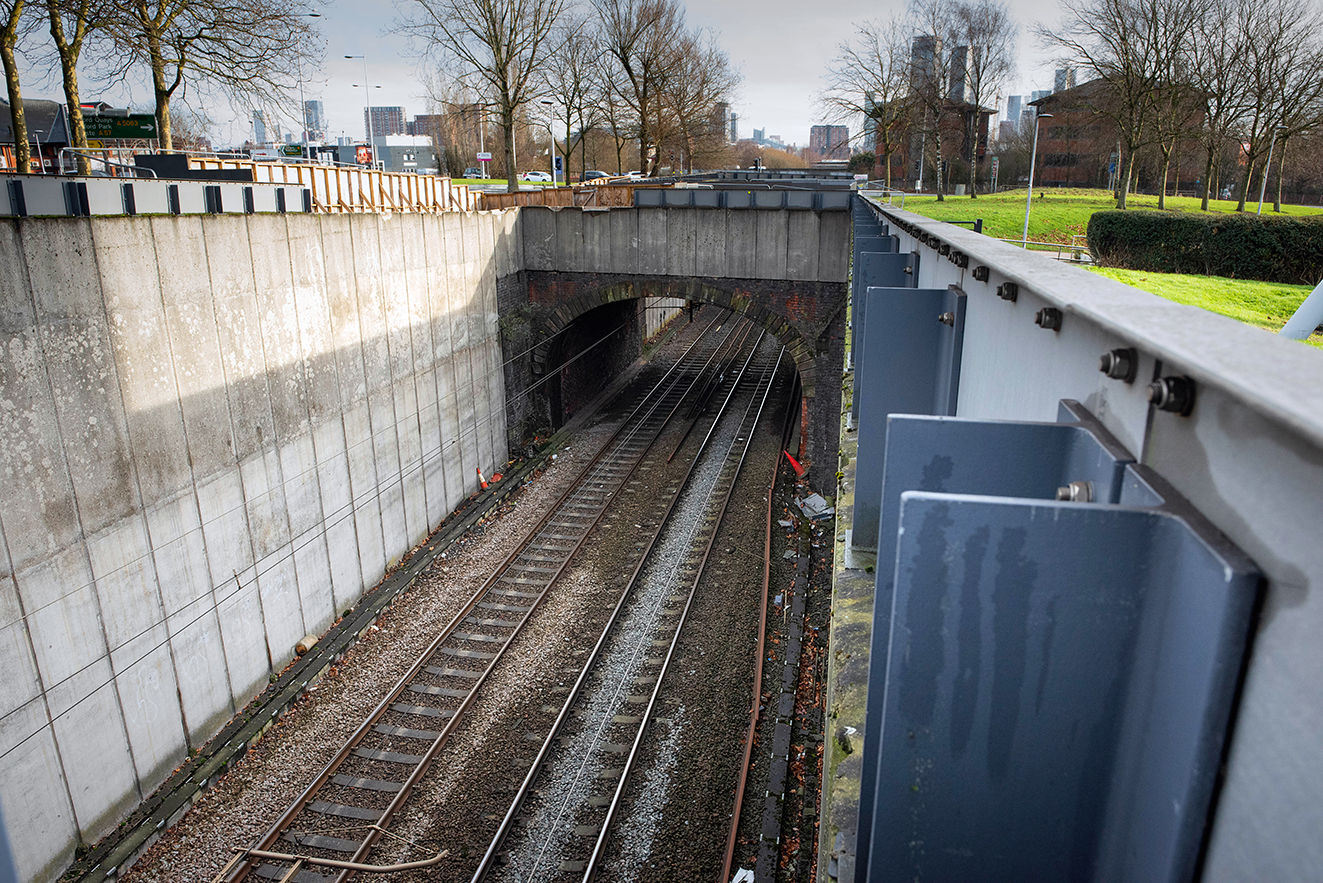
Cross Lane Bridge carries the early railway beneath the road in Salford, now set within a large modern roundabout where major routes converge. The line runs through a cutting, passing under a low brick arch that has been heavily altered over time. Today the original structure is partly hidden by later concrete retaining walls and road engineering, with only fragments of older brickwork still visible.
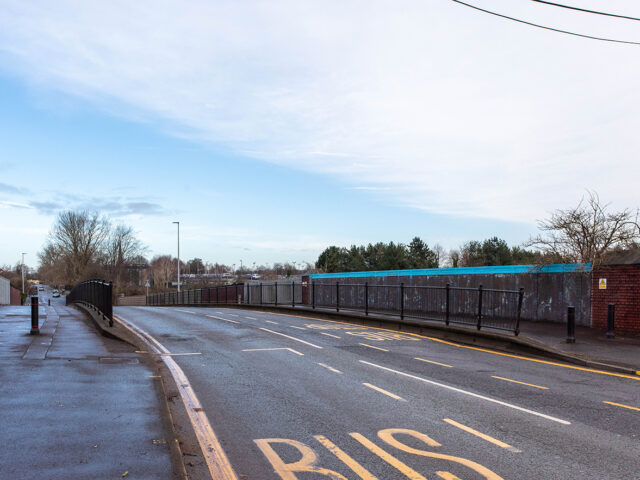
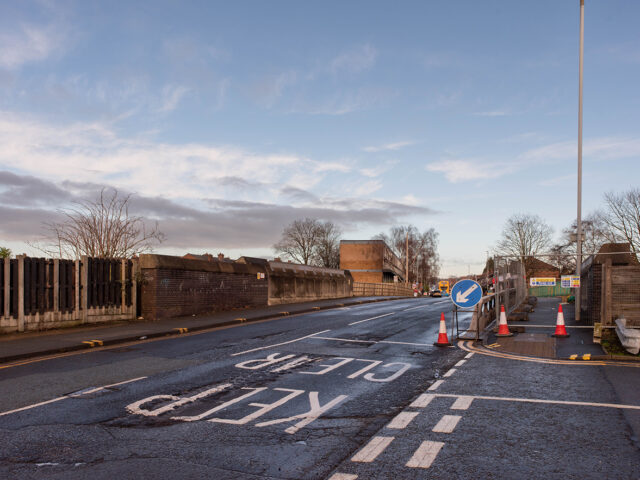
At street level, it feels like an ordinary and busy road junction. Traffic circulates constantly, and the bridge sits quietly below, doing the same job it has always done. The surviving brick arch suggests an earlier phase of construction, while everything around it reflects later changes to accommodate growing roads and traffic.
Why it matters
This is a clear example of how the world’s first intercity railway has had to adapt to a changing city. What began as a relatively simple crossing is now absorbed into a major road system where the M602 becomes Regent Road.
The railway remains in its original corridor, but the landscape around it has been reshaped many times. Early engineers kept the line level by threading it through cuttings and under roads, while later developments built up the surrounding infrastructure. Concrete walls, widened carriageways and the roundabout itself all reflect the needs of a much later age.
The result is a layered piece of engineering where early railway fabric survives within a much larger and more modern structure.