Warrington

Withington’s Bridge

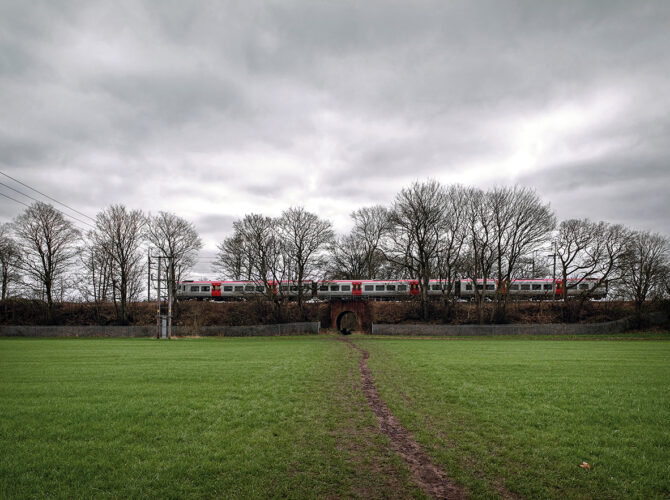
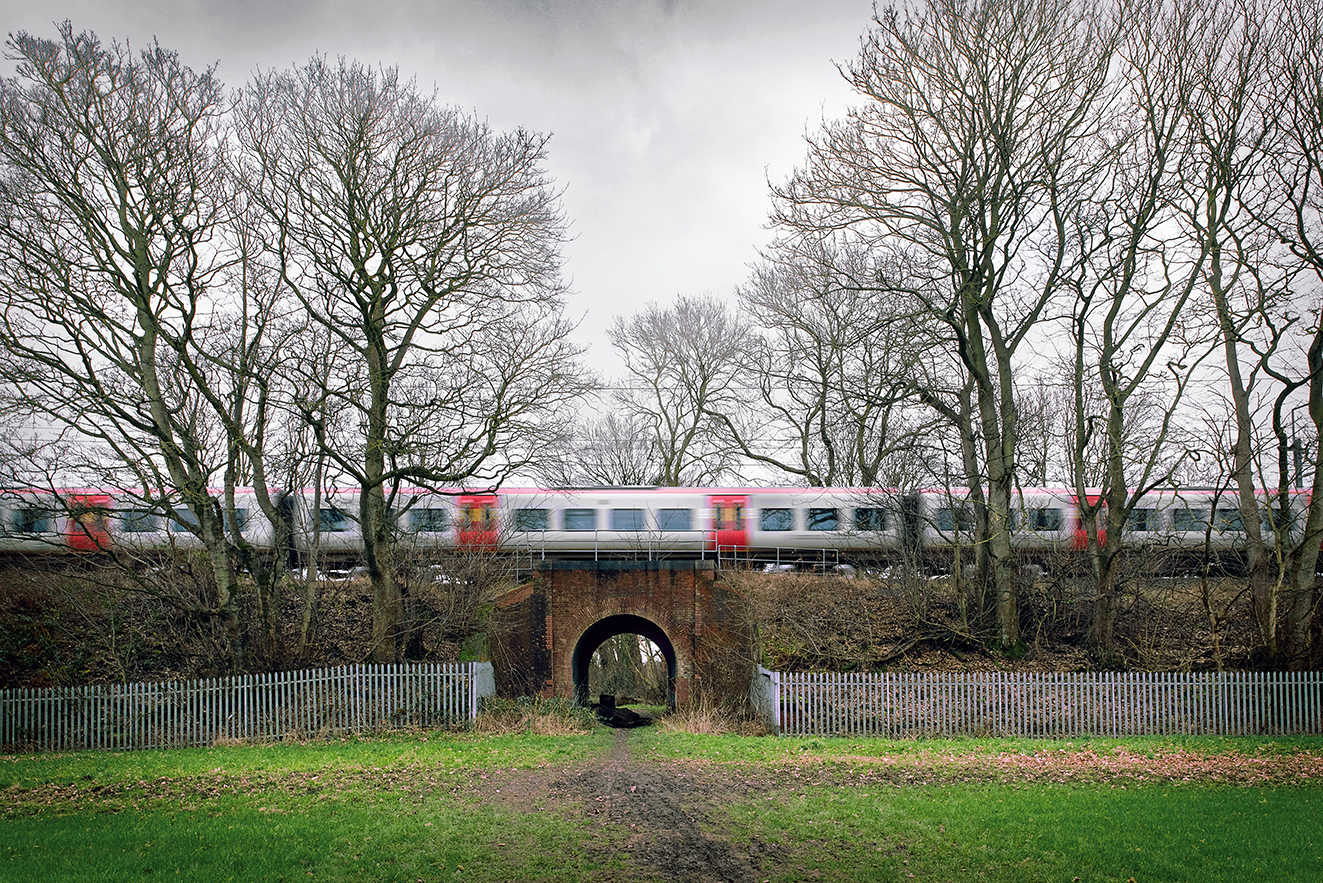
A red-and-white train crosses a low brick bridge above a narrow path running through an arched tunnel. Leafless trees and an overcast sky create a quiet, wintry atmosphere
© Manchester Histories

A farmer’s crossing beneath the rails.

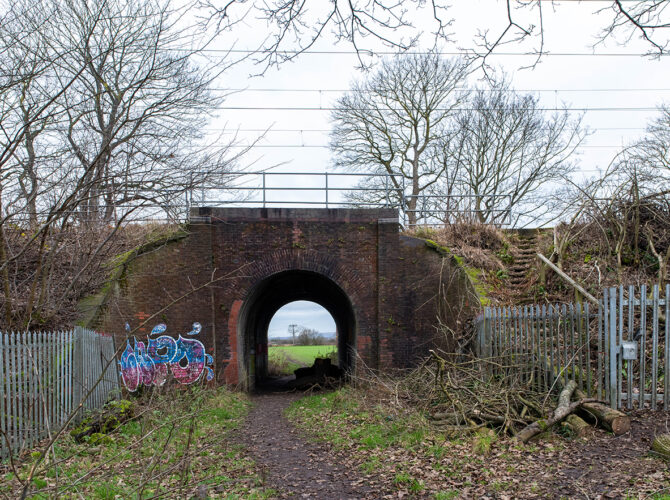
Withington’s Bridge is a small brick‑arched underpass that carries a footpath and field access beneath the Liverpool & Manchester Railway. Like other minor underbridges on the original line, it was built during the railway’s construction around 1830 to allow local landowners, farmers and walkers to pass safely under the tracks. The gently curved, single‑span brick arch and the earth embankments on either side are typical of early railway accommodation bridges, which combined simple, robust construction with the practical need to keep existing routes open.

Why it matters

Although unassuming, Withington’s Bridge is evidence of the early 19th‑century approach to integrating a major new transport artery with the local landscape. On one hand the railway cut a direct line across farmland; on the other, engineers ensured access across it was preserved. These small structures helped avoid severing property boundaries and pre‑existing paths, making the new railway more acceptable to those who lived and worked along its route. That the bridge still stands and continues to serve walkers is a testament to the durability and practicality of early railway engineering..
Interesting stories

Bridges like this were essential to everyday rural life in the 1800s. Before the railway, farmers and farm workers would have walked livestock and moved between fields unimpeded. When the railway was built, paths were often blocked if bridges or underpasses were not provided, which could have been deeply disruptive. Accommodation bridges sometimes called occupation or field bridges, avoided this. Withington’s Bridge likely owes its name to the historic field or land ownership pattern in this area, and while the railway above has changed enormously over the past two centuries, the crossing below is still used by people enjoying the fields today.

What to look for…

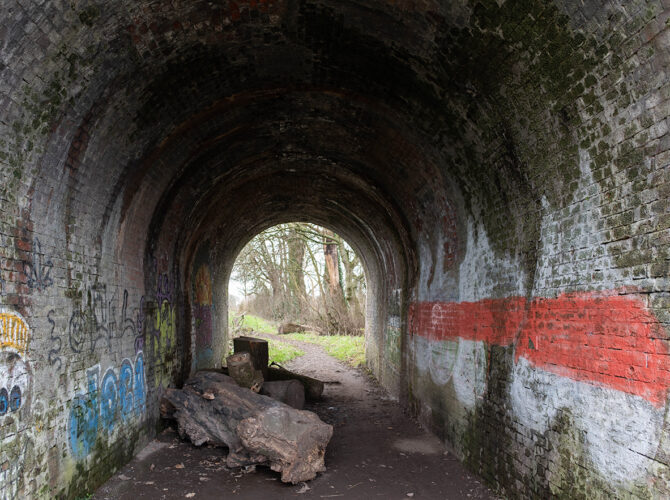
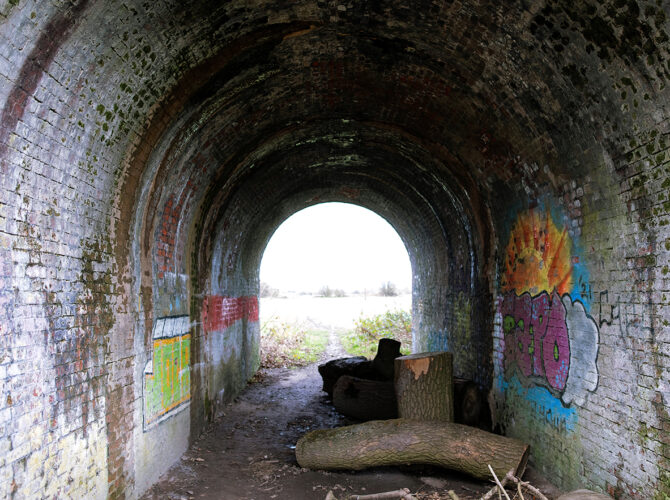
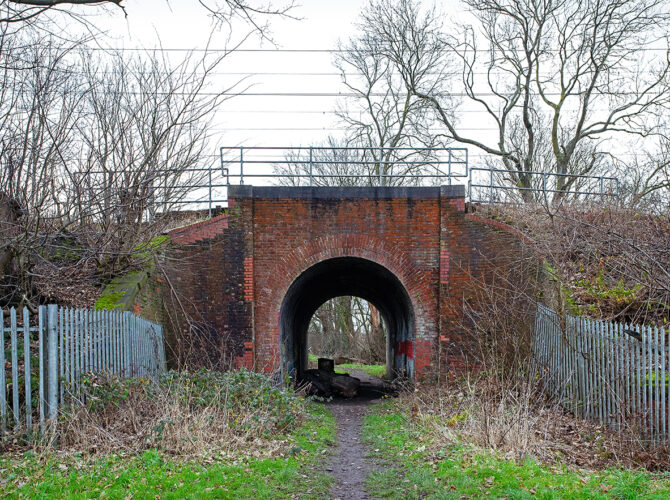
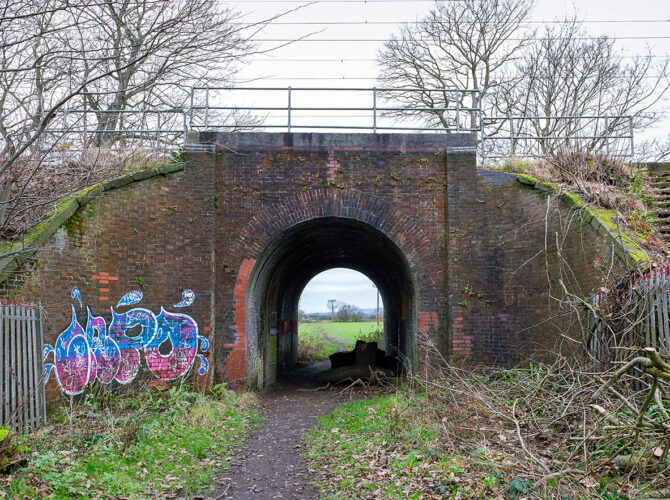
Approaching from either side, you’ll see the brick arch set neatly into the embankment. The brickwork shows regular courses with subtle variations in tone where repairs or infill bricks have been inserted over time. The interior vault is compact and tunnel‑like; moss, weathering and occasional graffiti give a textured patina to the old masonry (see interior photos). Above, the railway embankment continues at track level, and from a distance you can see trains passing overhead, linking this quiet field crossing with the busy line between Manchester and Liverpool. The scale of the arch is modest, wide enough for walkers and livestock but not large vehicles, which underlines its original purpose as a farm/field access.

Explore related content