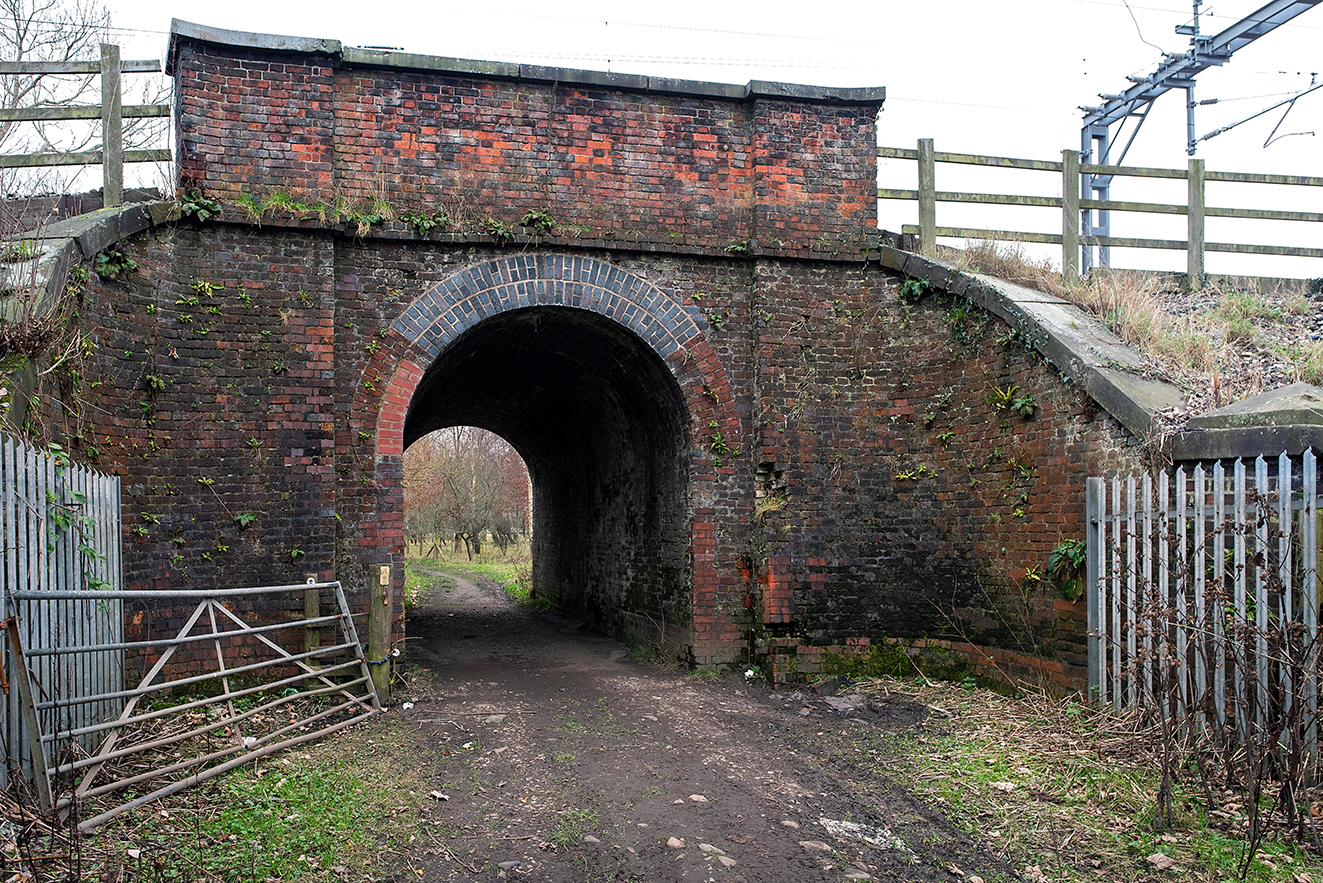
Built for cattle, made to last.
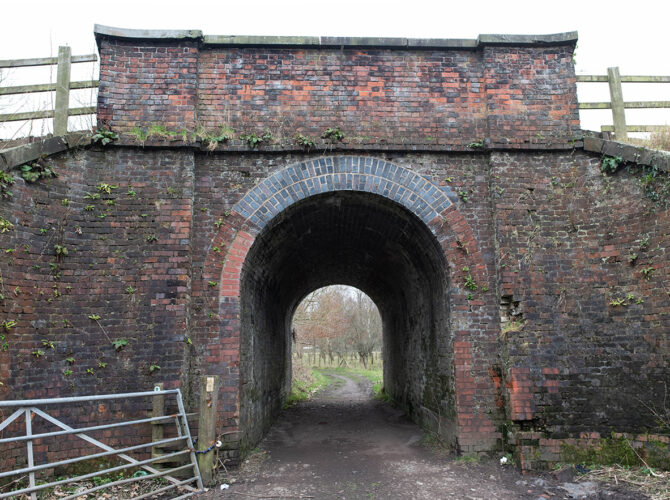
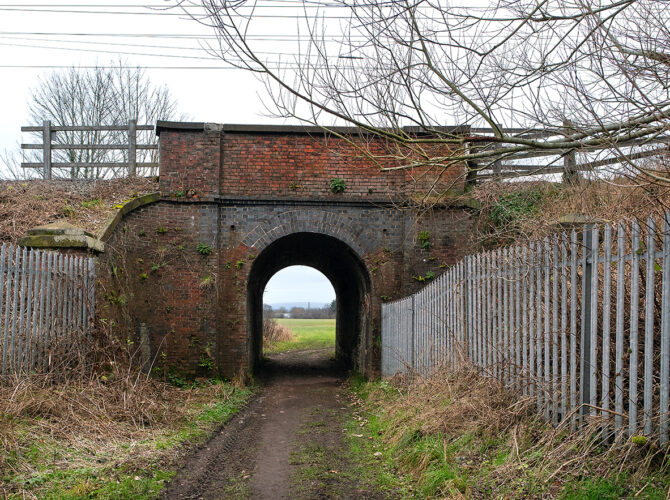
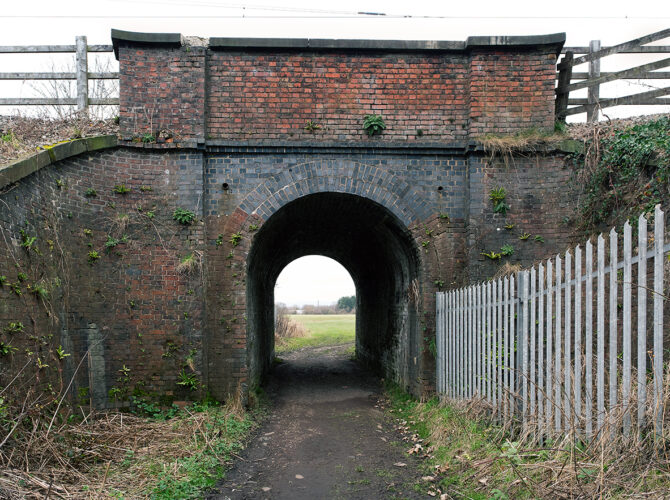
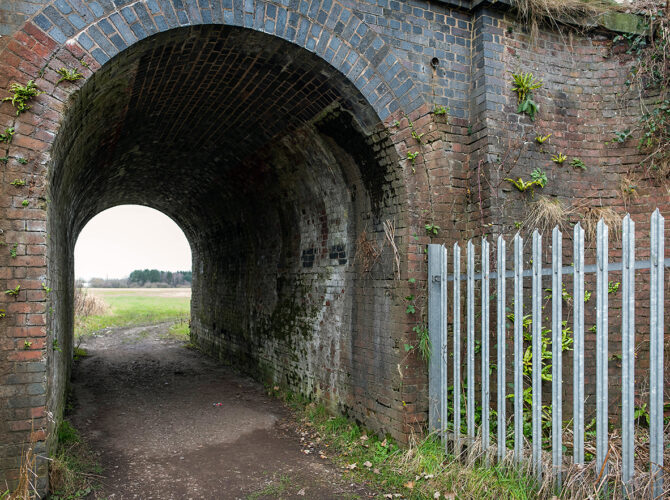
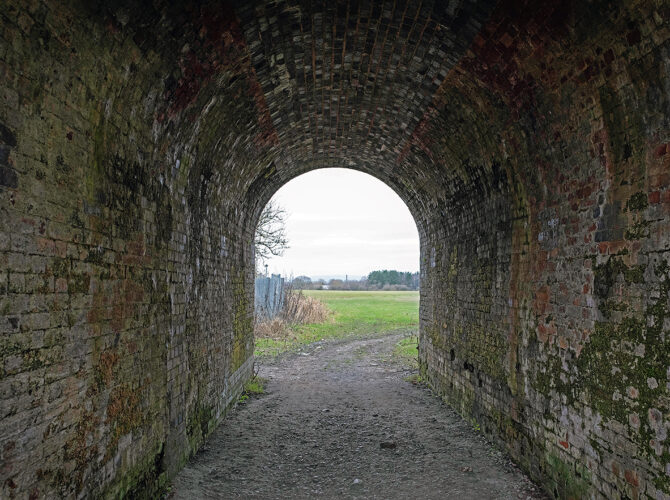
Hodgkinson’s Cattle Bridge is a small arched underpass beneath the railway Near the village of Glazebury, designed to allow cattle to pass under the tracks. Constructed in brick with careful detailing, it is one of the many small but significant pieces of infrastructure that helped the Liverpool and Manchester Railway function safely and efficiently from its early days. The bridge takes its name from Eaton Hodgkinson, the engineer known for his pioneering work in the strength of materials, who contributed to the design standards of many of the original structures on the line. Though modest in size, this bridge is a fine surviving example of early 19th-century railway engineering that enabled coexistence between new transport technologies and traditional rural practices.
Why it matters
This bridge represents a critical part of the railway’s original operation and planning. It illustrates how the railway was integrated into the existing agricultural landscape with minimal disruption, accommodating livestock routes that predated the tracks. Surviving largely unaltered, the bridge provides insight into how early railway engineers tackled the practical challenges of the new infrastructure, balancing innovation with everyday functionality. Its simple yet durable design speaks to the foresight of early railway construction and reflects the industrial ambition of the time.