Liverpool

House of George Stephenson

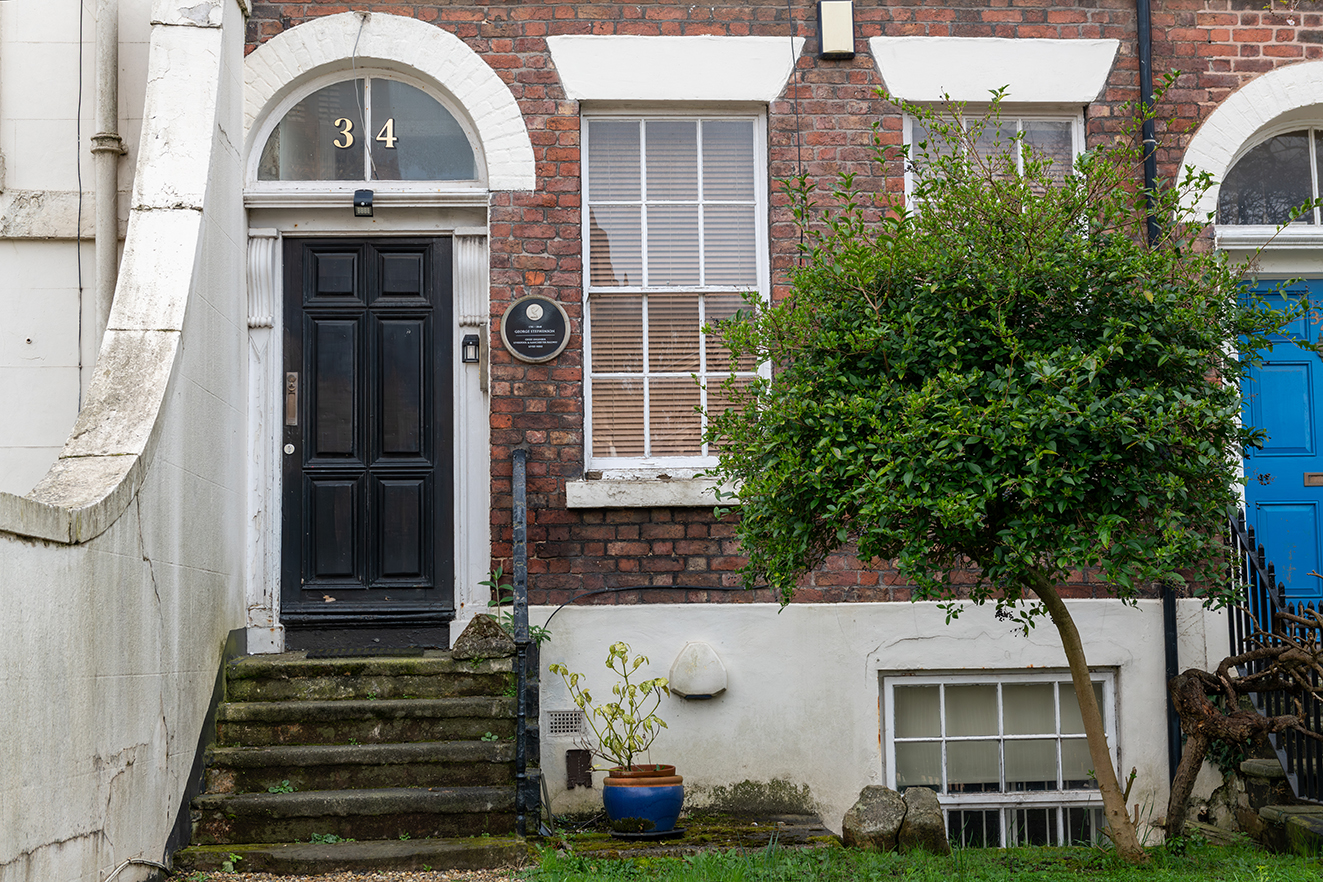
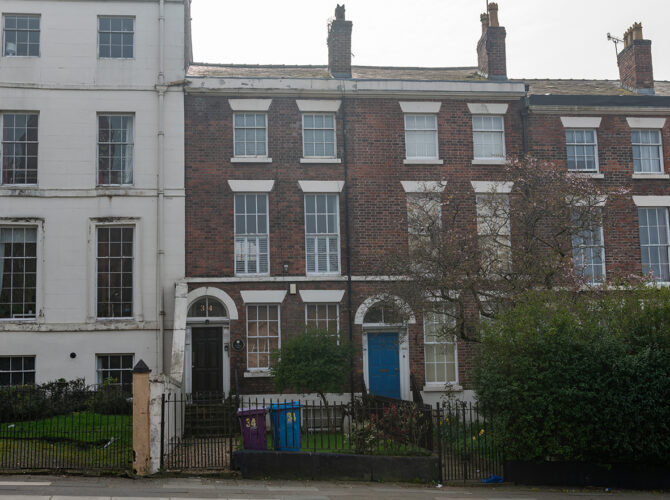
A brick townhouse with steps to a black front door, featuring a plaque marking George Stephenson’s residence.
© Chris Iles

Home of the railway pioneer.

At 34 Upper Parliament Street stands a modest Georgian townhouse where George Stephenson once lived while working on the Liverpool and Manchester Railway. Stephenson was the railway’s chief engineer and one of the most important figures in the early development of rail transport.

The house is part of a row of red brick Georgian terraces typical of early 19th century Liverpool. With its tall sash windows, simple brick façade and arched doorway, it reflects the style of housing built for the city’s growing professional and merchant classes.

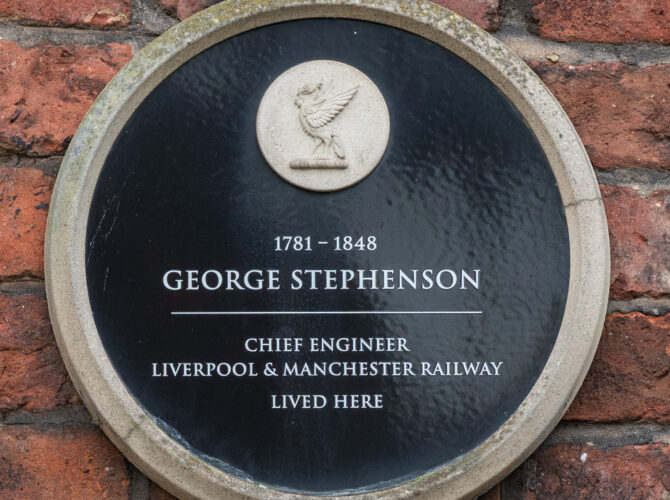
Today the building remains a private residence, but a plaque on the wall marks its connection to one of the pioneers of the railway age.

Why does it matter?

George Stephenson played a central role in the creation of the Liverpool and Manchester Railway, the world’s first fully operational inter-city passenger railway. As chief engineer he oversaw the design and construction of the line, including its bridges, cuttings and track.

Stephenson stayed at this house during the crucial years when the railway was being planned and built. From here he travelled to sites along the route, working with engineers, contractors and surveyors to solve the many challenges of constructing a railway across the landscape.

The house therefore represents a quieter but important part of railway history — the place where one of the key figures behind the project lived while shaping a transport revolution.
Interesting stories

George Stephenson was not formally trained as an engineer. He began life as a colliery worker in Northumberland and taught himself mechanics while working with steam engines in the mines.

Despite this humble start, he became one of the most influential engineers of the 19th century. His locomotive Rocket, developed with his son Robert, famously won the Rainhill Trials in 1829 and helped prove that steam locomotives were the future of railway transport.

While living in Liverpool during the construction of the line, Stephenson became well known in the city. His work on the Liverpool and Manchester Railway helped establish his reputation and led to further railway projects across Britain.

What to look out for...

Look for the round commemorative plaque beside the doorway at number 34. It records that George Stephenson, chief engineer of the Liverpool and Manchester Railway, lived here.

The house itself is a good example of a Georgian Liverpool townhouse. Notice the tall sash windows, the simple brickwork and the arched doorway with decorative stone surround.

Although it appears modest today, this was once the home of the engineer whose work helped launch the railway age. From this street Stephenson set out each day to oversee the construction of a railway that would change travel forever.

This content is adapted from:
https://openplaques.org/plaques/7885

Explore related content