Number two in the sequence.
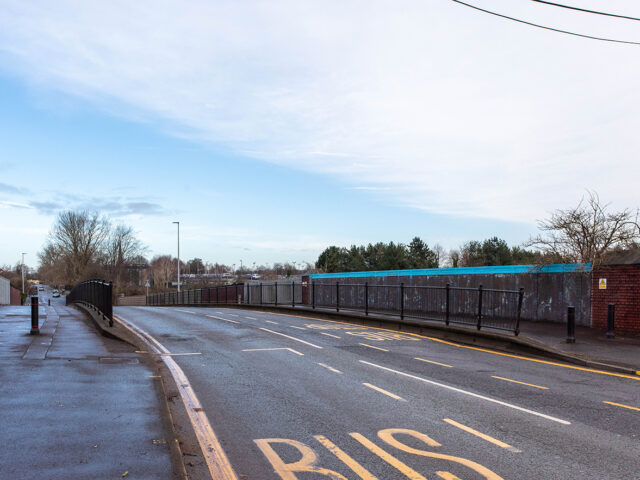
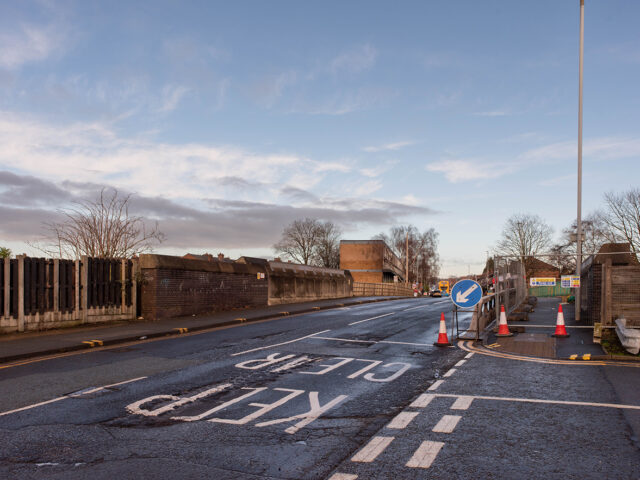
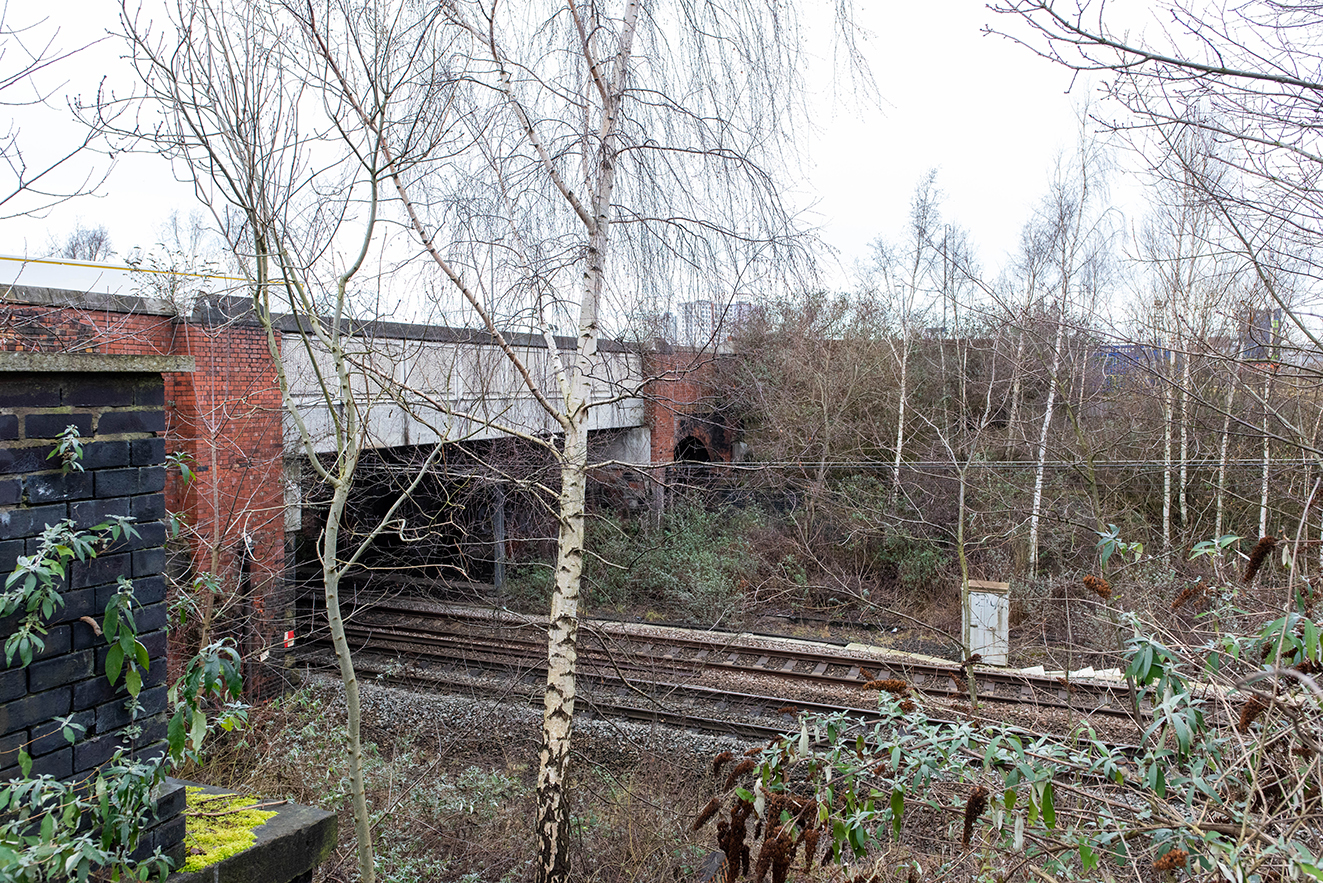
Jones’ Bridge No. 2 once carried a road over the early Liverpool and Manchester Railway, part of a closely spaced sequence of crossings along this stretch of line. The original bridge has been replaced and little survives of it directly, but the location remains defined by the raised roadway above the railway cutting below.
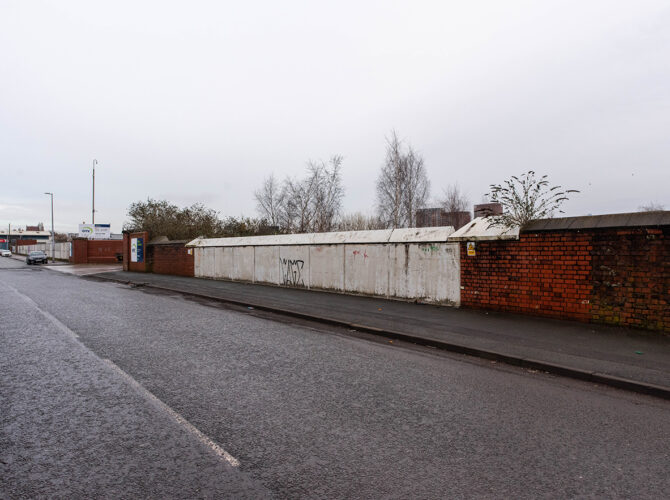
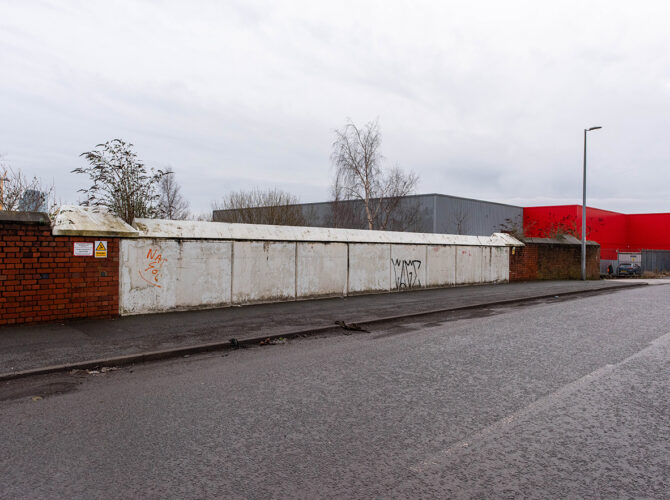
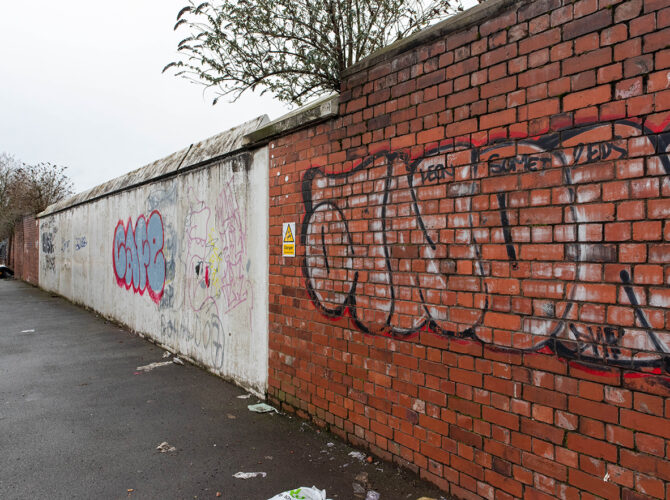
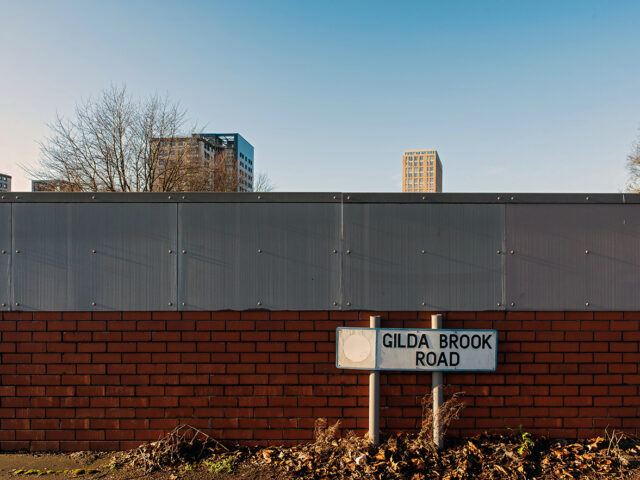
At street level, the scene is straightforward. A wide road runs past industrial buildings, with a mix of brickwork and later concrete forming the boundary along the pavement. The structure in place today reflects later rebuilding rather than the early railway period, and the exact date of replacement is unclear.
Why it matters
This was one of several closely spaced bridges that allowed roads to pass over the railway as it cut through Salford. Keeping the line level was essential for early locomotives, so crossings like this were built wherever streets needed to continue across the route.
Although the bridge itself has been replaced, the arrangement still reflects that original solution. The road remains carried above the railway, maintaining the separation between rail and street that defined the line from the beginning.
The sequence of “Jones’ Bridges” shown on early maps also highlights how densely connected this area once was, with multiple crossings serving nearby streets and industry.