Salford

Legh’s Brick Arch

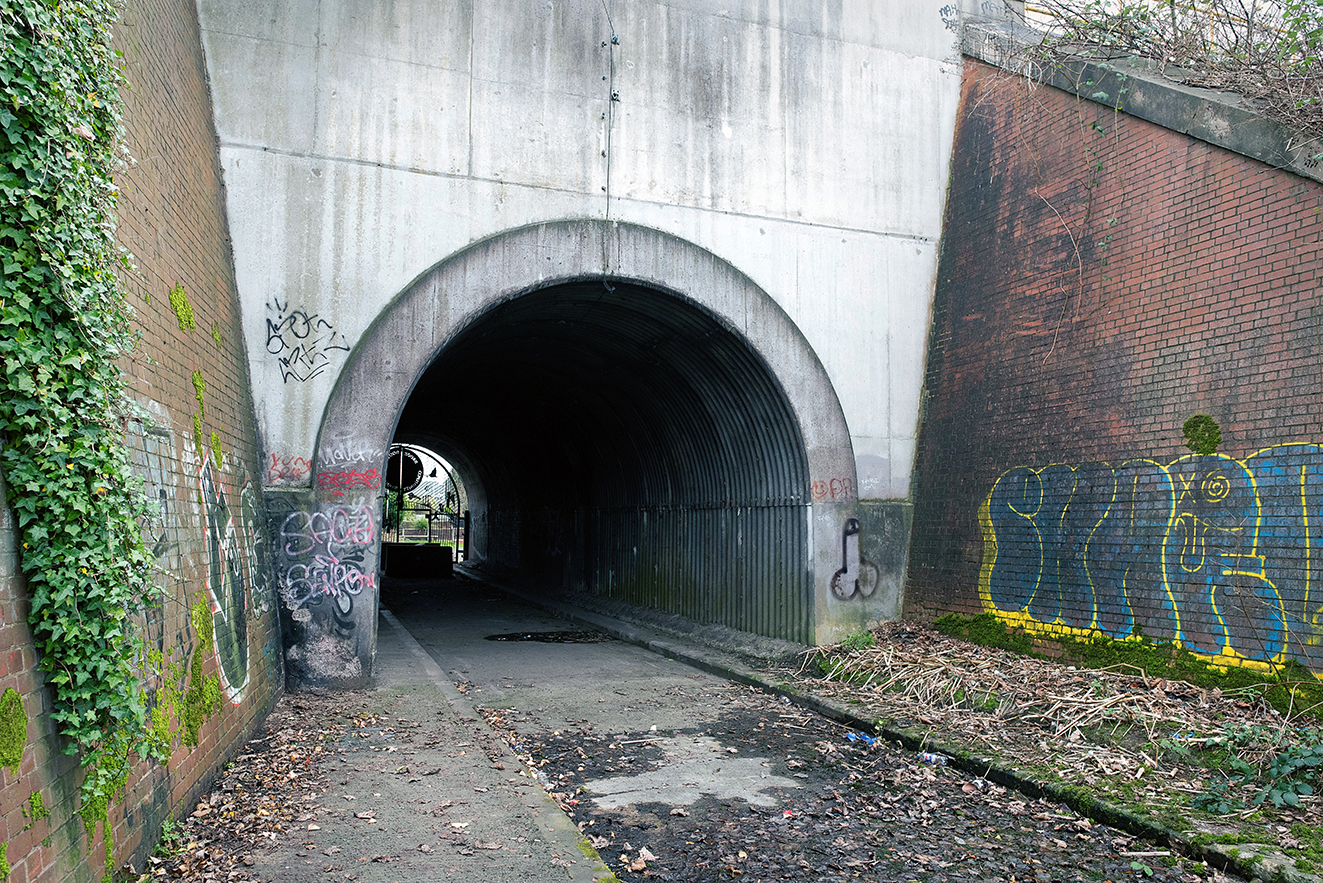
A wider view showing the tunnel entrance set within later concrete and brickwork, with signs of modern use and graffiti.
© Manchester Histories

A brick arch beneath the railway.

Legh’s Brick Arch is a small tunnel beneath the railway near Barton Moss. It sits under the Barton Embankment and leads into Brook House Community Woodland. It is a well-built early railway structure made of brick with a curved roof and plain sidewalls.

Its shape and size suggest it may have started as an accommodation bridge allowing movement beneath the embankment for people livestock or access between fields. Whatever its original use it was designed to work with the land rather than block it.

Why it matters

This bridge is one of many small but important structures that helped the Liverpool to Manchester line succeed. The Barton Embankment was built to carry the railway over lower ground and across Worsley Brook. It needed to be strong and well drained. Brick arches like this one helped maintain access and stability without weakening the structure above.

Legh’s Brick Arch shows how early railway engineers worked with the land making sure the line served its purpose without cutting people off from their surroundings.
Interesting stories

Legh’s Brick Arch appears on early lists of bridges on the Liverpool and Manchester Railway alongside a nearby structure known as the Frame Bridge. The two stood within the same section of the Barton Embankment and were both built to allow movement or drainage beneath the raised railway.

The Frame Bridge was different in design. It used a timber frame supported by brick abutments and was likely quicker to build but less durable. Legh’s Arch was built entirely in brick with a full arch and vaulted lining. It was made to last.

Map research shared by local historians shows that both bridges appeared on 19th-century Ordnance Survey maps. By the 1960s only Legh’s Brick Arch remained visible. The Frame Bridge had disappeared possibly dismantled or lost to time.

Together the two bridges show how different ideas were tested side by side. One was temporary and has vanished. The other is still here still doing its job.

What to look out for…

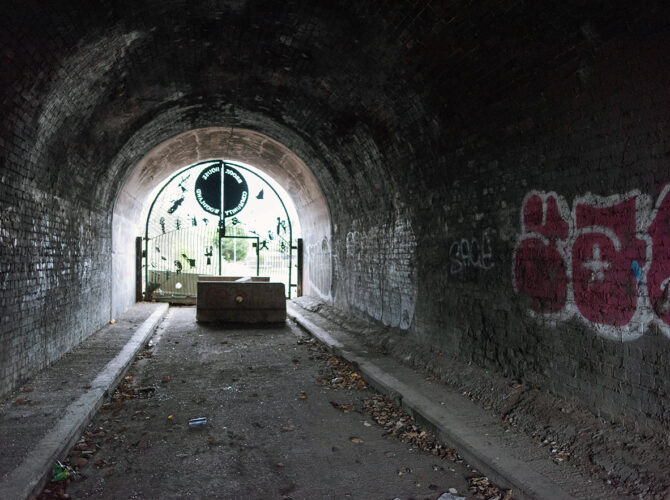
Look at the shape of the tunnel. The brick lining curves up in a perfect arch a sign of the care taken even in small structures. You can also spot differences in the brickwork where repairs or changes were made over time.

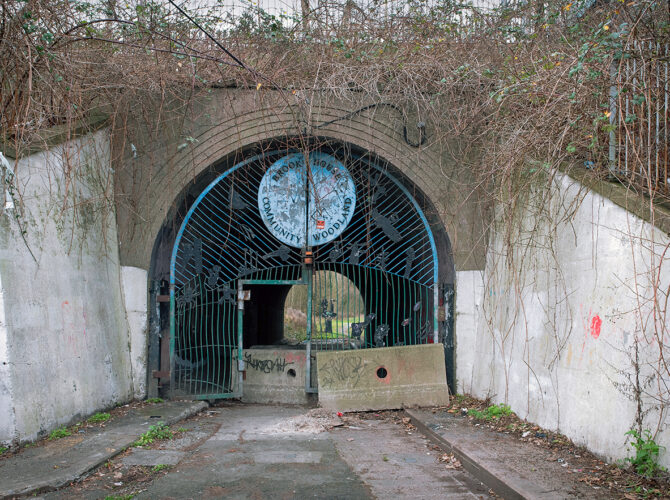
At either end of the tunnel iron gates have been added with artwork linked to the community woodland. These are modern additions but they frame the arch and show how this quiet corner of railway history still has a role in the landscape today.

Explore related content