Salford

Oldfield Lane Bridge

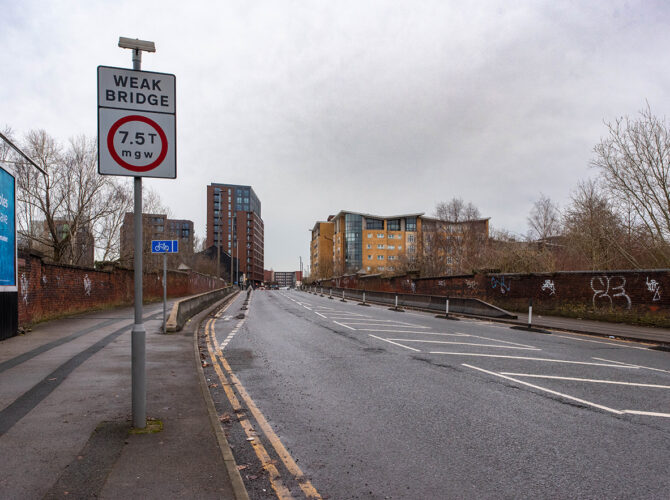
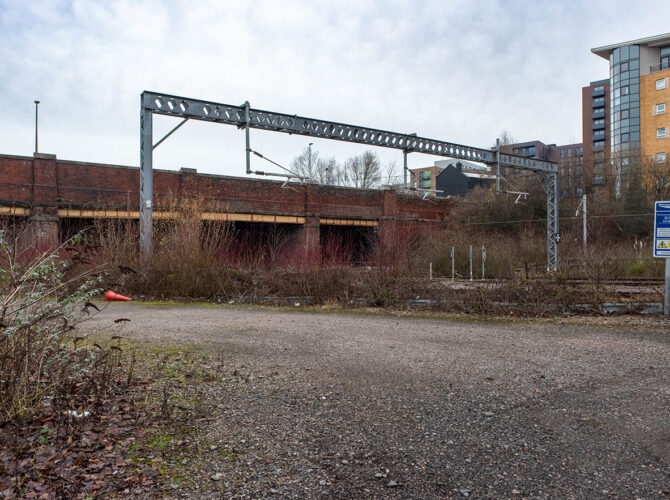
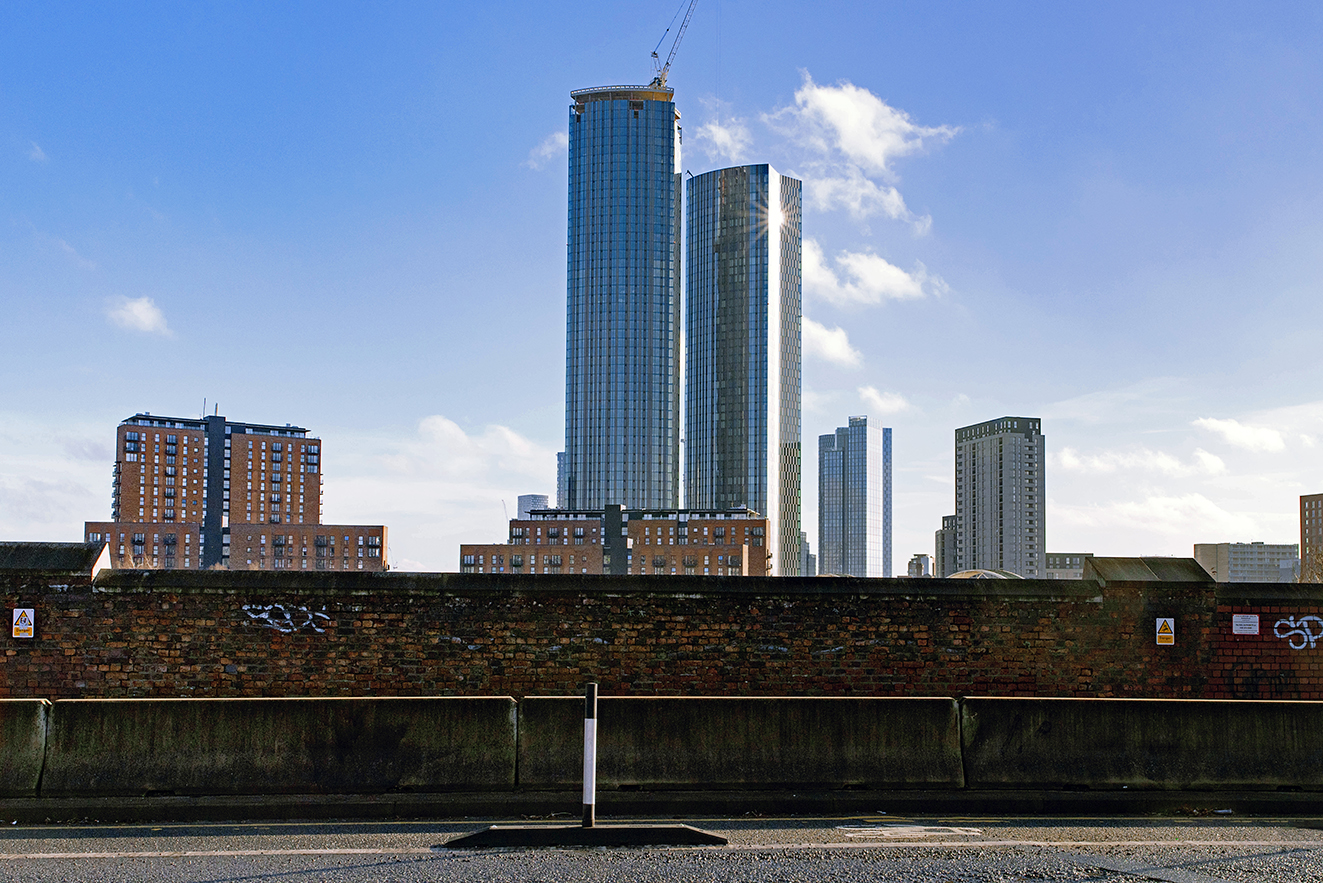
Tall glass buildings stand beyond an older brick railway wall showing contrast between eras
© Manchester Histories

Road above, railway below

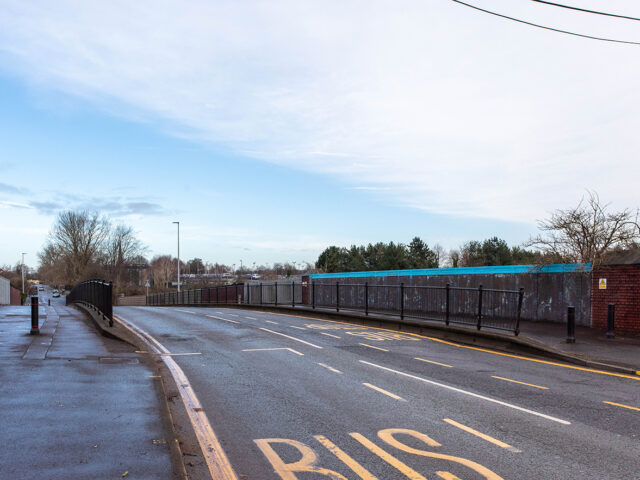
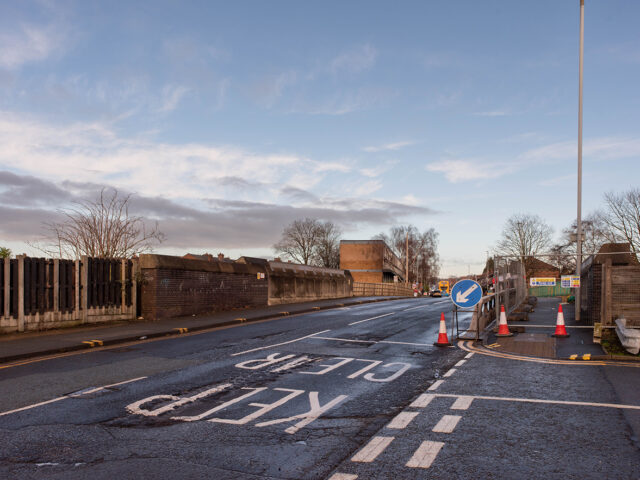
Oldfield Lane Bridge carries the road over the railway in Salford. The bridge itself has been replaced at some point in the past, though the exact date is unclear.

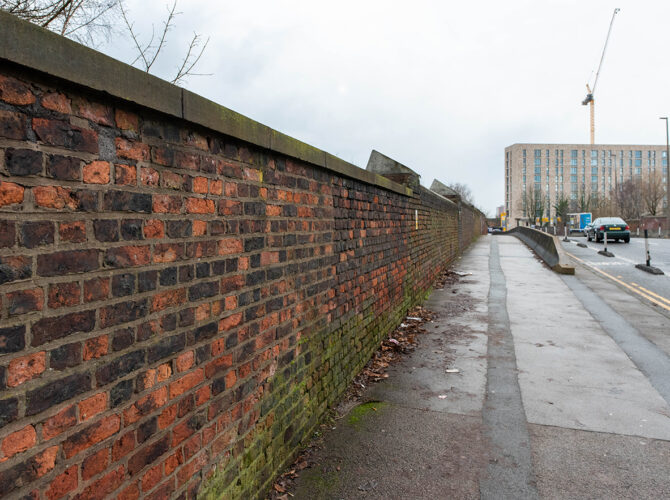
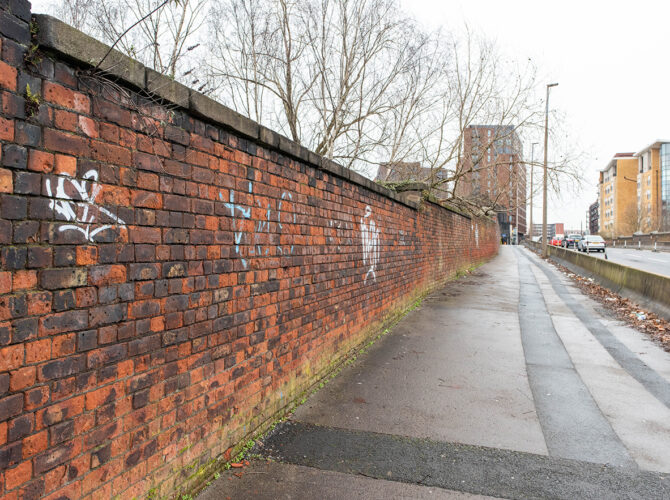
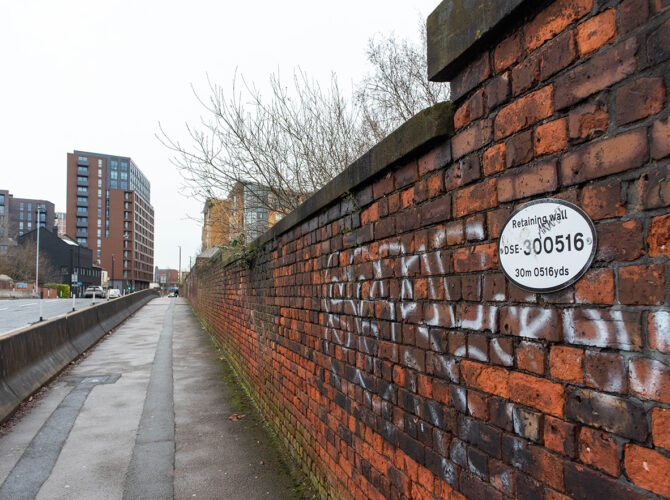
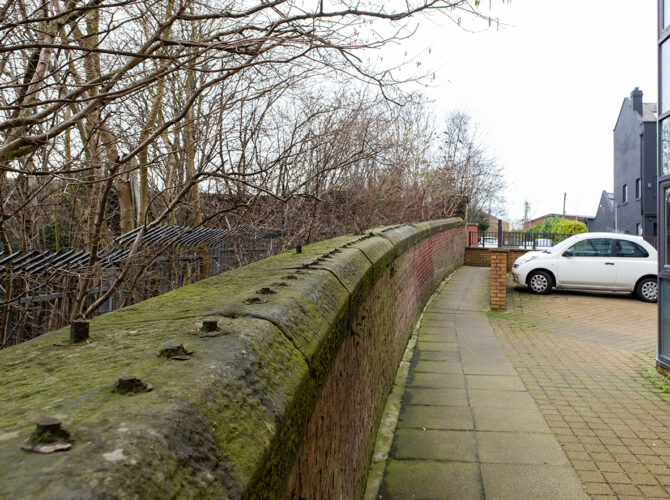
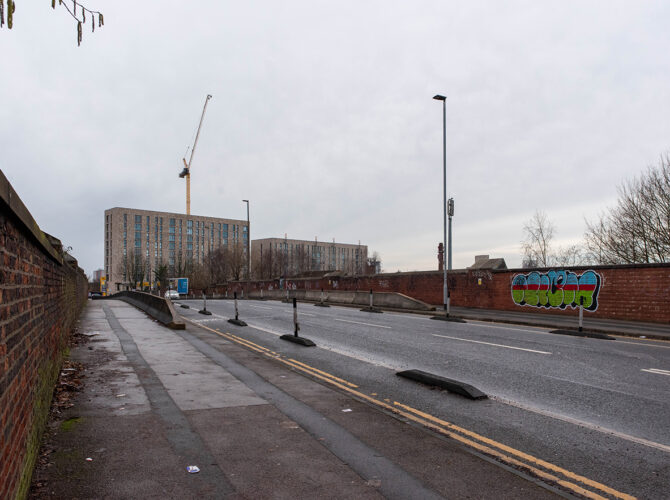
Along the street, long stretches of brick retaining walls run over the railway cutting below. While these walls are built a long time ago, it is not certain how much of what we see today dates from the original construction and how much has been rebuilt or altered over time.

At street level, the road and pavements run beside these solid walls, stained and patched over the years. Below, out of sight, trains pass through the cutting beneath, following the same route laid nearly two centuries ago.

Why it matters

This site forms part of the original approach into Manchester, where the railway was carefully engineered to maintain a steady level. Instead of rising and falling with the landscape, the line cuts through it, with roads like Oldfield Lane carried over the top.

Even though the bridge has been replaced, the layout still reflects those early decisions. The cutting, the alignment and the relationship between road and railway remain much as they were when the line first opened
Interesting stories

When the railway first passed through this area, the surroundings were far more open, with fields and scattered industry beginning to take shape. As Manchester expanded, the land around Oldfield Lane filled with factories, yards and housing, all tied to the railway below.

The bridge would have been altered as traffic increased and engineering standards changed. What we see today is part of that ongoing story, where original routes meet later upgrades.

Now the setting has shifted again. Modern apartments, retail parks and busy roads surround the site, but the railway continues to run beneath, linking past and present.

What to look out for…

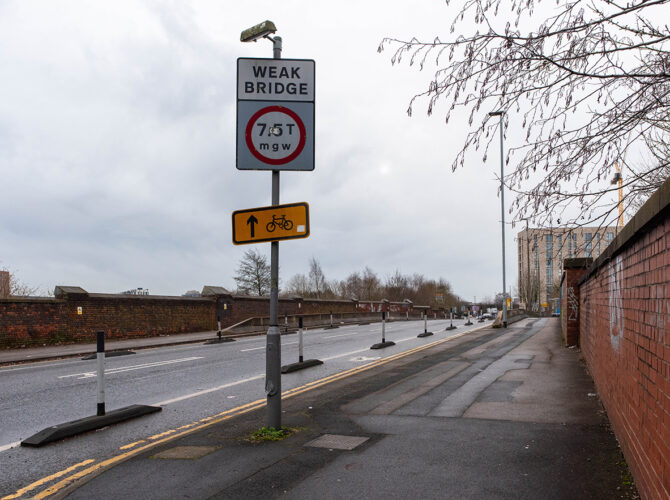
Look closely at the brick retaining walls along the street. Variations in colour and texture reveal layers of repair and change over time. Some sections are darker, others cleaner, showing where work has been carried out.

Notice how the wall follows the line of the road, sometimes straight, sometimes gently curving. The coping stones along the top edge add a neat finish while protecting the brickwork beneath.

From the pavement, it is easy to miss the railway entirely. Pause and listen and you may hear a train passing below, within the cutting. It is a subtle reminder of the line that shaped this landscape.

This content is adapted from:
https://historicengland.org.uk/listing/the-list/

Explore related content