Salford

Ordsall Lane Station

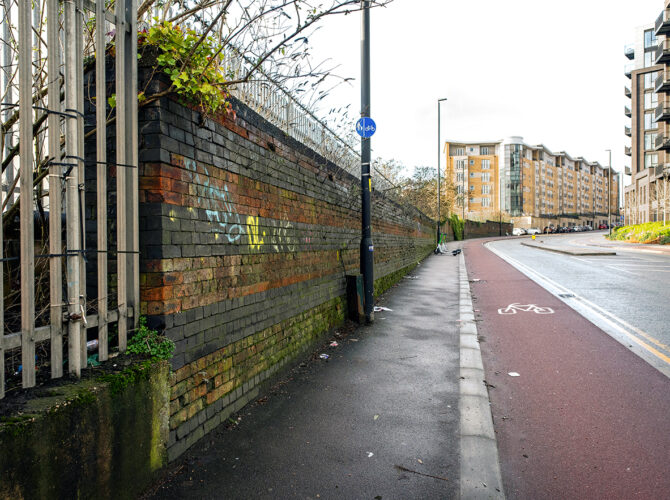
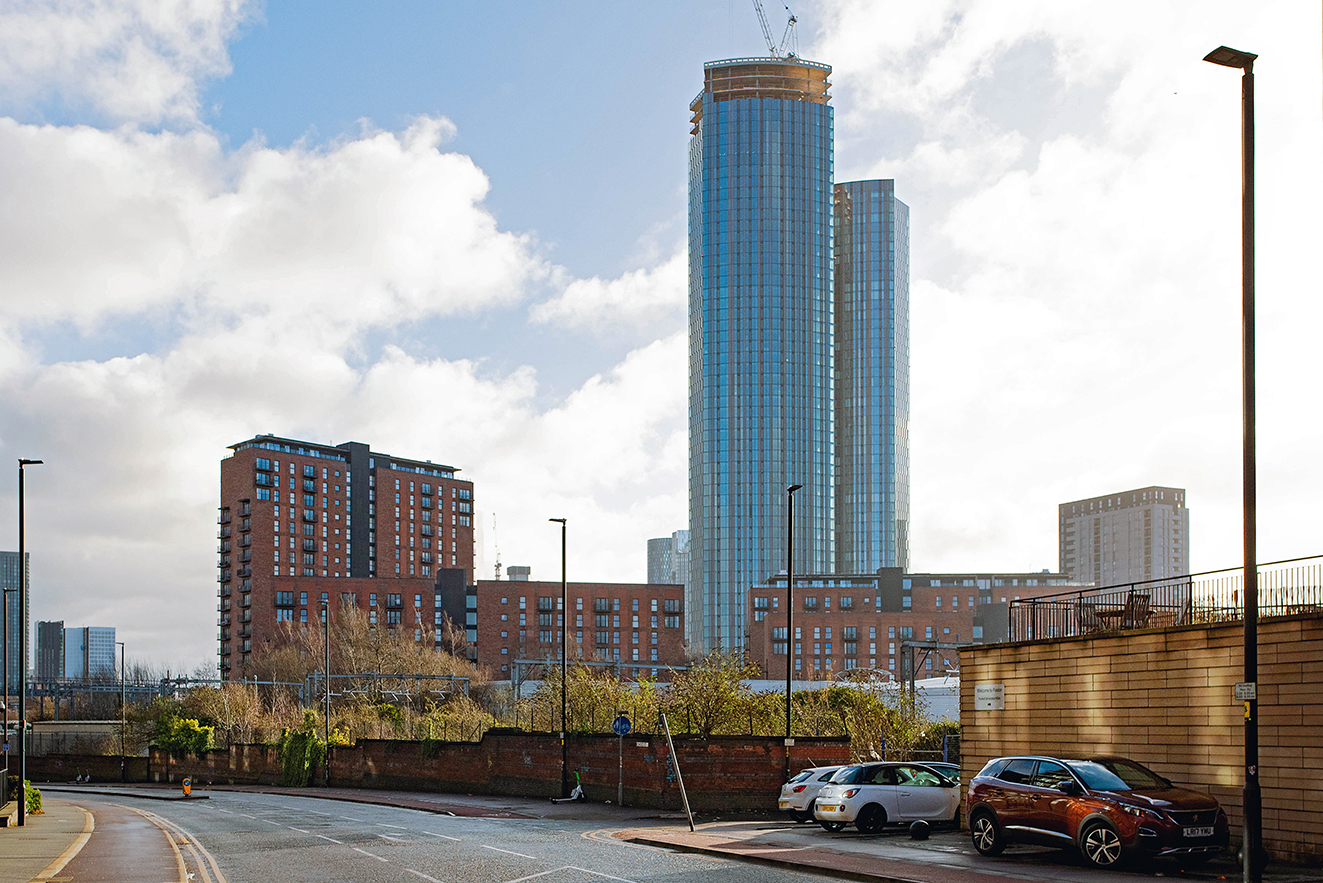
Wide view of the street and wall with high-rise buildings beyond, showing old and new together.
© Manchester Histories

Traces along the wall.

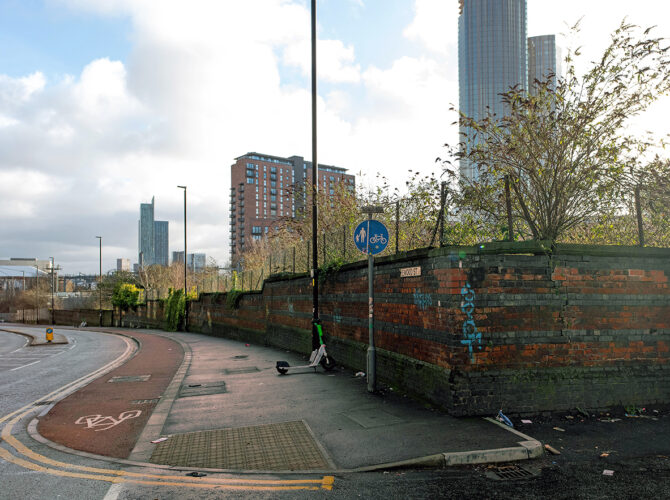
Ordsall Lane Station once stood along the Liverpool and Manchester Railway in Salford, close to where the line curved toward Manchester. Nothing of the station remains today, but its presence lingers in the long brick retaining walls that line Ordsall Lane, now marked by graffiti, weathered brickwork and the steady flow of traffic and cycle lanes.

The surrounding area has changed dramatically. Modern flats and towers rise nearby, but the line still runs above, hidden behind those sturdy early walls.

Why it matters

Opened in 1830, Ordsall Lane was one of the intermediate stopping places on the original route into Manchester. It served a growing industrial district, linking local workers and goods to the wider railway network at a time when the city was expanding rapidly.

Stations like this were never grand, but they were essential. They helped knit together industry, housing and transport, turning the railway from a bold experiment into something woven into everyday life.

Though the buildings have gone, the surviving brickwork along the road reflects the same early engineering seen elsewhere on the line, built strong to support the raised track above.
Interesting stories

Ordsall Lane had a relatively short life as a passenger station, closing in the mid 19th century as services were reorganised and larger stations took over. As Manchester’s railway network grew more complex, smaller stops like this were gradually left behind.

The area around the station, however, continued to thrive industrially. Warehouses, sidings and factories filled the landscape, and the railway remained at the heart of it all.

Today, the contrast is striking. Where once there were goods yards and smoke, there are now apartment blocks and city skyline views, with the railway still quietly following its original course.

What to look out for…

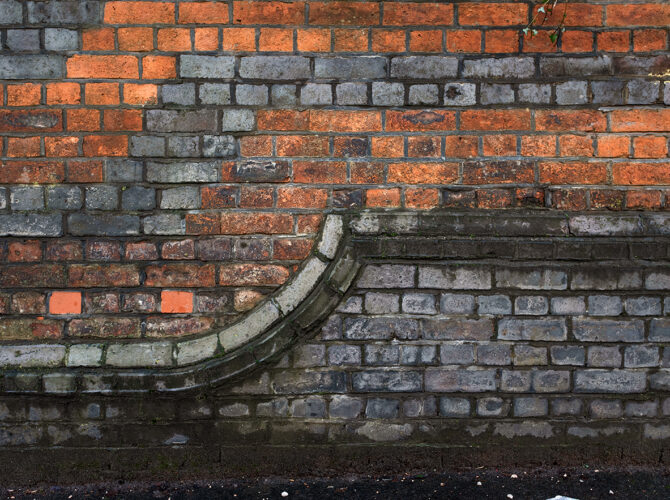
Walk along Ordsall Lane and study the long brick retaining wall. Look for changes in brick colour and pattern, signs of repair and adaptation over time.

In places, the brickwork curves gently and steps slightly, hinting at the structure that supports the railway above. The stone detailing and coping along the top edge show the care taken, even in what might seem like a simple boundary wall.

Pause and look beyond the wall. The modern skyline rises above it, but just behind that brickwork runs one of the oldest passenger railway routes in the world, still in use today.

This content is adapted from:
http://www.disused-stations.org.uk/o/ordsall_lane/index.shtml
https://en.wikipedia.org/wiki/Ordsall_Lane_railway_station_

Explore related content

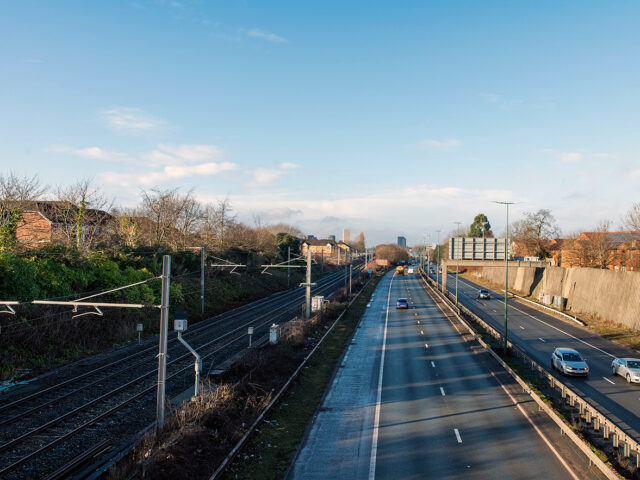
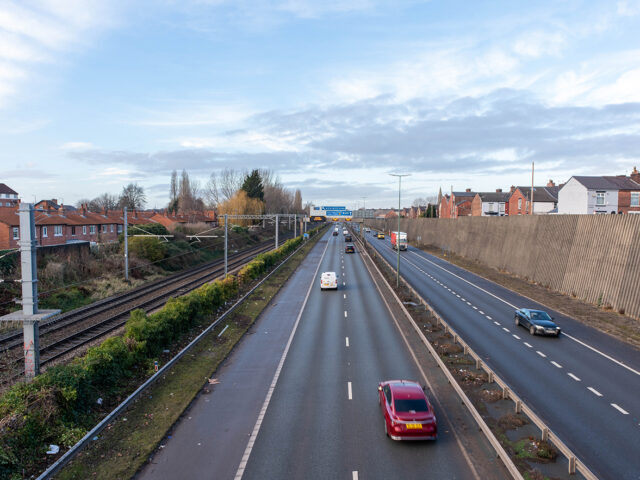
View from Gore Booth Bridge showing a railway line running parallel to a busy dual carriageway, with houses on one side and a high retaining wall on the other, marking the area where Seedley Station once stood
Salford

Seedley Station

A lost station at Seedley. Seedley Station once stood along the Liverpool and Manchester Railway in...