Salford

Queens Arms

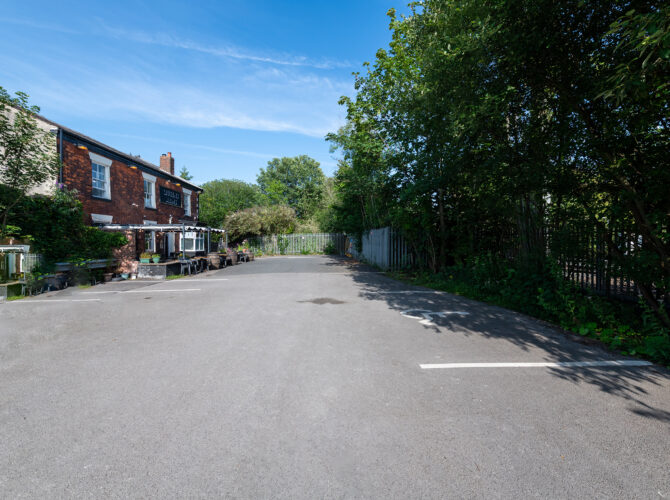
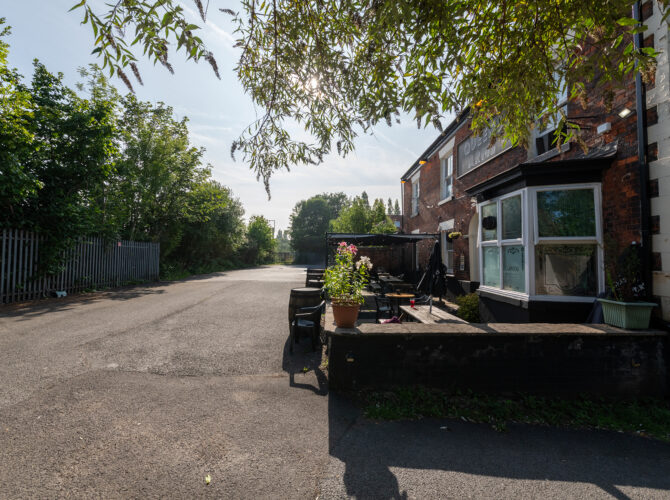
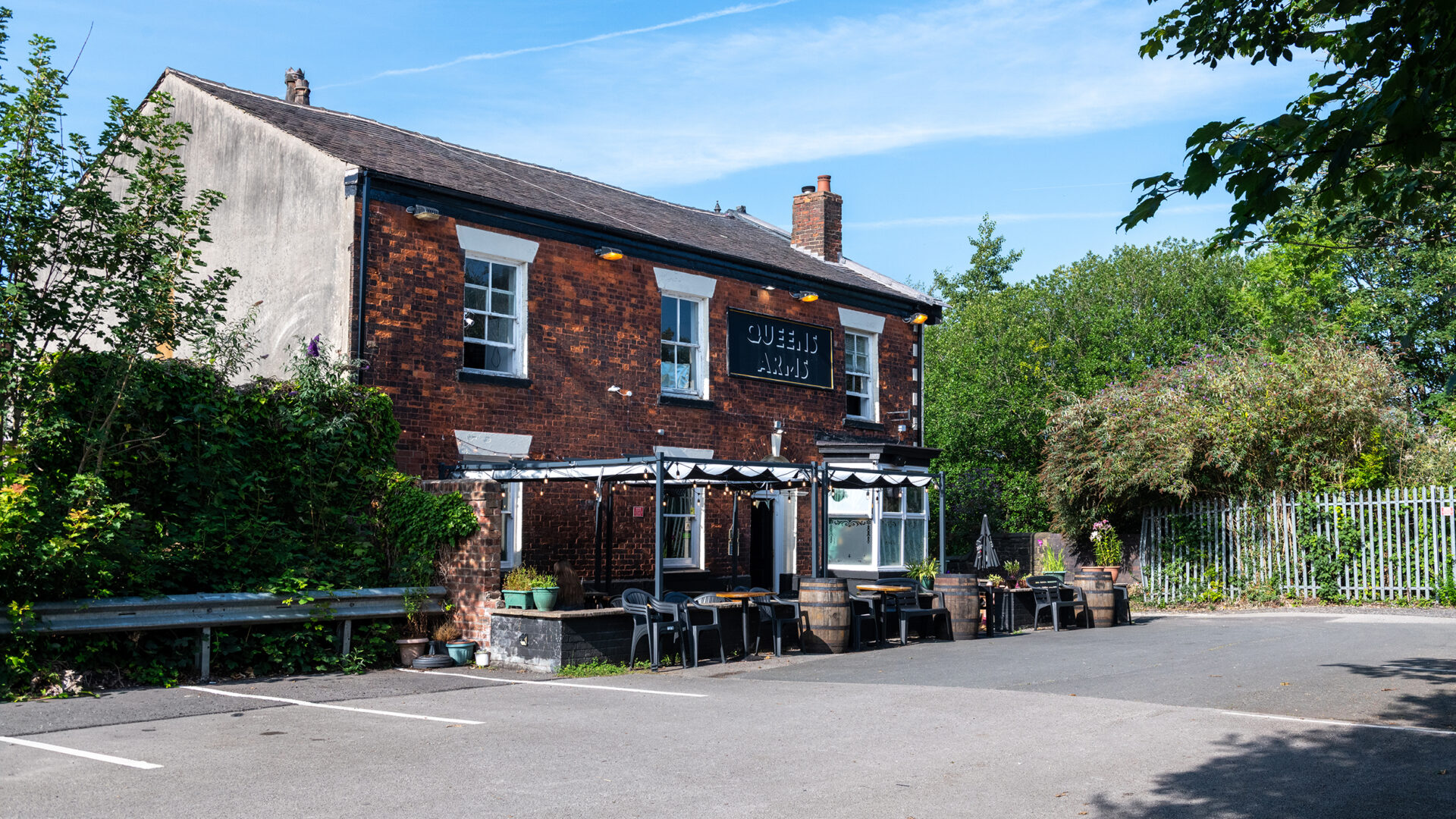
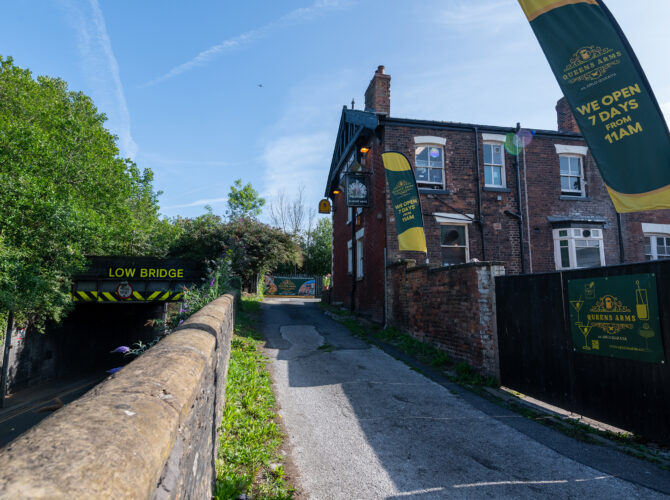
A view of the Queens Arms from the car park showing the two-storey red-brick building, outdoor tables and surrounding trees.
© Chris Iles

One of the first railway pubs.

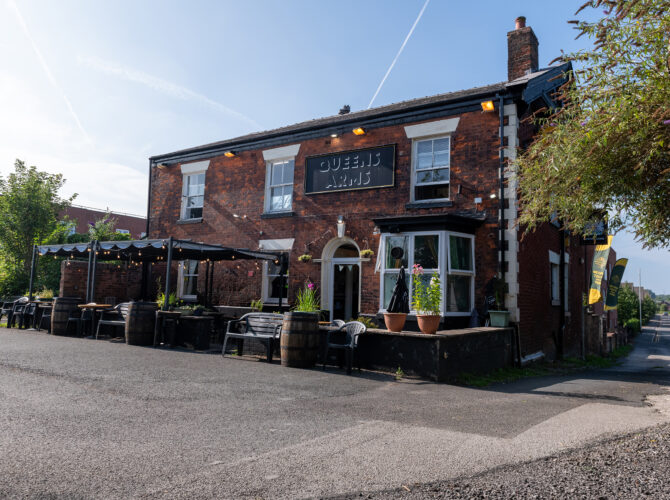
The Queens Arms is a traditional red-brick pub in Patricroft, built in 1828,  two years before trains began running on the Liverpool and Manchester Railway. Originally known as the Patricroft Tavern, it was renamed the Queens Arms some time between 1857 and 1864, reportedly in honour of a 2nd visit by Queen Victoria. Tucked beside the tracks near Patricroft station, it has served railway workers, engineers and locals for nearly two centuries.

Why it matters

This may be one of the world’s first railway pubs. Positioned just yards from the line, it quickly became a popular stop for early rail travellers and workers from nearby industries, including Nasmyth’s famous Bridgewater Foundry, one of the great powerhouses of Victorian engineering. Its close ties to the railway give the Queens Arms a unique place in industrial and social history. It’s now Grade II listed for its historic and architectural interest.
Interesting stories.

In the early days of the railway, water wasn’t always safe to drink, especially in industrial towns. Ale, being boiled and brewed, was often the safer choice. With engines blazing and footplates roasting, railway workers; drivers, firemen and guards would cool off with a pint of ale as their trains pulled into Patricroft. The Queens Arms became a regular refreshment stop, its doors swinging open to the heat-hazed rhythm of arriving locomotives.

What to look out for…

From the car park in front of the Queens Arms, you can just make out the railway line beyond the fence, once so close that there was a small platform here. Trains would stop outside the pub, making it a favourite refreshment spot for railway workers and thirsty travellers. Looking up at the building itself, you’ll see period features like the red brickwork and sash windows, all echoing its early 19th-century roots and a  living piece of railway history.

This content is adapted from:
https://historicengland.org.uk/listing/the-list/

Explore related content