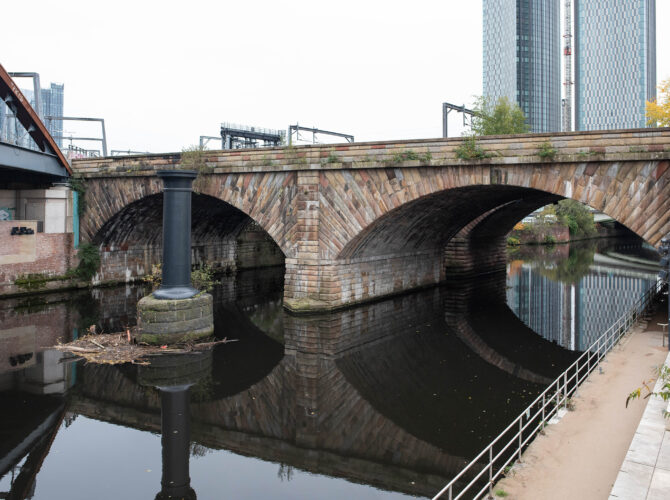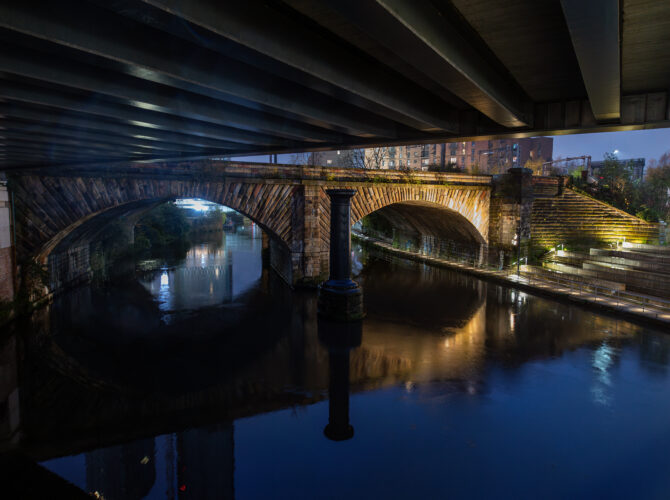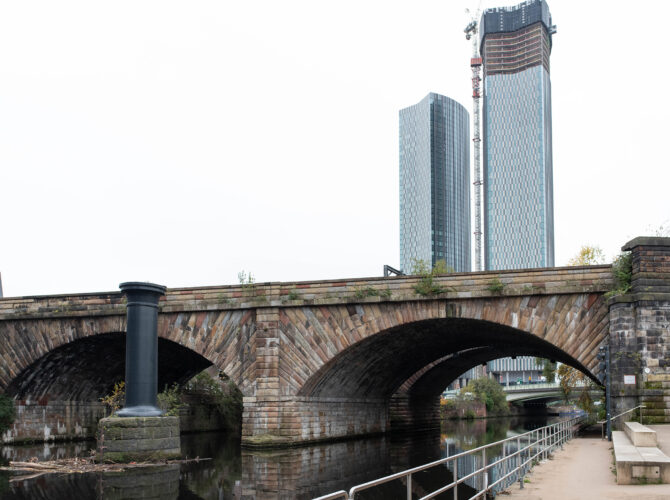
Where the railway first entered Manchester.
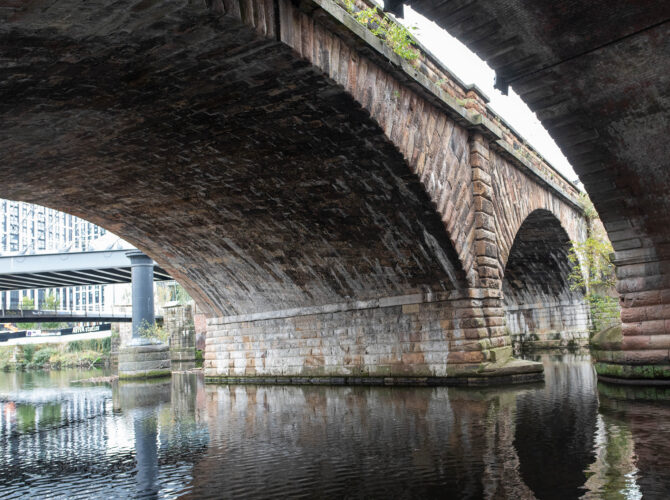
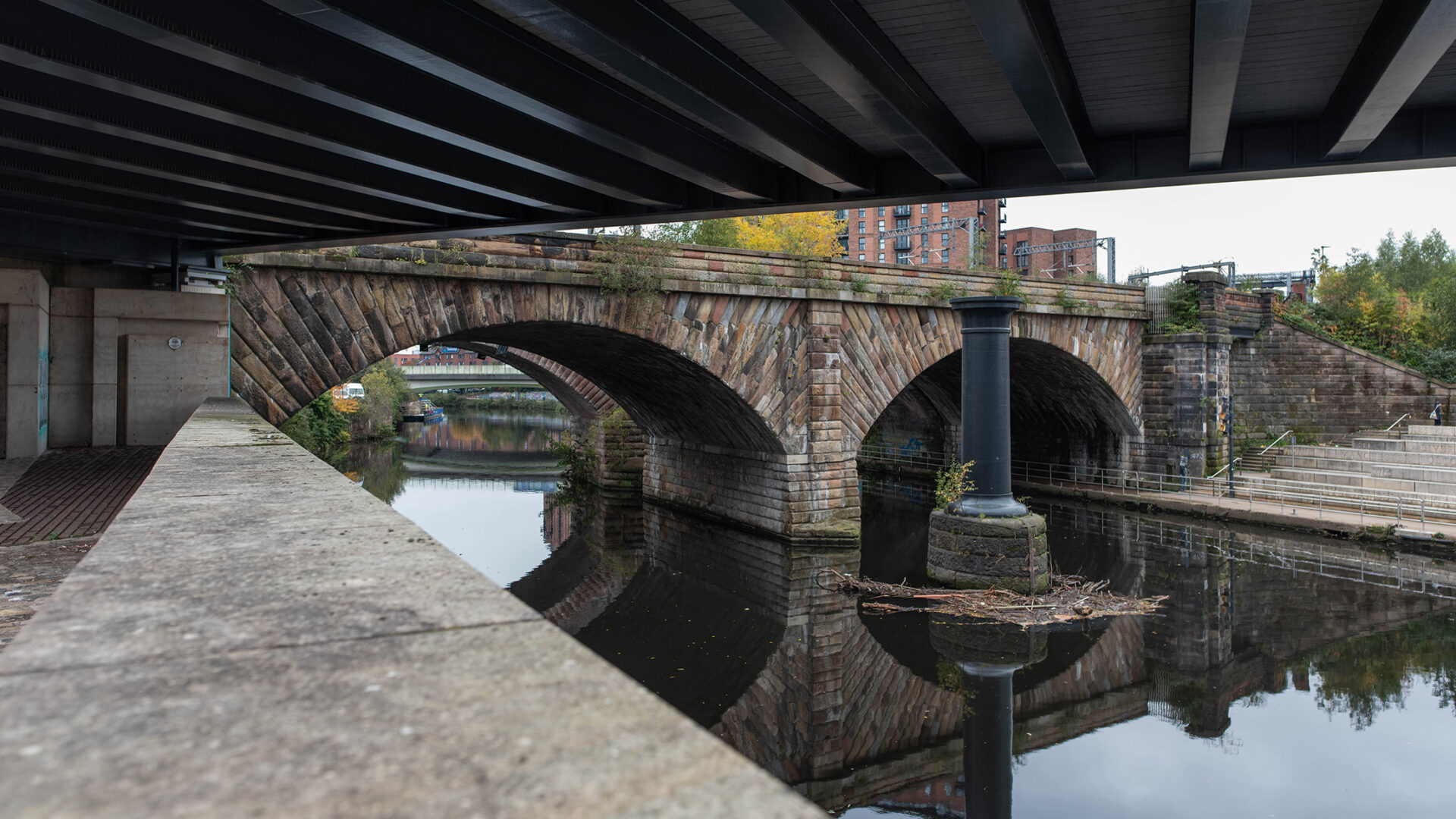
This impressive stone bridge carries the Liverpool and Manchester Railway over the River Irwell into the former Liverpool Road Station. Opened in 1830, it was designed by George Stephenson and is one of the world’s earliest railway bridges. Built from finely dressed sandstone, it features two skewed segmental arches, rusticated ashlar facings and distinctive herringbone-patterned stonework.
Though now surrounded by modern buildings, the bridge remains a quiet monument to early railway engineering, standing just behind the Science and Industry Museum in Manchester.
Why it matters
This was no ordinary bridge. It had to meet strict clearance rules set by the Mersey and Irwell Navigation Company to allow river traffic to pass beneath. That challenge shaped not only the height of the bridge, but also the slope and layout of the station behind it, influencing the design of one of the world’s first passenger terminals.
The Irwell Bridge represents a key moment in the railway age: when civil engineering, commercial needs and new technology came together to solve problems and shape cities. Its survival today is a testament to that bold vision and craft.