Salford

Railway Bridge over Worsley Road

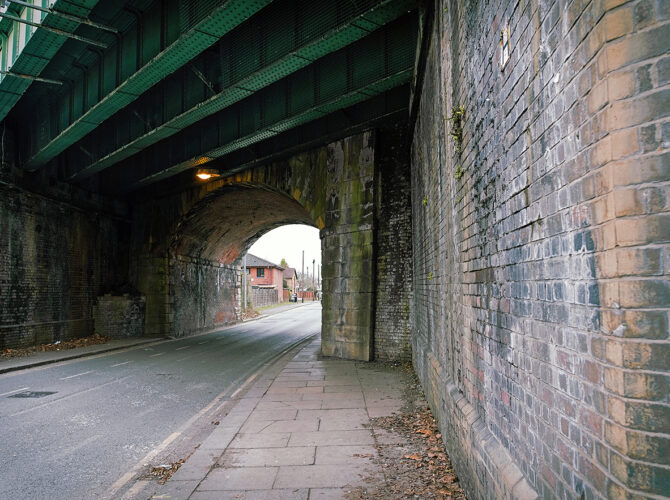
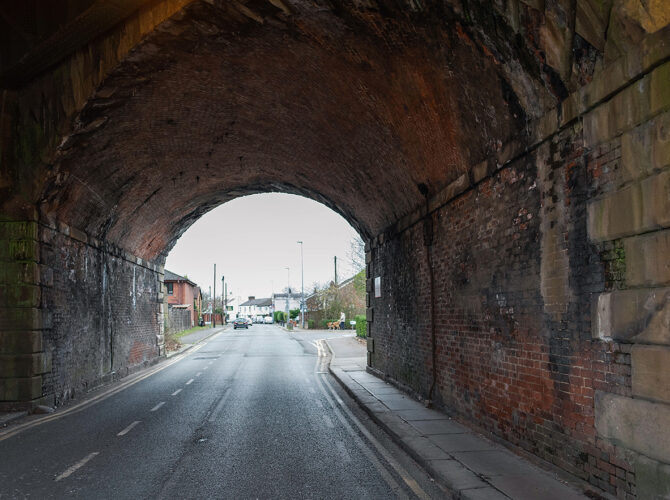
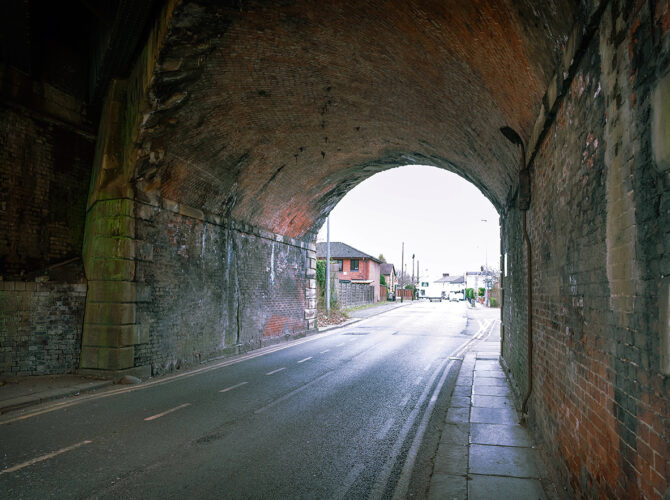
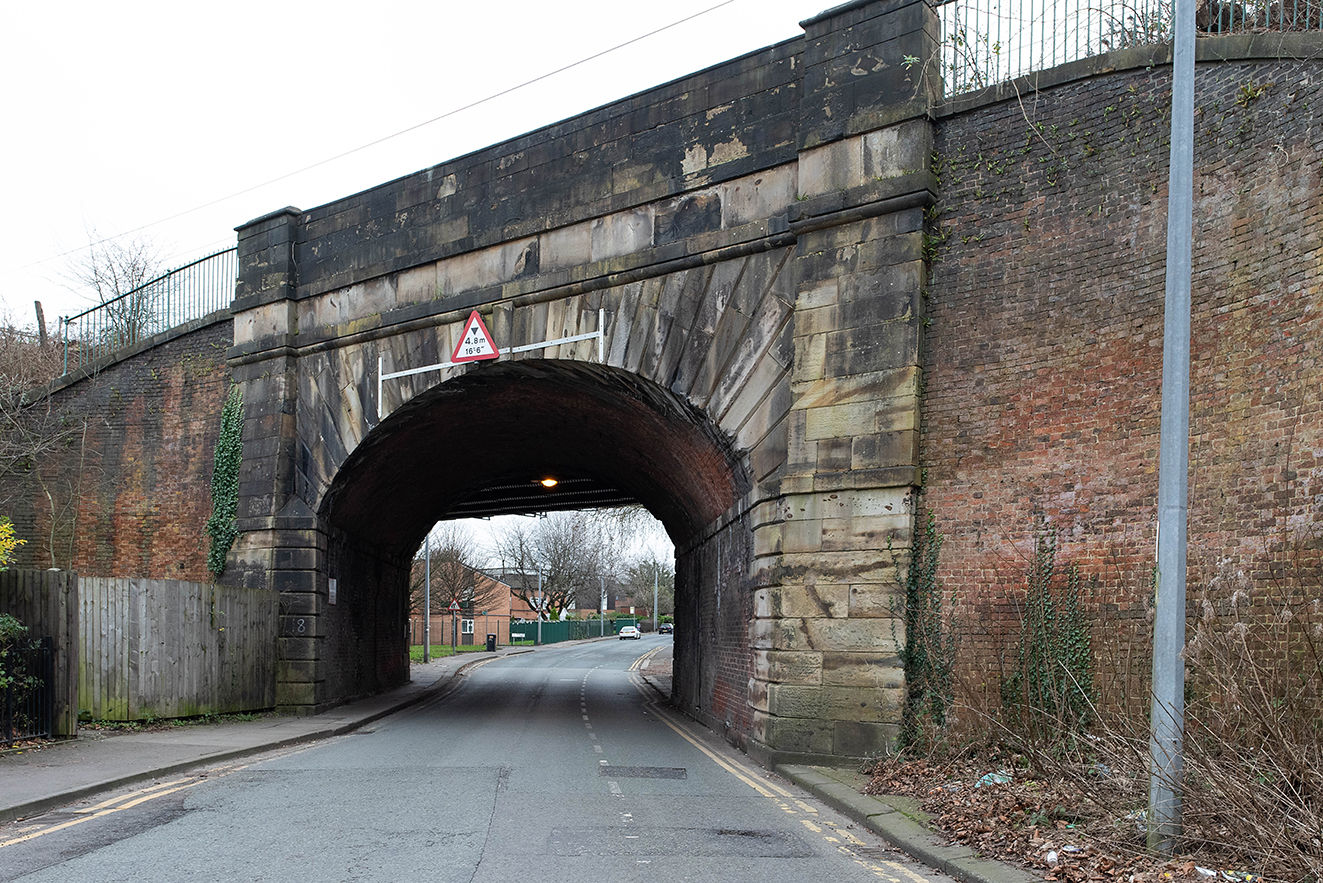
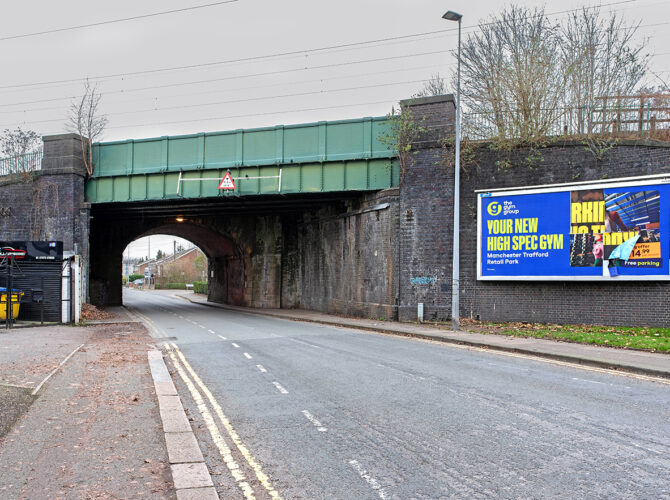
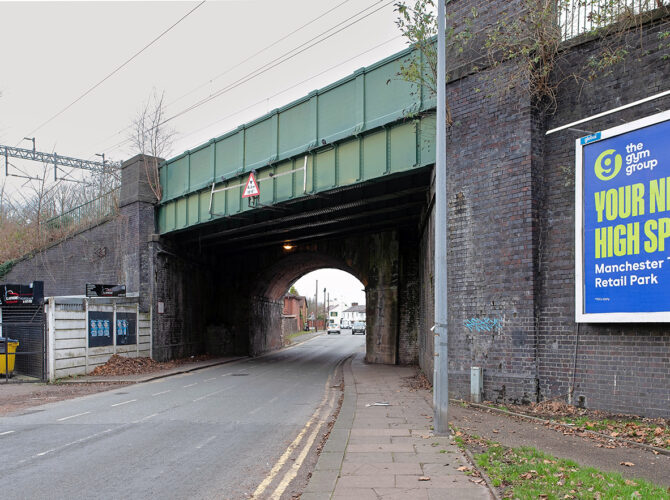
The earlier stone-built arch, with its angled design, shows the craftsmanship of early railway engineering.
© Manchester Histories

One of the earliest examples of a skew bridge.

This bridge carries the Liverpool and Manchester Railway over Worsley Road in Patricroft. The original stone bridge was designed by George Stephenson and built between 1829 and 1830. It is one of the earliest known examples of a skew bridge,  where the bridge crosses the road at an angle rather than straight on. This clever solution allowed the railway to cut across existing roads without the need to realign them, an important factor in the design of early railways.

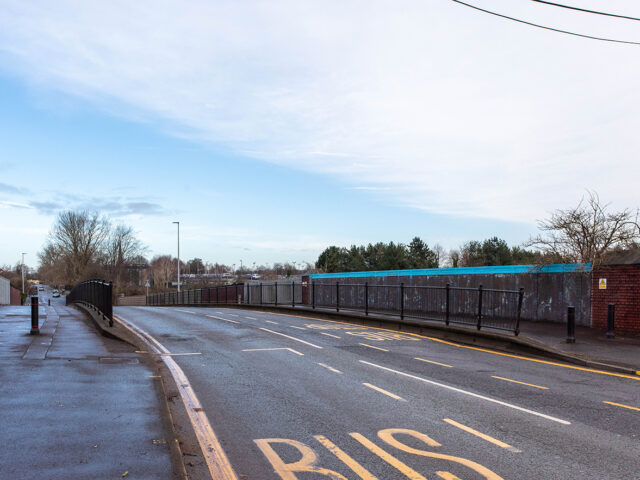
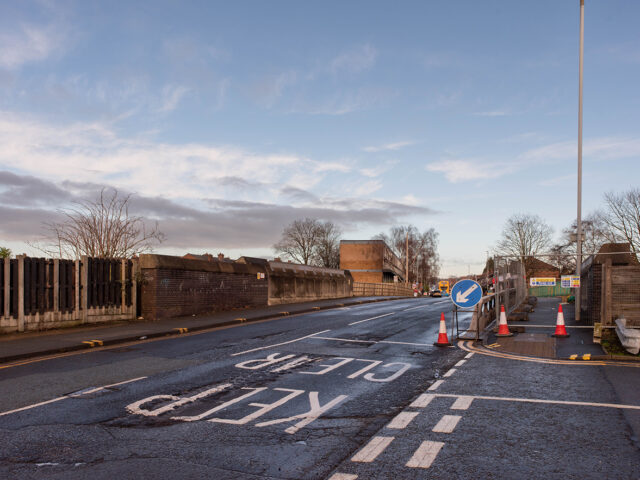
Today, the bridge features both the original stone arch and a later green-painted steel deck added above it to carry heavier modern trains. Together, they form a layered structure that still performs its function nearly 200 years later.

Why it matters

This bridge is one of the few surviving original structures from the opening phase of the Liverpool and Manchester Railway. Its Grade I listing reflects its national importance as a rare and early example of skew bridge engineering. Stephenson’s design required each stone block in the arch to be individually cut to follow a twisting path,  a challenge in both geometry and craftsmanship. This makes it not just a practical structure but a fine piece of civil engineering.

It also tells the story of how engineers worked around existing roads and topography to create a railway that was fast, direct and reliable. Bridges like this laid the groundwork for later railway expansion across the country and beyond.
Interesting stories

The bridge has witnessed nearly two centuries of railway history. When it first opened, steam locomotives like the Rocket would have passed overhead, watched by curious onlookers standing below. The road itself remained in constant use, with the arched tunnel acting as a key local route beneath the railway. Later strengthening works, including the addition of a steel span, allowed it to continue supporting modern rail traffic without replacing the original masonry.

This bridge stands not far from the former Bridgewater Foundry, linking it directly to the heavy industry that once thrived in this part of Salford. Locomotives built nearby would likely have crossed over it, making it part of a self-contained industrial world of innovation and movement.

What to look out for…

Look closely at the arch itself. The sandstone blocks form a twisted shape known as a helicoidal or skew arch. This gives the bridge a distinctive angled appearance and shows just how precisely each stone had to be cut. Stand beneath it to see the curvature of the tunnel and the blend of brick and stonework inside.

Above, the green-painted metal girders of the later addition sit in contrast to the original materials. The two structures together tell a story of continuity and adaptation, where the past hasn’t been swept away but built upon. This is railway engineering with history still written into the walls.

This content is adapted from:
https://historicengland.org.uk/listing/the-list/

Explore related content