Manchester

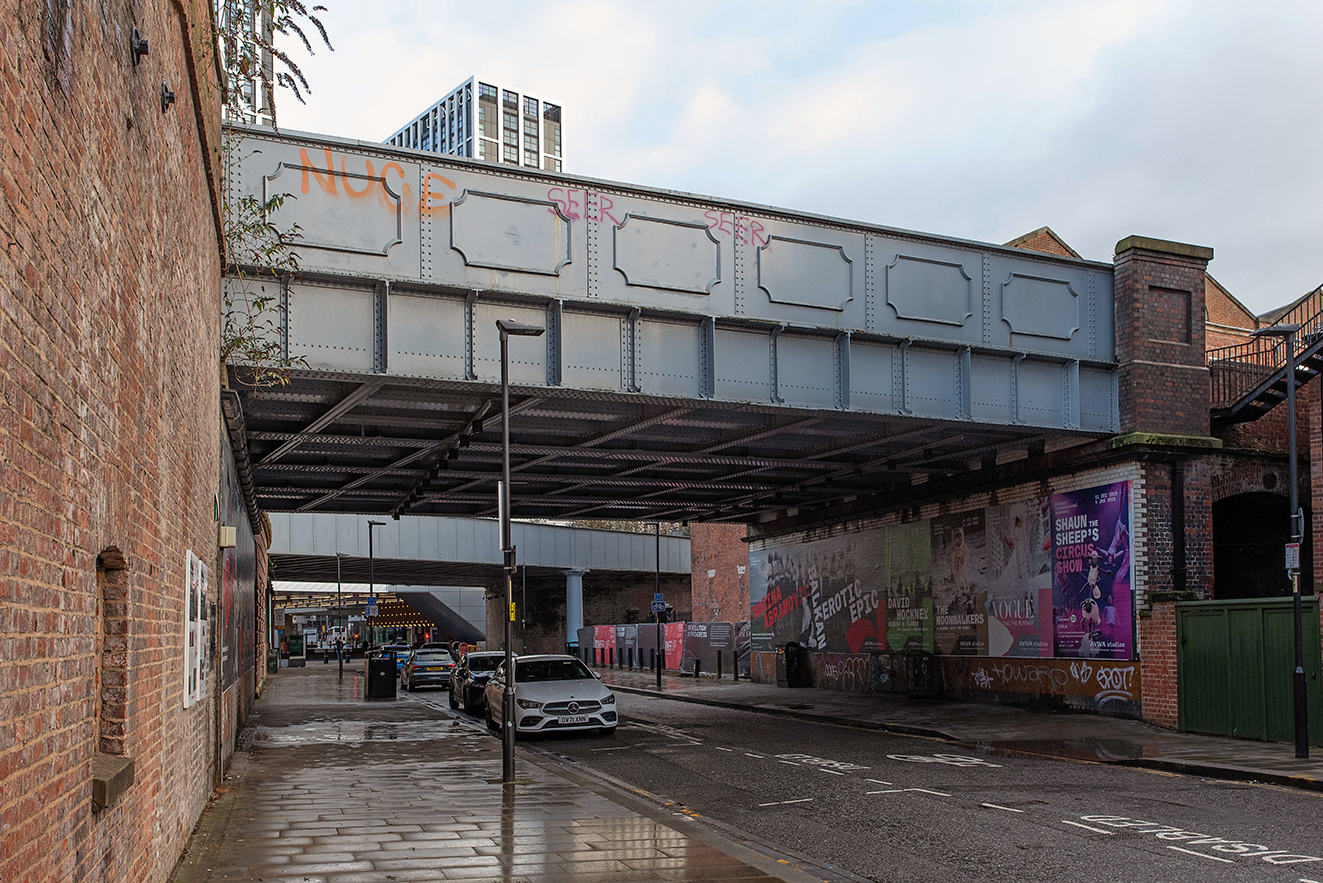
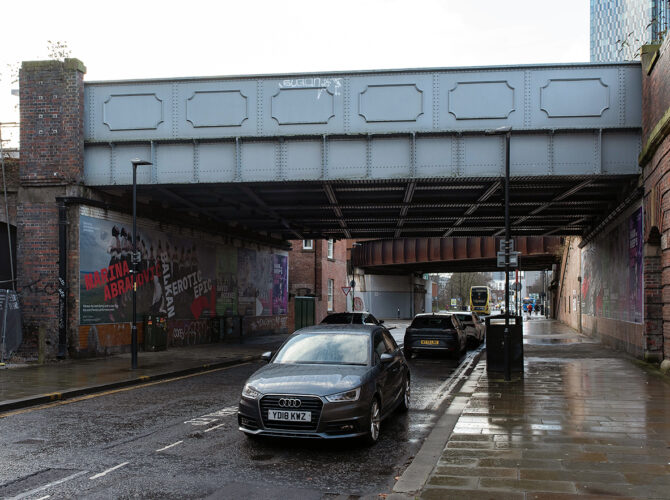
Railway Viaduct Linking Bridge over Irwell to Liverpool Road Station [Water Street Bridge]

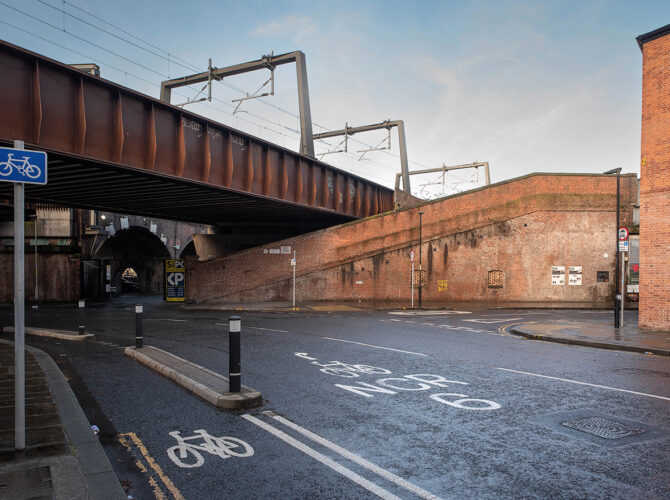
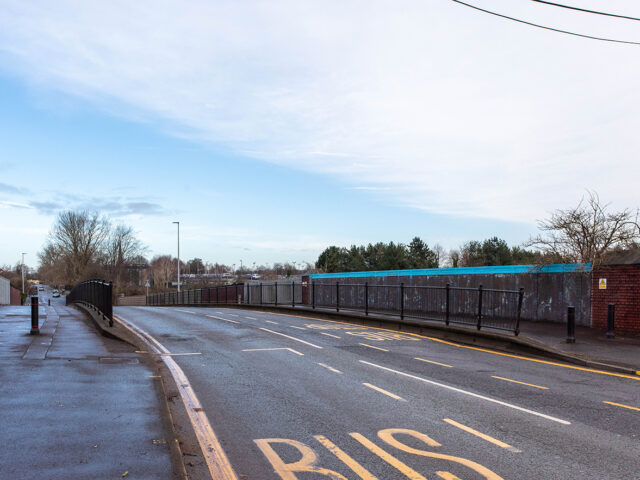
Wider view of the bridge spanning the road, with nearby buildings, signage, and traffic passing underneath.
© Manchester Histories

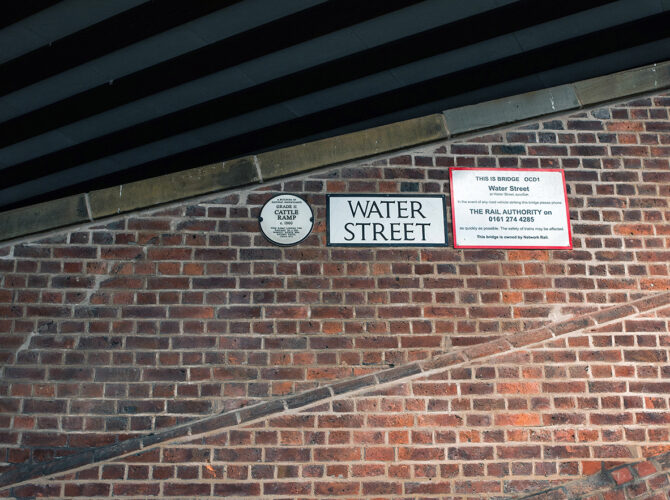
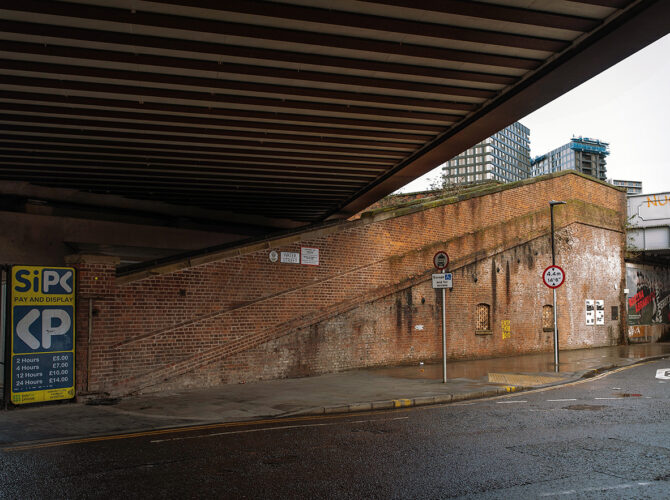
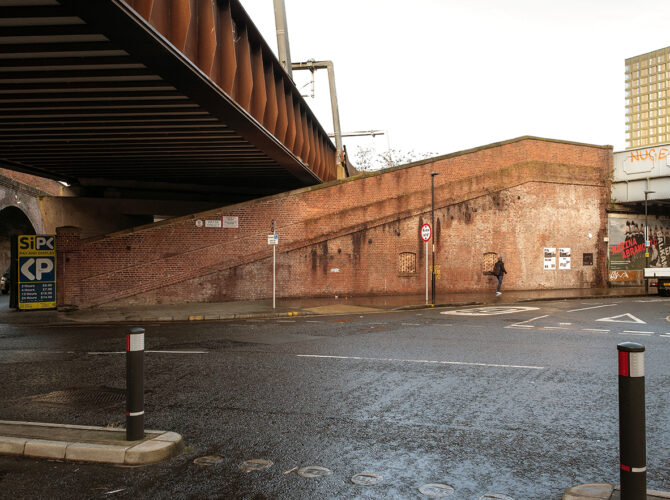
The cattle ramp of Liverpool Road.

A railway viaduct and bridge that carried the Liverpool and Manchester Railway into Liverpool Road Station. Built in 1830 and partially rebuilt in 1905, it includes a brick viaduct leading to an iron-girder bridge over Water Street. Attached to the south side is a brick cattle ramp, built at a right angle to the viaduct with a cobbled surface and parapets. The ramp was used to move livestock from street level up to the railway line and is a rare surviving feature from the early years of goods transport by rail.

Why it matters

Although rebuilt in parts, this structure is a key piece of the original railway infrastructure connected to Liverpool Road Station, the first passenger railway station in the world. It physically links the station to the bridge over the River Irwell and was a vital part of the early railway network that helped transform Manchester into a global industrial city. The cattle ramp is especially significant as one of the few remaining examples of how railways were adapted for handling livestock within the urban setting.
Interesting stories?

The cattle ramp tells a different side of the railway story. Livestock arriving by train were driven down the ramp into the heart of the city, close to the warehouses and markets they were bound for. While passenger travel often gets the headlines, the daily movement of animals and goods was just as essential to the railway’s success. The fact that the ramp survives in its original position is a rare and vivid reminder of that part of Victorian city life.

What to look out for…

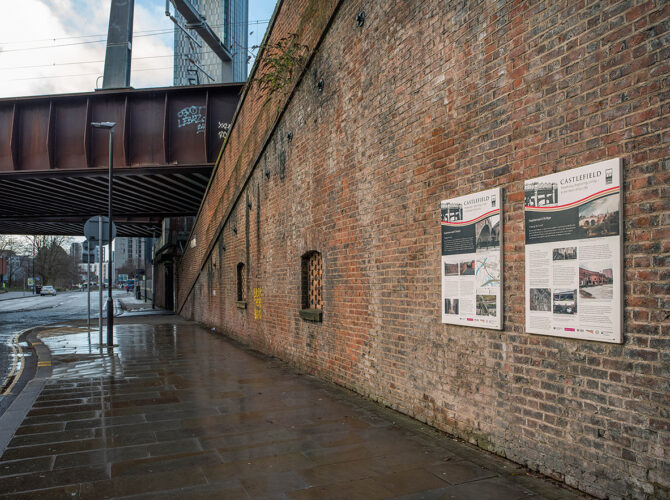
As you approach from Water Street, look up to see the iron-girder bridge spanning the road, supported by solid masonry abutments. On the south side, the cattle ramp rises at a right angle from the viaduct with its original cobbled surface and brick parapets still in place. At the base of the ramp, a plaque clearly labels it as the Cattle Ramp, a quiet but powerful survivor of early railway goods handling. Along Water Street, the retaining wall features bold brick banding that gives the structure a strong and purposeful presence.

This content is adapted from:
https://historicengland.org.uk/listing/the-list/

Explore related content