St Helens

Skew Bridge & the Milestone

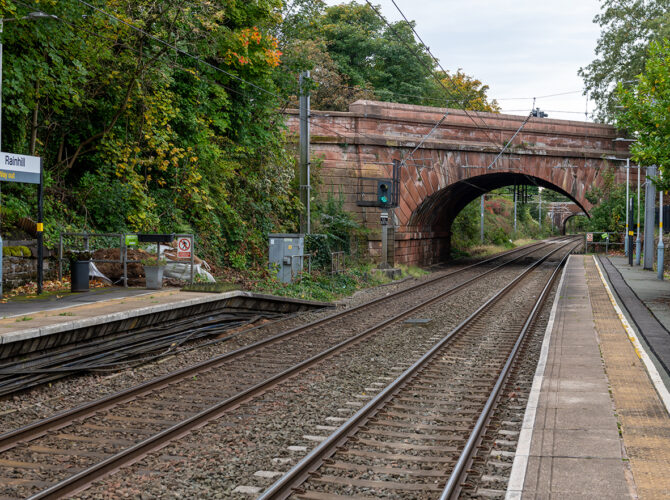
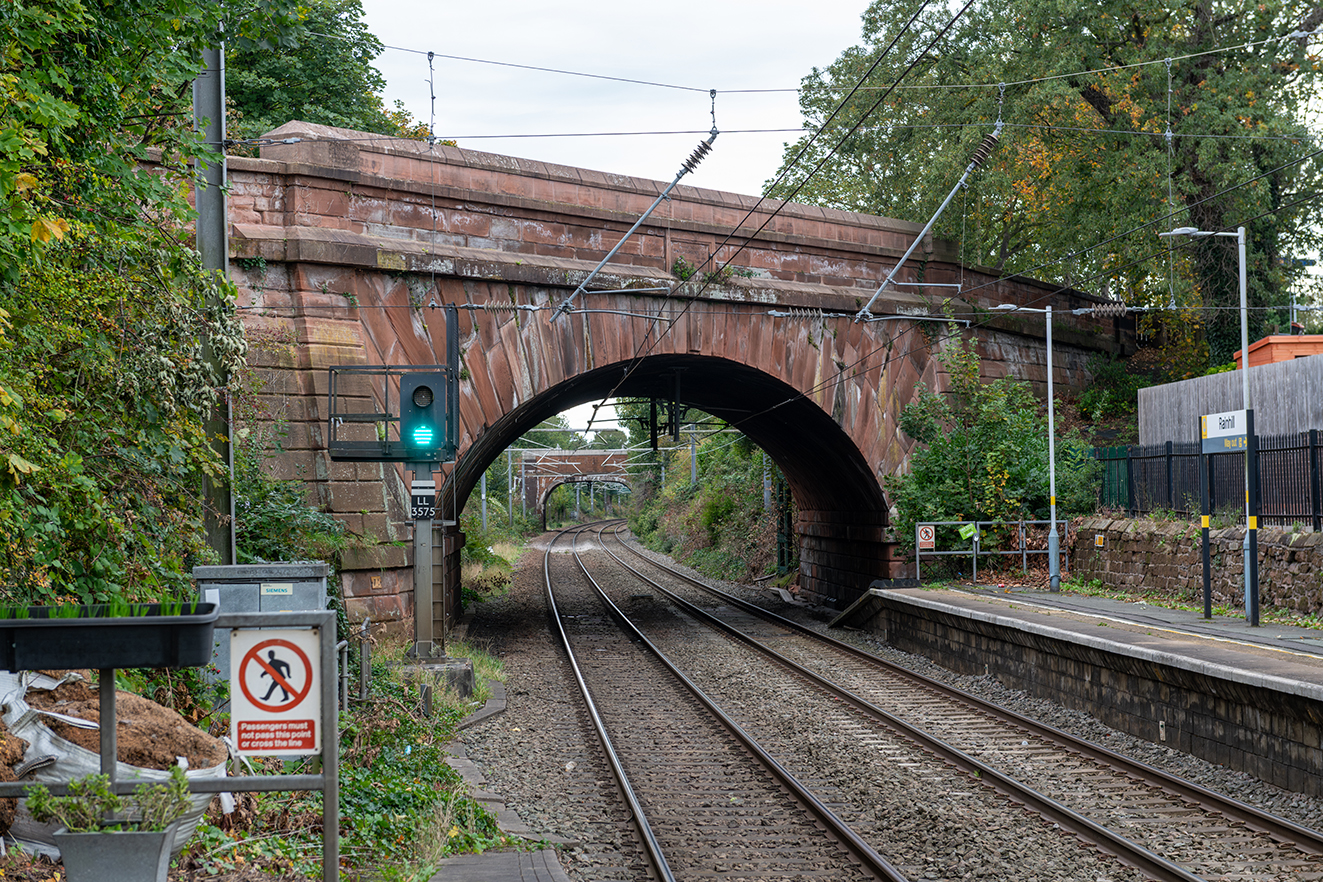
Close view of the sandstone Skew Bridge spanning the railway, with tracks curving beneath and overhead lines above.
© Chris Iles

The bridge built at an angle.

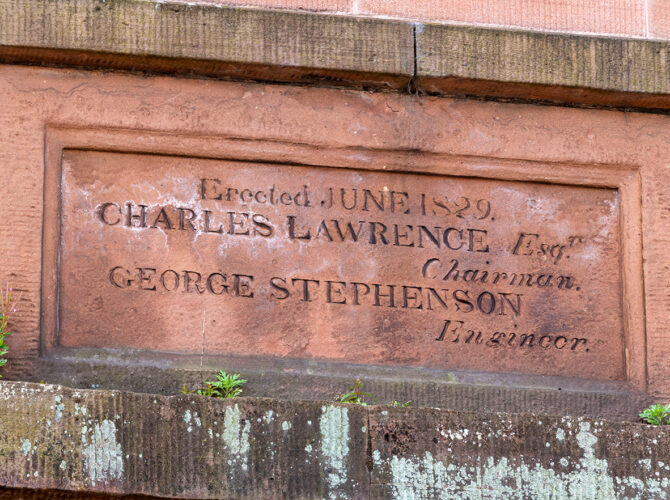
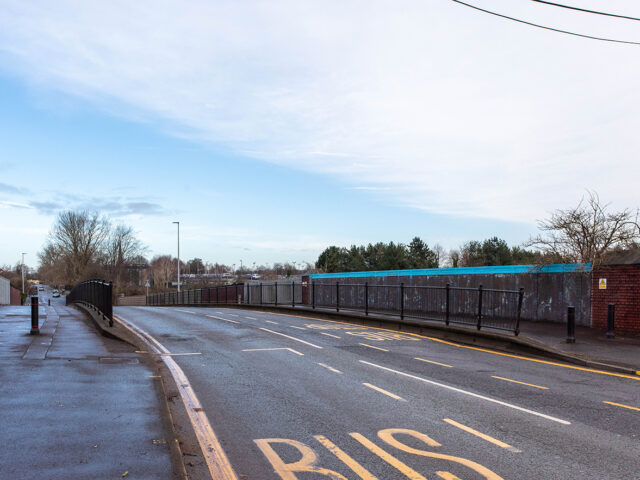
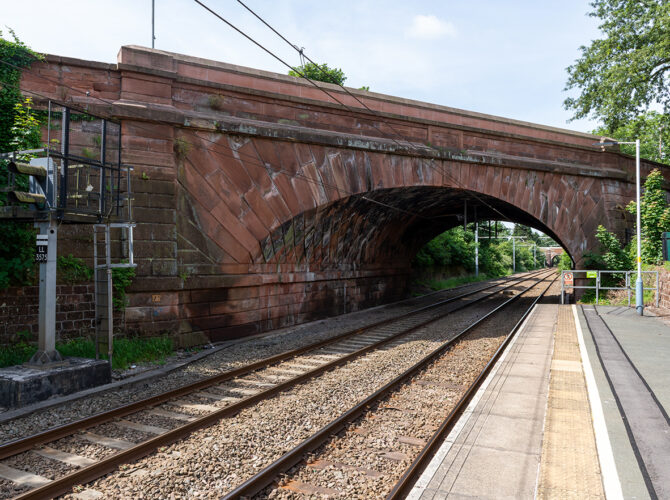
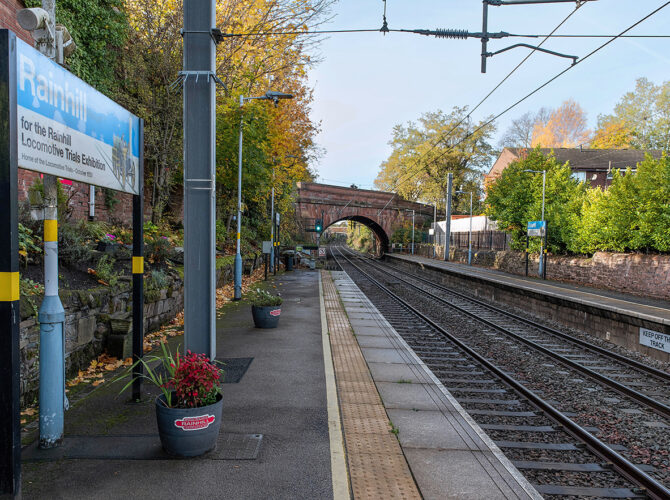
Just west of Rainhill Station, the road crosses the railway at an angle on what is known as Skew Bridge, or Rainhill Bridge. Built around 1830, it carries Warrington Road over the tracks in a way that was quite new at the time.

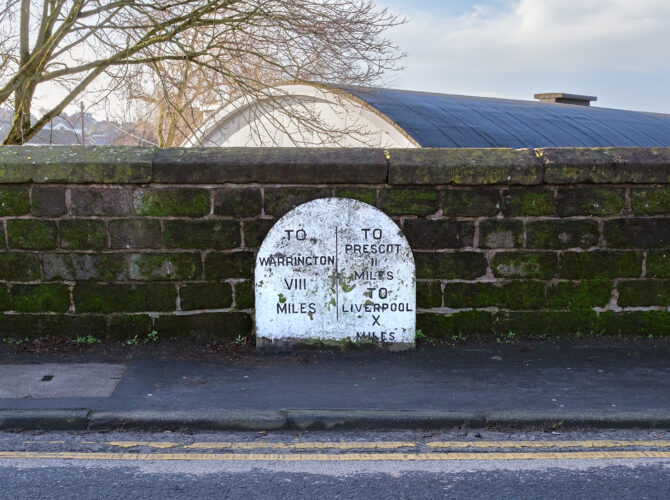
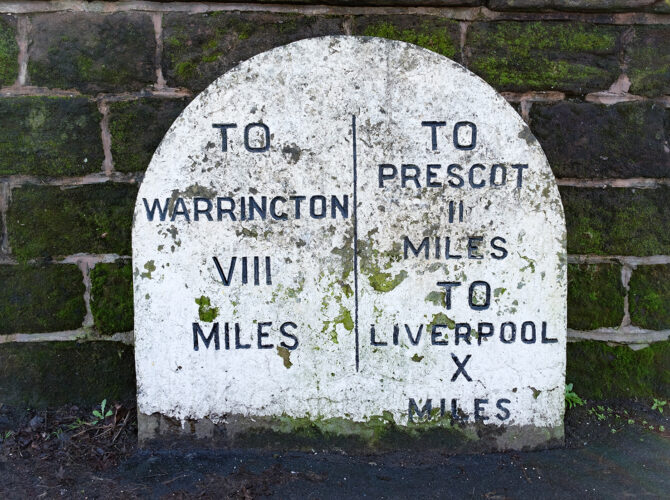
Instead of crossing straight over, the bridge sits diagonally across the railway. Tucked into its stonework beside the road is a small but remarkable feature, a carved milestone marking distances to nearby towns.

It is both a clever piece of engineering and a quiet roadside detail with a story to tell.

Why it matters

Skew Bridge is one of the earliest examples of a skew arch, designed to solve a tricky problem. The railway needed to run straight and level, but roads did not always line up neatly. Rather than divert the road, engineers built the bridge at an angle.

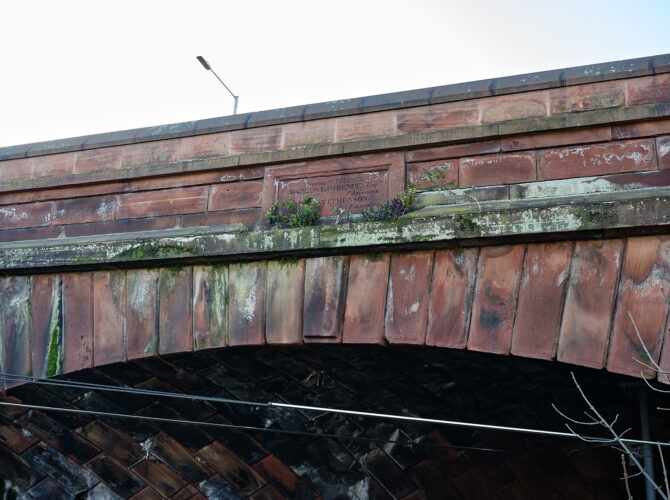
This required each stone in the arch to be carefully shaped to follow a twisting line, a real challenge for early 19th century builders.

The milestone adds another layer of meaning. It connects the railway to the older road network, showing how people measured distance and travelled before and during the railway age.
Interesting stories

Skew Bridge is one of the earliest of its kind, was designed to carry the road neatly over the tracks without disrupting the route.

Close by, the 1896 signal box at Rainhill still stands as the last of its type on this stretch, a reminder of how busy and important this line became for both passengers and goods.

The milestone can be found at the side of the road on Skew Bridge and itself has had a journey of its own. No longer in its original position it now points in the wrong directions, but it still preserves the distances early travellers would have followed.

What to look out for…

Stand back and notice how the bridge crosses the railway at a clear angle. The skew is subtle but becomes obvious once you spot it.

Look closely at the sandstone blocks of the arch. Their angled lines reveal the careful craftsmanship needed to build a bridge like this.

Nearby, find the milestone. It is split down the middle, with one side reading “to Warrington VIII miles” and the other “to Prescot II miles to Liverpool X miles”.

It no longer sits in its original position, so the directions now point in the wrong directions. Even so, it remains a rare and tangible link to the journeys people made when rail travel was just beginning.

This content is adapted from:
https://historicengland.org.uk/listing/the-list

.

Explore related content