Liverpool

Wellington Rooms (Former Irish Centre)

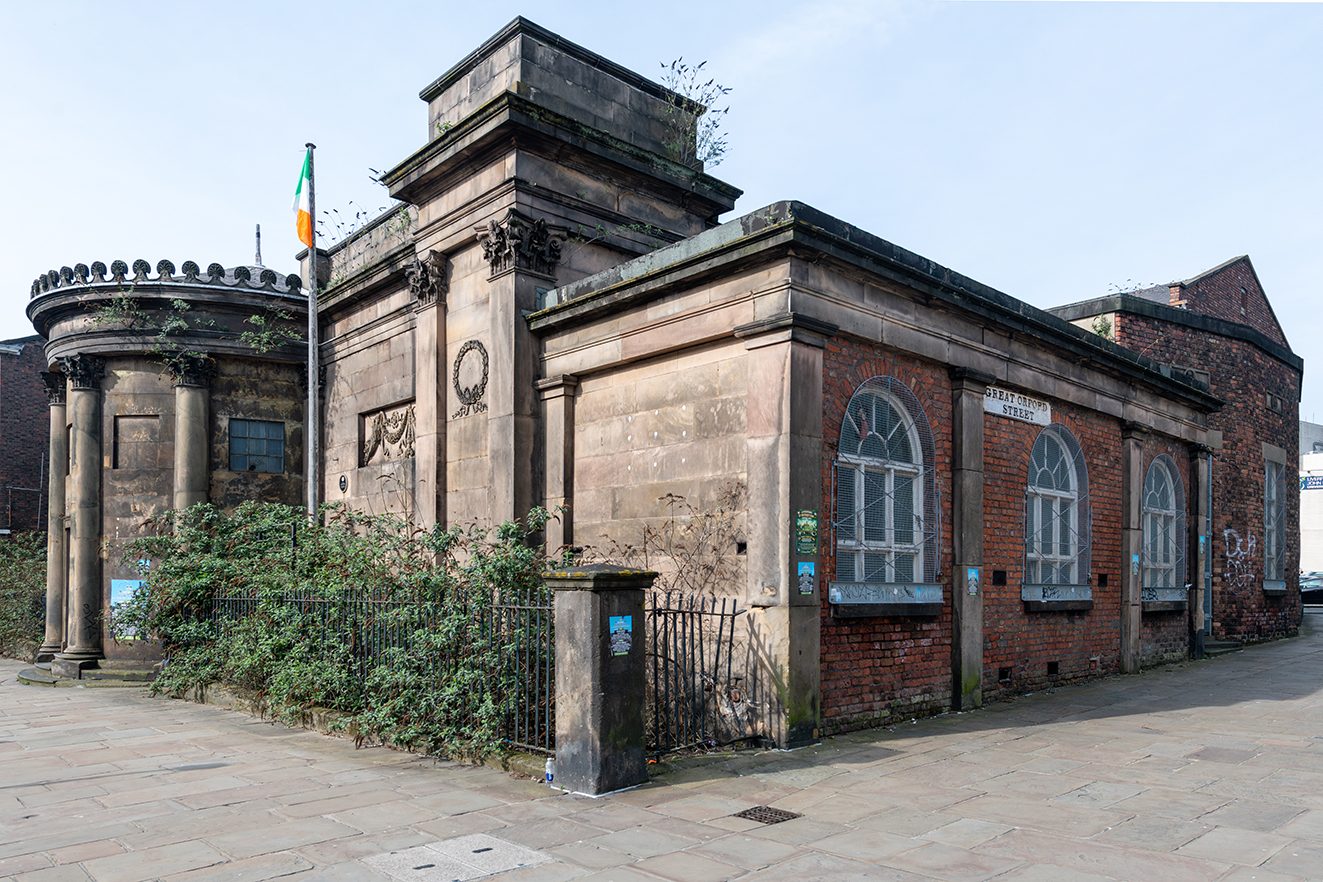
The building’s stone frontage meets a later red-brick section, with arched windows along the side street.
© Chris Iles

A grand opening banquet that did not go to plan.

The Wellington Rooms is a striking stone building on Mount Pleasant in Liverpool. Built between 1815 and 1816 and designed by architect Edmund Aikin, it was originally created as elegant assembly rooms for the city’s growing middle class. At the time, these were places where people gathered for dances, concerts, meetings and social events.

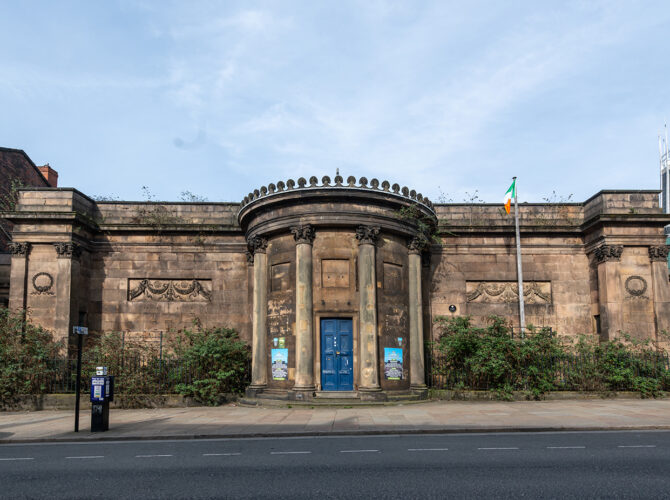
The building has a classical design, with a curved central entrance framed by tall columns and decorative stonework. Behind the simple exterior once lay a series of grand interior rooms, including a large ballroom with ornate plasterwork, chandeliers and richly decorated ceilings.

In the 20th century the building became home to Liverpool’s Irish community and was widely known as the Irish Centre. Today it stands empty but remains an important historic building, with plans and campaigns aimed at restoring it for future use.

Why it matters

The Wellington Rooms reflects an earlier chapter in Liverpool’s social history, before the great railway hotels and civic halls of the Victorian era. Assembly rooms like this were fashionable gathering places where music, dancing and conversation brought together the city’s professional and merchant classes.

Architecturally, the building is one of Liverpool’s most refined neoclassical designs. Edmund Aikin created a façade inspired by classical temples, using strong stone columns and carefully balanced proportions to give the building dignity and presence.

Its later life as the Irish Centre adds another layer to the story. For many decades it served as a cultural and social hub for Liverpool’s large Irish community, hosting music, dances, celebrations and community events.
Interesting stories?

Guests were meant to arrive at the Wellington Rooms after their historic first journey. But the day had been overshadowed by the fatal accident involving William Huskisson.

Trains were delayed and many invited guests were still making their way back to Liverpool when the event began. Although the Duke of Wellington did return to Liverpool, he chose not to attend. Instead, he left for the Marquess of Salisbury’s estate just outside the town at Childwall and did not come back.
In the end, the grand celebration went ahead without most of the people it was meant to honour. Those who did attend had not even travelled on the trains that day. It was meant to be a triumphant finale, but became a subdued and rather awkward gathering.
Years later, the building found a new rhythm as the Irish Centre, filled with music, dancing and celebration once again.

What to look out for…

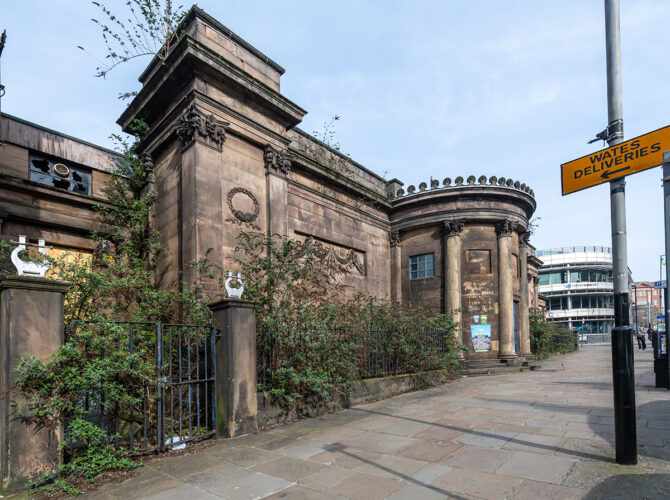
From the street, notice the curved central entrance with its classical columns and decorative stone cresting along the roofline. The stone carvings and wreath motifs reflect the fashionable neoclassical style of the early 1800s.

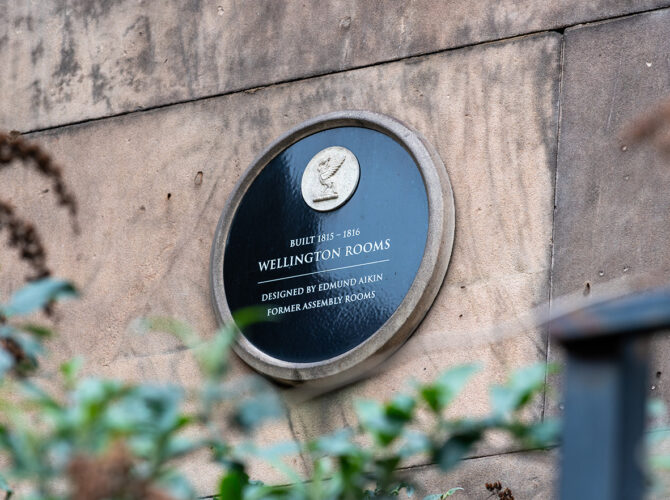
Look closely at the plaque beside the doorway. It records the building’s construction in 1815–1816 and its architect, Edmund Aikin.

Although the interior is not normally open to the public, photographs reveal the remarkable ballroom inside. Look for images showing the pale blue and gold ceiling panels, ornate plaster mouldings and chandeliers that once lit the dance floor. Even in its faded state, the room hints at the elegance and social life that once filled this remarkable building.

This content is adapted from:
https://historicengland.org.uk/listing/the-list/
https://en.wikipedia.org/wiki/Wellington_Rooms

Explore related content