Salford

Worsley Brook, Great Culvert

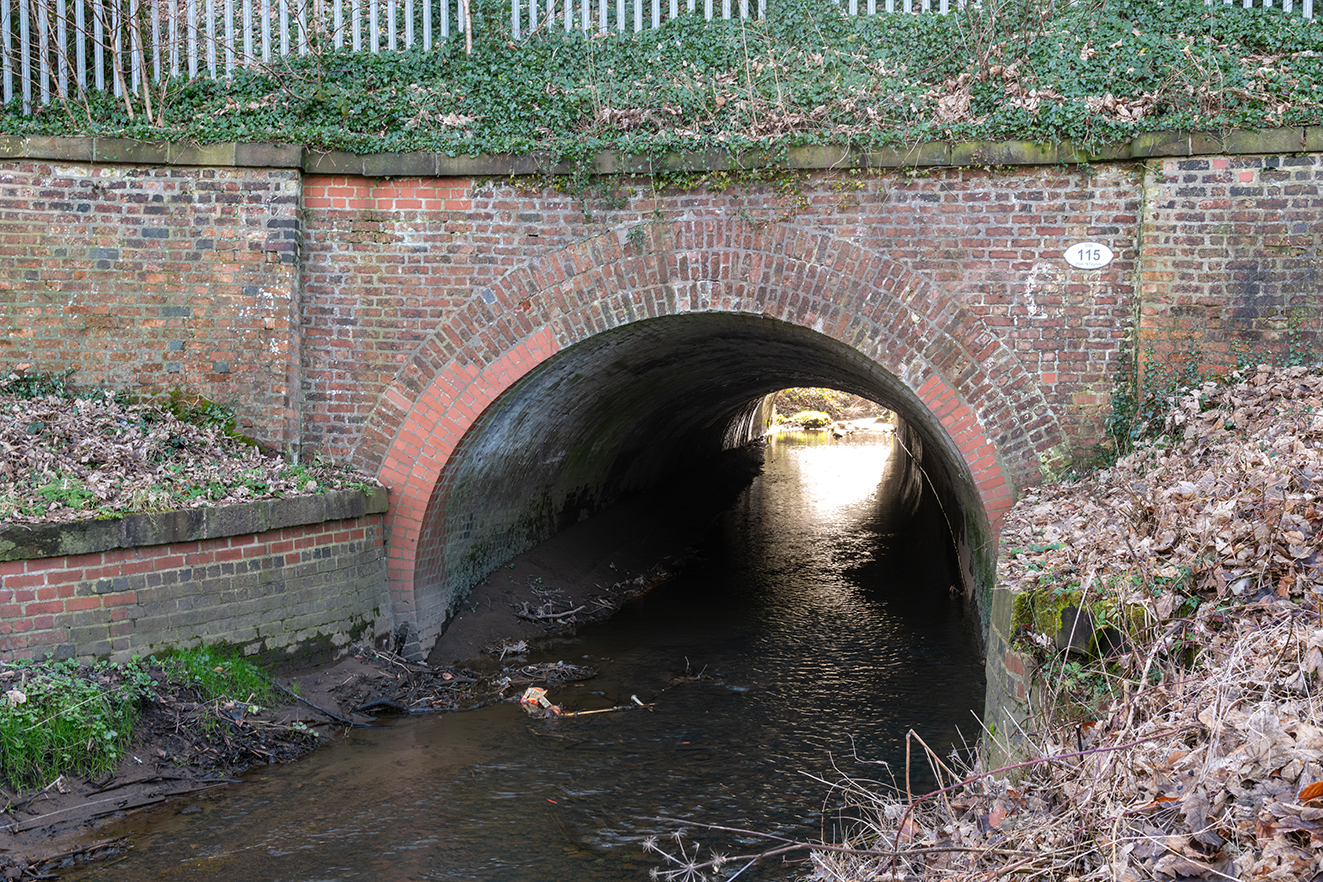
Looking through the culvert, the arched brick lining frames the flowing water and light beyond.
© Chris Iles

The hidden brook beneath the railway.

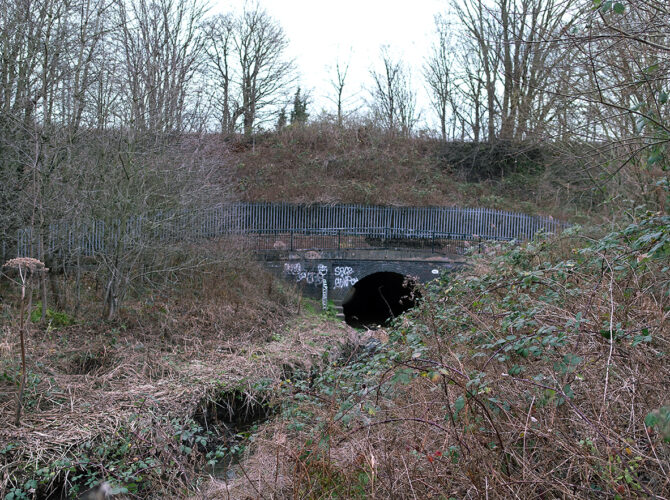
Worsley Brook Great Culvert is a brick-lined tunnel that carries Worsley Brook beneath the Liverpool and Manchester Railway. Hidden beneath the Barton Embankment near Barton Moss, it allows the brook to pass under the railway without disturbing the track above. Only a short section is visible at each end but the culvert extends beneath the embankment following the course of the brook.

Why it matters

At first glance you might not think much of it but this structure is actually one of the largest on the line. Listed in 1830 as one of the official structures of the Liverpool and Manchester Railway the culvert was recorded as being 125 feet long and 13 feet wide. It was the longest of several crossings built for watercourses along the route.

Its purpose was to manage natural drainage and protect the stability of the embankment which was raised over low-lying ground and small valleys. Though not visually dramatic it played a crucial role in keeping the railway dry secure and in operation.
Interesting stories

Worsley Brook still flows through the culvert much as it did when the line opened. While passengers above are unlikely to notice it the brickwork beneath their journey has stood the test of time. The structure was identified on early Ordnance Survey maps and today it continues to draw interest from local historians and railway enthusiasts.

The original brickwork still in place with later repairs limited to the surrounding fencing and nearby landscaping. As one of the lesser-known features of the railway it offers a rare chance to see the kind of hidden infrastructure that made early train travel possible.

What to look out for…

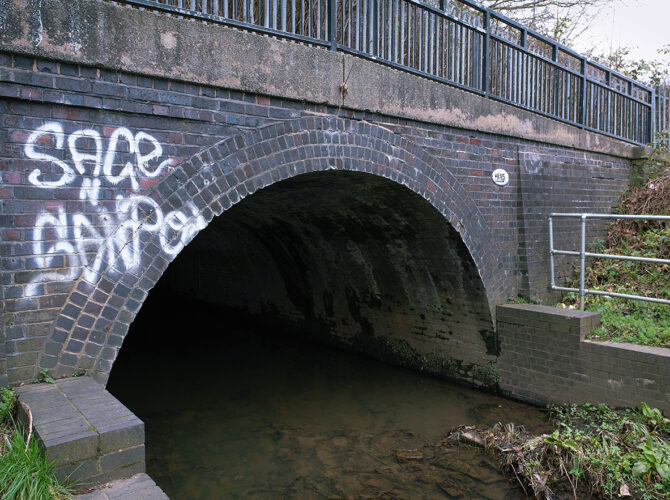
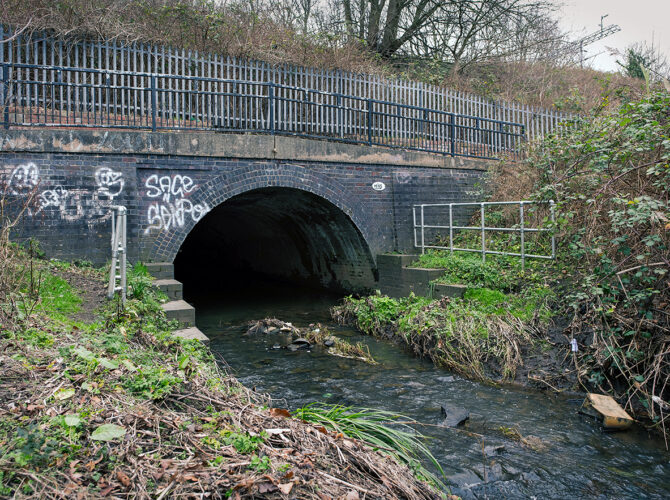
From the brook side look for the shallow arch set into the embankment. The brick lining curves smoothly overhead and runs straight through to the far side. You may notice modern fencing or signs of weathering but the shape and materials remain much as they were in 1829.

The scale of the embankment above gives a sense of how much earth was moved to form the railway. Even though only the entrance is visible the culvert runs deep beneath it still guiding water safely through after nearly 200 years.

Explore related content